
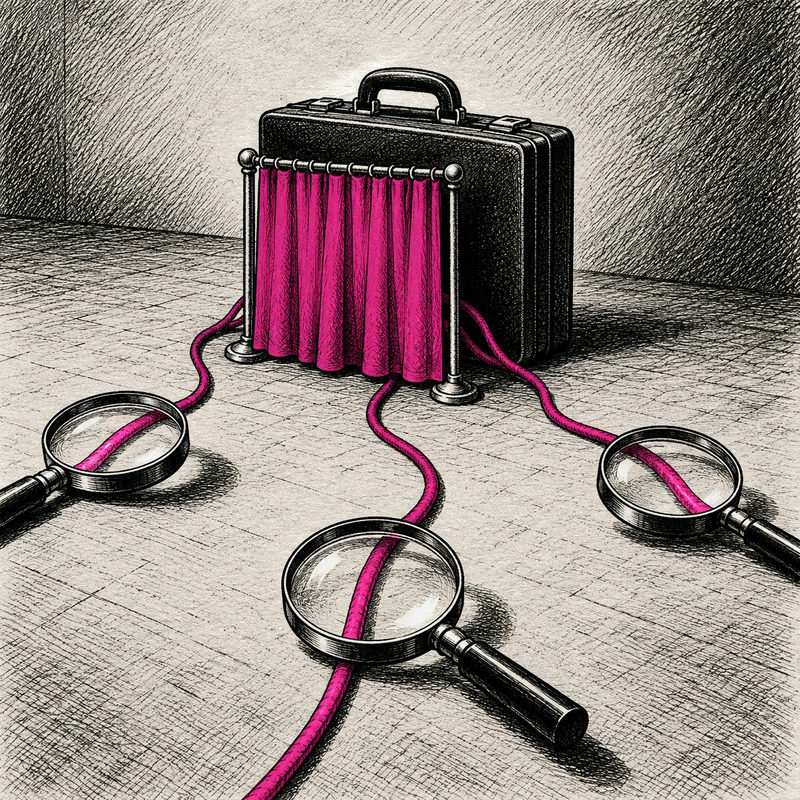
The attraction of a clandestine network is that the connections are supposed to be difficult to see. Romania's authorities are now describing an alleged sabotage operation whose next stage involves Germany, Poland, arrest procedures and rather less privacy.
The Associated Press reports that President Nicusor Dan condemned alleged Russian involvement on Tuesday, after Romania's intelligence service said it had identified a Russia-coordinated network linked to a September 14 fire in Brasov County. The fire damaged several commercial premises. Romania also summoned the Russian ambassador and said it presented evidence gathered in the investigation.
These are allegations, not convictions. Russia did not immediately comment on this case and has repeatedly denied conducting sabotage plots in Europe. The nationality of a suspect is not proof of who directed an operation. The intelligence claims need evidence, and the criminal cases need to be tested through the courts.
The reported response nevertheless supplies a concrete mechanism worth noticing. Romania's anti-organised-crime agency says two suspects were arrested in Germany while preparing similar acts, and a European arrest warrant was issued for another defendant in Poland. Authorities are seeking to extradite all three to Romania.
An operation allegedly intended to exploit Europe's connections has encountered Europe's other connections: police cooperation and paperwork that travels quite well without a secret handler.
The three people under investigation are two Belarusians and a Ukrainian, all residents of EU countries, according to the agency. That description does not turn nationality or residence into guilt. It does underline why investigating a cross-border network requires more than pointing at a flag and declaring the mystery solved.
Make powerful people uncomfortable.
Subscribe to Democrawonk.
Romania's intelligence service alleges that the network had targets beyond Romania, including arms manufacturing and other military or industrial sites. It also says investigations uncovered other attempts involving international military facilities or locations used to train Ukrainian forces. Those claims describe a potentially wider operation; they do not establish that every listed target was attacked or that the Brasov fire destroyed an arms factory.
That distinction is particularly useful in a story about hybrid warfare, a phrase capable of making almost any assertion sound as if it has already attended a classified briefing.
Dan argues that sabotage belongs to a broader Russian effort to weaken European democracies and their solidarity, alongside election interference, disinformation and cyberattacks. If the sabotage allegations are established, the objective he describes would have an awkward feature: it has prompted several European countries to work together on the response.
This is not a promise that cooperation will uncover every plot. Nor does summoning an ambassador repair damaged premises. Diplomatic protest, intelligence assessment and criminal prosecution are different jobs. One cannot substitute for the others merely by using the word unacceptable at sufficient volume.
But the arrests, warrant and extradition effort are more substantial than a strongly worded adjective. They create a process in which the alleged links can be examined, challenged and, if supported, acted upon.
The defendants are entitled to that process. The public is entitled to evidence rather than a demand to accept every intelligence assertion on faith.
A secret network would prefer everyone to distrust everyone else. A functioning investigation offers a less cinematic response: compare the files, follow the connections, and make the case in a room where the other side gets to answer.
Comments
Have something to say? Give this story a heckle.
Comment Rules
Argue the point. Add a joke. No threats, harassment, hate speech, spam, private personal information or unsupported accusations. First-time comments and comments with links are moderated. Full Comment Rules
Loading comments…
Questions or deletion requests? Contact Us. We retain comments and moderation records until removed. Only hashed email identifiers are stored for comment accounts.