
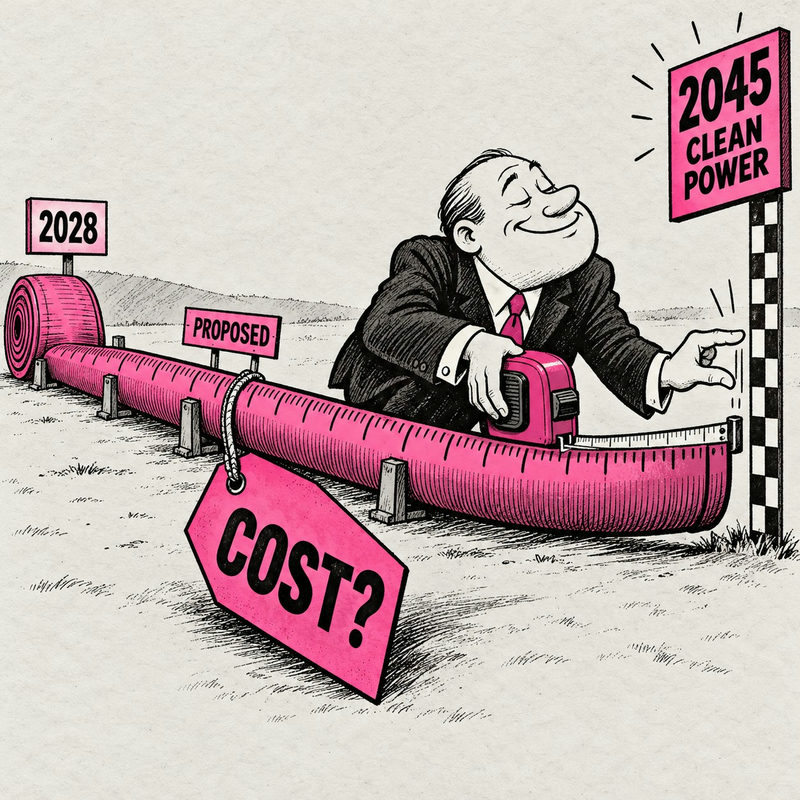
Puget Sound Energy wants to buy electricity from a proposed natural-gas conversion of the idled Centralia coal plant from 2028 through the end of 2044. Washington’s grid is supposed to be entirely non-polluting starting in 2045. Regulators are considering whether the contract is prudent, the Washington State Standard reported October 29.
The proposed fossil-fuel commitment ends just before the clean-power requirement begins. Whatever else one thinks of the plan, it has excellent edge awareness.
This is not a contract that openly promises to ignore the 2045 law. It is a contract seeking a very substantial portion of the time before it. Seventeen years is a magnificent duration for something presented as the way to get through a transition. A child born when it starts could be driving before it ends. The stopgap has time to develop opinions about borrowing the car.
PSE says it needs dependable capacity during high demand, including heat waves and cold snaps. The converted plant would not run continuously. The utility says using existing infrastructure avoids the risks of building from scratch and supplies backup when renewables and storage may not be enough. It also says demand is rising while data-centre developers compete for new clean-power contracts.
That is a real engineering and reliability argument. Electricity has to be there when people need it. A beautifully principled blackout is still a blackout, and nobody can charge a heat pump with the moral satisfaction of having opposed a gas plant.
But dependable is not a synonym for reasonably priced. The commission’s staff recommends rejecting the arrangement or, at minimum, requiring better evidence that it is the lowest reasonable-cost option. The attorney general’s Public Counsel has also recommended rejection. Large industrial power users submitted an analysis questioning cost-effectiveness. PSE counters with confidential financial evidence that it says demonstrates value when reliability is included.
So the dispute is not simply environmentalists declining to appreciate electricity. Some of the objections come from people whose businesses would quite like electricity and whose accountants would quite like to see the price justified.
The Daily Heckler: five or six selected stories.
Political satire for your morning inbox.
The project has managed to unite concern about fossil fuels with concern about the bill. That is a broader coalition than the usual publicity photo of somebody looking sternly at a smokestack.
PSE serves 1.2 million electric customers and operates as a regulated monopoly in its service territory. Those customers cannot answer the long-term purchasing proposal by putting their utility back on the shelf and choosing the other brand beside it. Regulatory scrutiny is the part of this shopping trip where their ability to say no is supposed to occur.
And the purchase is being discussed inside a rate case that has already drawn complaints about proposed increases. No final rates or approval of the gas contract have been decided. Expert testimony is due to start November 3, with the commission’s decision expected in January.
Meanwhile, TransAlta still needs permits, and its board is waiting until early 2027 to make a final investment decision. The plant has not operated since last December. The federal order keeping it on standby is a separate matter from approval of this gas conversion. There are several unresolved decisions here, not a new gas plant already humming away while everybody writes objections.
Which makes this precisely the time to scrutinize the proposal—before the adjective necessary hardens into a seventeen-year financial commitment.
Local supporters cite preserved jobs and useful existing infrastructure. Opponents argue cheaper, cleaner alternatives deserve more weight. Those benefits and trade-offs require actual comparison. You do not get to settle them by pointing to the last permissible year and announcing that the calendar looks reassuring.
I keep coming back to the size of the supposed interval. Seventeen years. We can describe that as temporary, but then we need a new word for an arrangement short enough that the person signing it might still own the same couch when it finishes.
The utility may be able to prove this is the best dependable option. That is what the proceeding is for. Until then, ratepayers are entitled to more than the comforting thought that the fossil-fuel commitment knows when to stop.
A deadline is not a fucking coupon. Using every available year before it does not automatically make the purchase a bargain.
Comments
Have something to say? Give this story a heckle.
Comment Rules
Argue the point. Add a joke. No threats, harassment, hate speech, spam, private personal information or unsupported accusations. First-time comments and comments with links are moderated. Full Comment Rules
Loading comments…
Questions or deletion requests? Contact Us. We retain comments and moderation records until removed. Only hashed email identifiers are stored for comment accounts.