
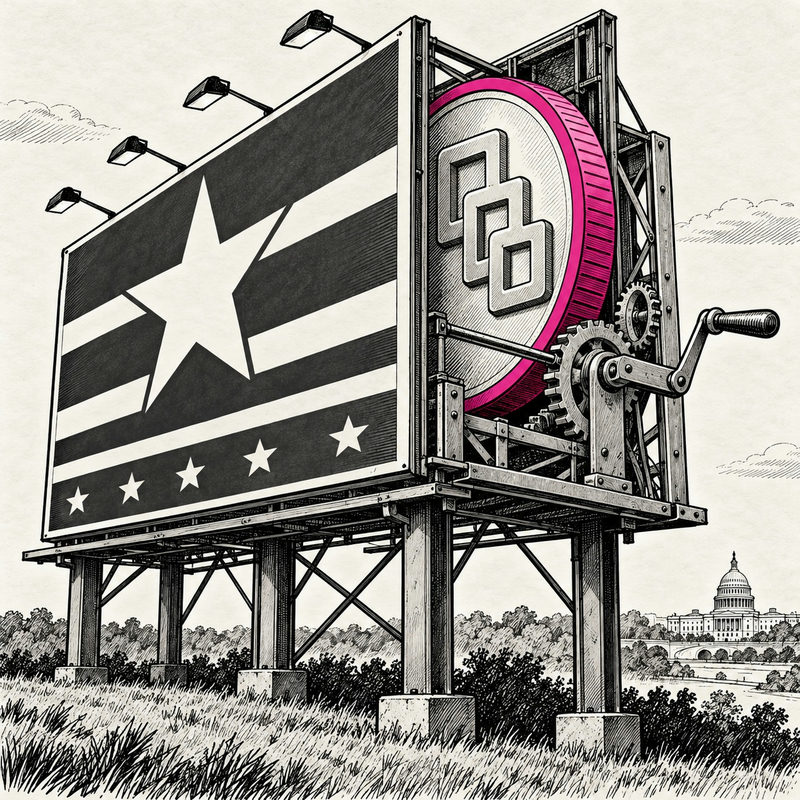
The crypto industry has found an excellent way to sell voters on its future: run election ads about something else.
Reuters reports that the industry has spent roughly $176 million across more than 100 midterm races, building a coalition intended to advance its interests after Donald Trump leaves office. Many ads barely mention crypto. Instead, voters hear about taxes, immigration and other subjects that do not immediately suggest somebody is shopping for a preferred regulator.
The product placement is Congress.
Fairshake and its affiliates account for about $150.8 million of the spending through October 20, according to campaign-finance records reviewed by Reuters. Affiliate names such as Defend American Jobs and Protect Progress help keep the presentation civic and pleasantly unspecific. “Please Consider Our Desired Market Structure Legislation” presumably tested poorly as a yard sign.
The spending is not, by itself, evidence of an illegal deal. Super PACs may raise and spend unlimited amounts but cannot coordinate directly with candidates' campaigns. That legal separation matters. It does not make the industry's political objective invisible, especially when its strategists explain it to reporters.
The central prize is durable law. The industry wants the Clarity Act, which would place crypto oversight under the Commodity Futures Trading Commission. The bill stalled this Congress. Without legislation, analysts cited by Reuters say agency-level changes under Trump could be reversed by a later administration.
Make powerful people uncomfortable.
Subscribe to Democrawonk.
That is the difference between winning a favourable meeting and acquiring a policy that survives the person who hosted it. The industry is not simply buying a nice November. It is working on the renewal terms.
Fairshake says it supports pro-crypto candidates who favour American innovation in both parties. Its House spending is bipartisan. In Senate races this cycle, however, it chose to back only Republicans after Democrats blocked the Clarity Act from reaching a final vote amid a fight over an ethics provision that would require the Trump family to sell its crypto holdings.
So “bipartisan” is the destination. The current Senate boarding pass has conditions.
This is a national version of the distinction in our look at campaign pledges and outside spending: money can shape the race without arriving in the candidate's own campaign account. Knowing that distinction is more useful than treating every reassuring campaign label as a complete financial disclosure.
The money also doesn't guarantee results. Reuters describes industry-backed attacks that failed to stop Illinois primary winners Juliana Stratton and La Shawn Ford. Voters still have agency. A giant ad budget is a powerful instrument, not a remote control.
But voters deserve to recognise the instrument. When an industry spends heavily to influence who writes its rules, an ad about somebody else's alleged immigration sins is not the whole pitch.
The crypto policy is in the transaction. It just isn't in the commercial.
Comments
Have something to say? Give this story a heckle.
Comment Rules
Argue the point. Add a joke. No threats, harassment, hate speech, spam, private personal information or unsupported accusations. First-time comments and comments with links are moderated. Full Comment Rules
Loading comments…
Questions or deletion requests? Contact Us. We retain comments and moderation records until removed. Only hashed email identifiers are stored for comment accounts.