
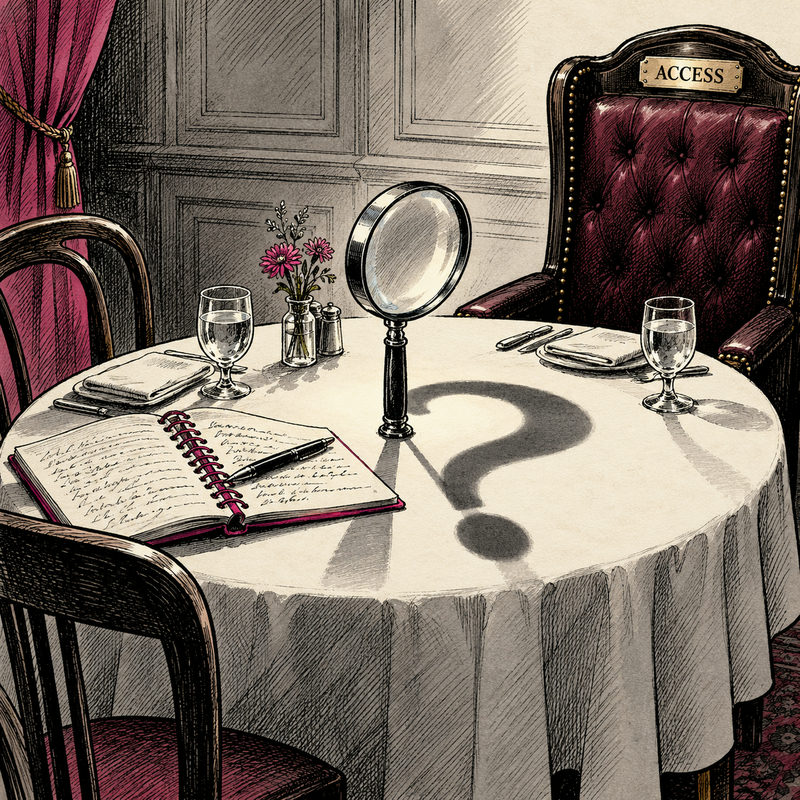
“Dream source” is a revealing compliment. The reader dreams of finding out what happened. The official may dream of ensuring the reader finds out what happened to somebody else.
Axios reports that Bob Woodward's forthcoming memoir identifies the late Reagan and George H.W. Bush official Richard Darman as both a close friend and a major confidential source. Woodward describes extensive conversations, valuable information and a friendship that collapsed after damaging Washington Post coverage. This is a newly disclosed account of an old relationship, not a current administration leak.
The interesting part is the overlap. A journalist needs access to people who know things. A powerful person benefits from knowing a journalist who will listen. Somewhere between those useful facts sits the temptation to mistake being welcomed for being shown everything.
I want reporters close enough to power to expose it and independent enough to spoil lunch. The public is not paying attention so that everyone at the table can have a fulfilling friendship.
Woodward's account, as reported by Axios, includes his belief that Darman avoided disclosures that would damage national security while approaching the boundary. That belief matters as his judgment; it is not an independent certification of every conversation. A charming, well-informed source remains a source. Charm is not a clearance procedure.
Nor does this relationship prove that Woodward's reporting was false. It produced scoops, and the friendship's rupture over adverse coverage demonstrates that the relationship did not prevent all unwelcome journalism. The danger is more subtle than a cartoon in which a reporter simply accepts orders. Proximity can influence which disputes look important, whose explanation sounds plausible and who gets described as brilliantly complicated instead of conveniently self-serving.
Darman's access to internal government business made him valuable. His position also gave him a perspective and interests. Readers need those features kept together. Otherwise “inside knowledge” starts functioning as a little aristocracy: the nearer a source stands to the president, the less strenuous the introduction to skepticism.
We defend a press room that isn't a loyalty program. That defense should travel into the newsroom too. Protect confidential sources where necessary, verify what they provide and resist making privileged access its own proof of public value. Freedom of the press includes the freedom to disappoint the person who has been exceptionally helpful.
Woodward is examining the costs of the relationship himself. Good. The useful lesson should reach beyond admiration for how extraordinarily well connected the extraordinary reporter was. A memoir can account for the friendship; the reporting must account for the public.
The journalist's difficult job is to hear the private explanation without becoming its preferred seating arrangement. If a source is delighted with every story, I would not immediately call that a dream. I would check whose dream we were having.
Comments
Have something to say? Give this story a heckle.
Comment Rules
Argue the point. Add a joke. No threats, harassment, hate speech, spam, private personal information or unsupported accusations. First-time comments and comments with links are moderated. Full Comment Rules
Loading comments…
Questions or deletion requests? Contact Us. We retain comments and moderation records until removed. Only hashed email identifiers are stored for comment accounts.