
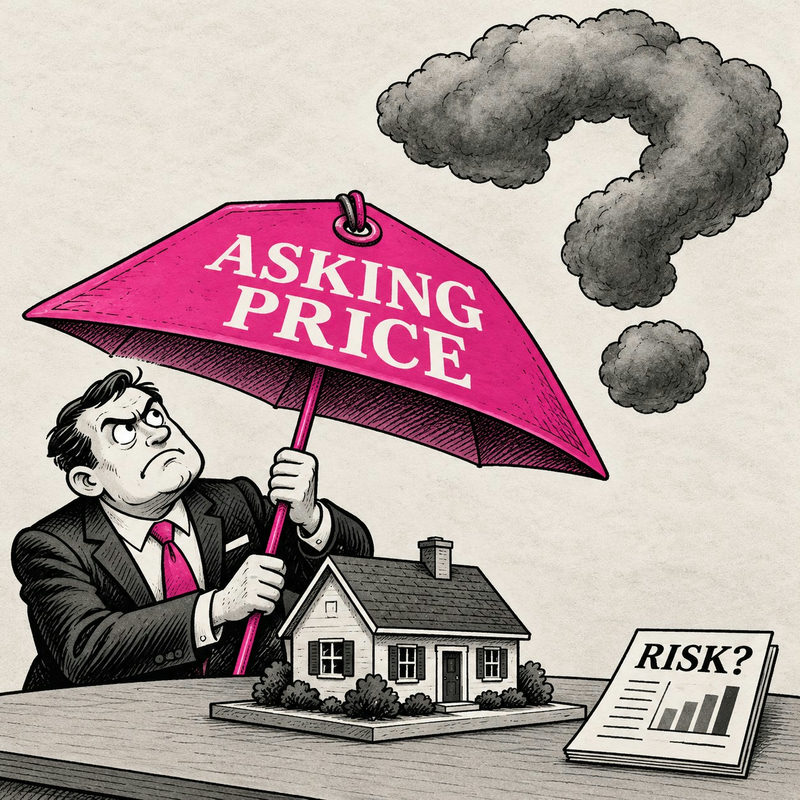
Florida Attorney General James Uthmeier is suing First Street Technology, alleging that its property-risk assessments are deceptive, exaggerate dangers and fail to provide the transparency the company promises. He also says the scores hurt home sales and raise insurance costs. The complaint described in Florida Phoenix’s October 26 report has not established those allegations as fact.
A risk model should be accurate and explain its limitations. Absolutely. If somebody is selling predictions, you are entitled to ask what went into them.
I am slightly less clear on when “this information may discourage the purchase” became an argument against information about a purchase.
Imagine a home inspection conducted with that principle. The inspector opens a cupboard, sees a problem and checks the seller’s desired closing date. Is this a serious issue? Potentially, but we have a very motivated owner and I don’t want to frighten the mortgage.
Uthmeier says some properties that First Street rates as major flood risks fall into FEMA’s minimal-hazard category. His complaint alleges faulty modelling, misleading claims of peer review and insufficient access to underlying data. Those are claims that can be examined. Two assessments disagreeing does not, all by itself, tell you which assessment is wrong. A disagreement is where the work starts, not a little ribbon you pin on the forecast you prefer.
First Street says its methods are validated and use the underlying physics of how an event would occur. It had not responded to the Phoenix’s request for comment at publication. Its claims deserve testing too. A business does not become infallible because the person suing it has discovered the phrase “climate activism agenda.”
But look at the sales argument. The complaint quotes figures showing homes rated at high flood risk were less likely to sell than homes rated at low risk. It treats the effect of alarming information on buyers as part of the problem.
The Daily Heckler: five or six selected stories.
Political satire for your morning inbox.
Yes. Sometimes the buyer encounters a possible problem and becomes less enthusiastic. That is not necessarily a malfunction in the buyer. We have equipped the human being with the ability to reconsider spending several hundred thousand dollars. Please stop tapping its head like a stalled credit-card reader.
The allegations include a property in a county that flooded but which, the complaint says, did not itself flood and never has. Site-specific accuracy matters. A county is not a bathtub with one uniform waterline.
Neither is “it has not happened here” a magical command that the future is obliged to obey. If that worked, insurance would consist of a man visiting your house, asking whether it had burned down yet and leaving a congratulatory mint on the counter.
I can hear the property tour now. Lovely light. Updated kitchen. Excellent record of not having experienced tomorrow.
The state wants clear disclosure that the reports are uncertain and may conflict with other credible sources. Fine. Put the uncertainty where buyers can see it. Explain the methods. Correct errors. But uncertainty is not the same product as reassurance, and the asking price does not get to adjudicate the difference.
That is the part that makes me want to take every glossy listing brochure outside and let it explain itself to the sky. A forecast can be wrong. A model can be misleading. Those questions require evidence. “People might pay less” requires only that people noticed something.
The company is entitled to scrutiny. So is the attorney general’s attempt to package the prospect of a slower sale as evidence that somebody has introduced an improper amount of concern into the room.
God forbid the room contains a buyer. They might ask whether the risk score needs correcting or the price does.
At which point the brochure will urgently remind them about the kitchen island. It has seating for four and no stated position on the next thirty years.
Comments
Have something to say? Give this story a heckle.
Comment Rules
Argue the point. Add a joke. No threats, harassment, hate speech, spam, private personal information or unsupported accusations. First-time comments and comments with links are moderated. Full Comment Rules
Loading comments…
Questions or deletion requests? Contact Us. We retain comments and moderation records until removed. Only hashed email identifiers are stored for comment accounts.