
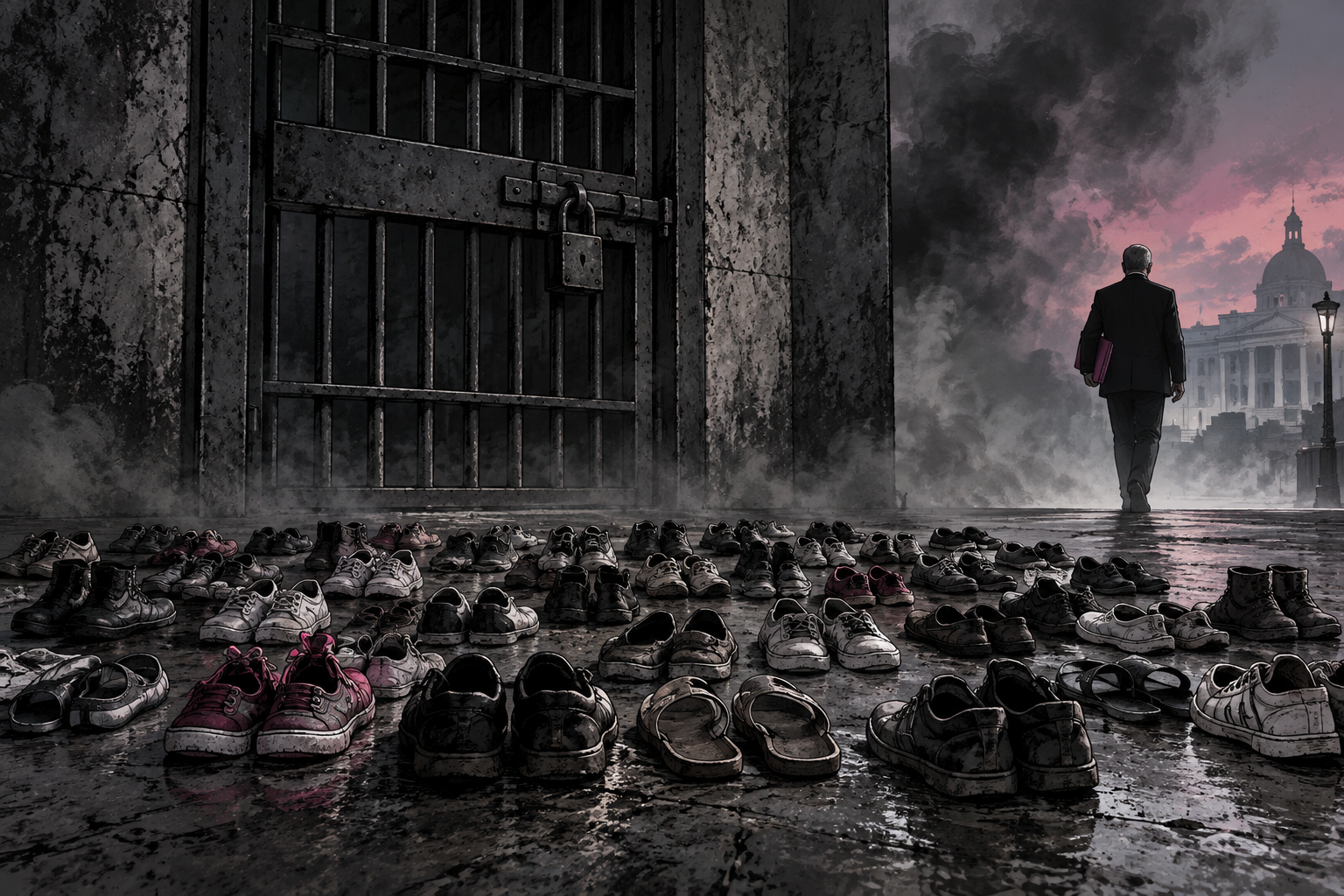
Forty men died behind a locked door in a government detention center. Three and a half years later, the case against the official who led Mexico’s immigration agency has been closed because a court found that the conditions of his suspended prosecution had been fulfilled. Bureaucracy has completed the form. Grief, inconveniently, has not.
The Associated Press reported that a federal judge closed the case against Francisco Garduño, the former head of Mexico’s National Migration Institute, over the March 27, 2023 fire in Ciudad Juárez that killed 40 migrants and injured dozens. Garduño faced accusations related to abuse of office and dereliction of duty. The ruling followed a conditional suspension requiring reparative measures, including compensation, medical care, a public apology, training and safety oversight.
Aristegui Noticias reported that prosecutors told the court Garduño had met the conditions and did not oppose closing the case. The outlet said the dismissal carries the effect of an acquittal in this proceeding. Victims and relatives participated in the seven-hour hearing, some by video from other countries. Their lawyers say they will challenge the decision. AP reported that an appeal and a separate injunction concerning reparations remain pending, so this is not the final word.
A Checklist Cannot Open A Locked Door
The facts that made this case notorious have not become less terrible with age. Surveillance footage showed guards leaving as smoke filled the men’s locked dormitory. The detainees had been protesting conditions. Only the women held in a separate cell were released. Most of the dead were from Central America and Venezuela.
That is not an abstract failure of "migration management." It is what happens when a state treats human beings as inventory and detention as an administrative convenience. The locked door was physical. The moral lock came earlier, when officials built a system in which desperate people could be confined without ventilation, water or an obvious path to safety.
Garduño has said compensation was paid and that he apologized. Victims’ representatives do not dispute that measures occurred; they dispute whether those measures amount to full repair. AP reported their argument that the immigration agency, rather than Garduño personally, paid damages, that families lacked clear access to promised medical care and that the apology was more formal than substantive. Those are claims the appeal process should examine, not paperwork to be waved away because every box has acquired a check mark.
Accountability Is A Public-Safety System
This is not about demanding punishment for its own sake. It is about making institutions learn at a depth deeper than mandatory training slides. Accountability should establish who knew about unsafe conditions, who had authority to change them, why guards failed to unlock the door, whether private contractors or public officials ignored warnings and what enforceable changes now prevent another locked-room disaster.
Other officials and individuals still face separate proceedings, according to AP. Their guilt or innocence must be determined fairly. But fairness for defendants and justice for victims are not competing luxuries. A functioning system can protect due process while refusing to confuse partial reparation with a complete accounting.
Migration policy on both sides of the U.S.–Mexico border routinely hides cruelty behind words like processing, custody and deterrence. The Ciudad Juárez fire burned through that vocabulary. Forty people died where the government put them and could not escape. Any official conclusion that sounds tidier than that should be reopened until it tells the whole truth.