
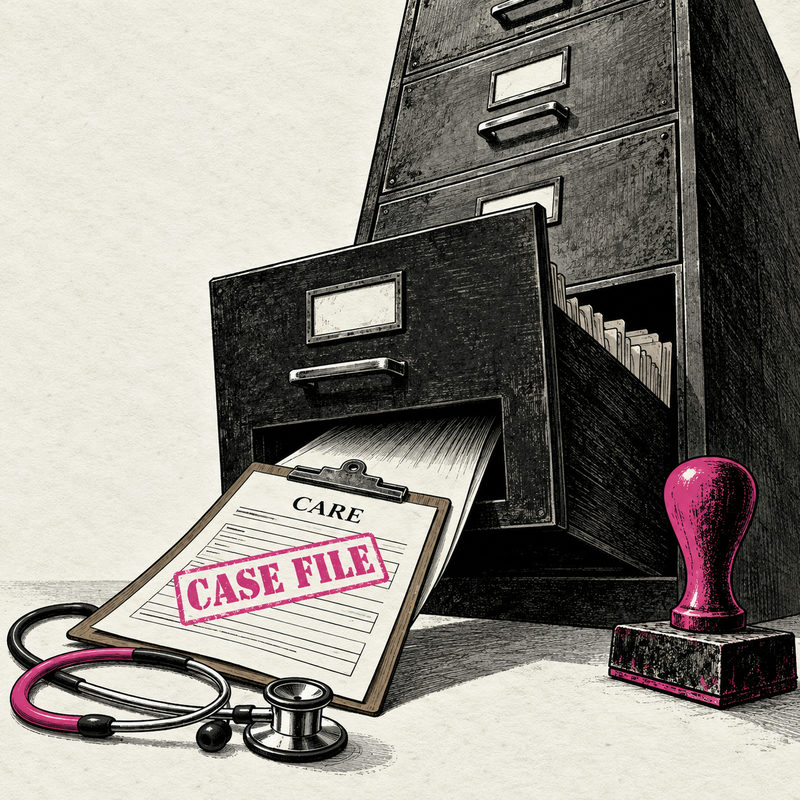
A public-health problem can be difficult to solve. Have we tried giving it a case number?
Stateline reports that researchers at Pregnancy Justice, an abortion-rights advocacy organization, identified 902 women facing 955 pregnancy-related criminal charges in 23 states during the first three years after the Supreme Court's Dobbs decision. Most charges were for child abuse, neglect or endangerment, usually involving allegations of substance use.
That is not a finding that 902 women were prosecuted for abortions. The researchers identified 13 specific allegations concerning obtaining, seeking or researching abortion, and said fuller analysis is still underway. The distinction is essential. The actual finding is serious enough without inflating it into a different one.
The broader question is what happens when a healthcare encounter starts to look like an opportunity for criminal investigation.
University of South Carolina law professor Madalyn Wasilczuk, one of the study's authors, warns that fear of prosecution can discourage pregnant women from seeking care, particularly when substance use is involved. A system ostensibly concerned with healthy pregnancies can therefore help make the clinic feel like the place you should avoid.
That is an extraordinary design choice. Imagine judging a smoke alarm by how effectively it persuades people not to report smoke.
Make powerful people uncomfortable.
Subscribe to Democrawonk.
The political movement around these prosecutions is not uniform. Major anti-abortion organizations have traditionally opposed punishing women for abortions. Groups advocating so-called abortion abolition want embryos and fetuses treated as legal persons and women prosecuted under criminal law. Stateline reports bills proposing such penalties in about a dozen states over the past two years; proposals are not the same as enacted laws.
The disagreement is revealing because some of the warnings come from inside the anti-abortion movement. Eric Scheidler of the Pro-Life Action League argues that treating pregnancy losses like other deaths would require investigating miscarriages. He describes the resulting enforcement system as a police state.
This is not a routine dispute over whether a campaign brochure should use a warmer photograph. It concerns what the machinery of enforcement would actually do.
Supporters can describe fetal protection in broad, uplifting language. Hospitals, patients, police and prosecutors must live with the operational details. Who gets questioned? What information becomes evidence? Does a person seek medical help promptly, or first wonder whether doing so creates legal exposure?
Those are not decorative implementation questions. They are the policy.
The fact that a legislature can attach a criminal category to conduct does not establish that criminal enforcement is an effective public-health response. Giving a problem a prosecutor is not the same as giving a patient treatment.
The intake desk should help people reach care. It should not need a second sign explaining which parts of their medical history might become the case against them.
Comments
Have something to say? Give this story a heckle.
Comment Rules
Argue the point. Add a joke. No threats, harassment, hate speech, spam, private personal information or unsupported accusations. First-time comments and comments with links are moderated. Full Comment Rules
Loading comments…
Questions or deletion requests? Contact Us. We retain comments and moderation records until removed. Only hashed email identifiers are stored for comment accounts.