
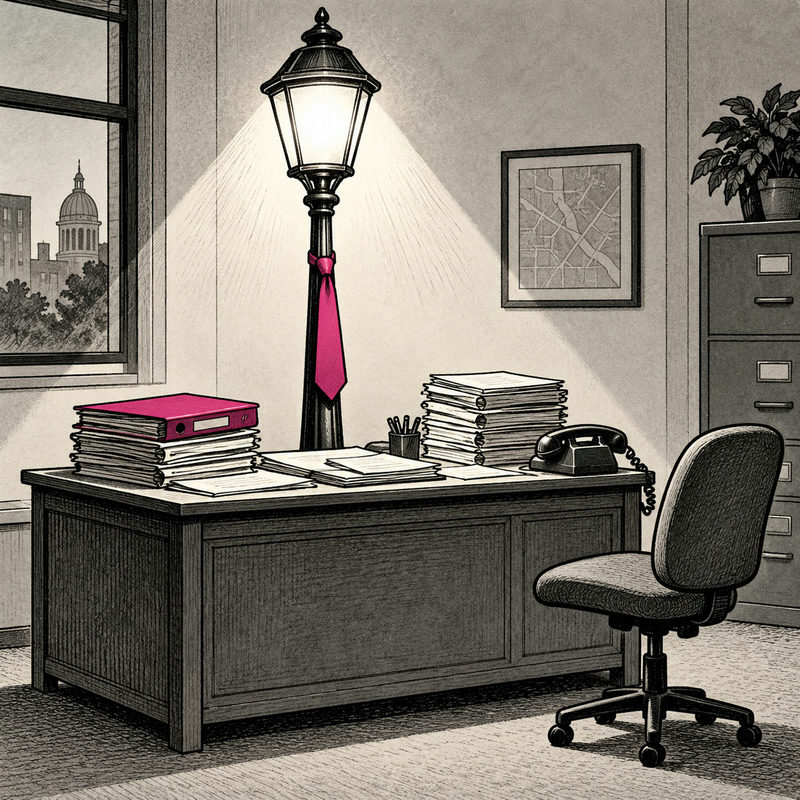
A streetlight is a useful public employee. Shows up every night. Rarely books a leadership retreat. But before city hall promotes it to the entire public safety department, there is a little follow-up paperwork.
Stateline reports that a new study of Newark's LED streetlight upgrades found an estimated 46% reduction in outdoor nighttime violent crime during the first six months. Over two years, the overall reduction was not statistically significant. Researchers found no significant overall effect on property crime. This was a quasi-experimental comparison, not a randomized trial, and the researchers cautioned against treating lighting as a standalone solution.
That is a useful result, if slightly inconvenient for anyone hoping to order public safety from a lighting catalogue.
Brighter streets can be worth having. A promising short-term improvement is worth examining. Neither proposition requires us to hand a lamppost the responsibilities of every other city service and then act disappointed when it fails to chair the interagency meeting.
Make powerful people uncomfortable.
Subscribe to Democrawonk.
The political temptation is easy to understand. A fixture is tangible. You can point at it, photograph it and put the purchase on a spreadsheet. Ongoing public work is less obliging. People need staffing, coordination and follow-through. None of those arrives in a box marked INSTALLATION COMPLETE.
Imagine a budget meeting in which the new bulb also has to mediate conflicts, answer residents and evaluate whether the city's plan is still working next year. Excellent efficiency. Perhaps it can balance the pension fund during daylight hours.
The study doesn't establish why the initial effect faded. Its possible explanations are not findings that a particular city program failed. The sensible response is to keep measuring and combine useful infrastructure with other prevention efforts, not pretend the first encouraging number came with a lifetime warranty.
A ribbon-cutting, if you're having one, should mark the beginning of public work. It shouldn't double as the exit interview.
Keep the light. Don't make it cover everyone else's shift.
Comments
Have something to say? Give this story a heckle.
Comment Rules
Argue the point. Add a joke. No threats, harassment, hate speech, spam, private personal information or unsupported accusations. First-time comments and comments with links are moderated. Full Comment Rules
Loading comments…
Questions or deletion requests? Contact Us. We retain comments and moderation records until removed. Only hashed email identifiers are stored for comment accounts.