
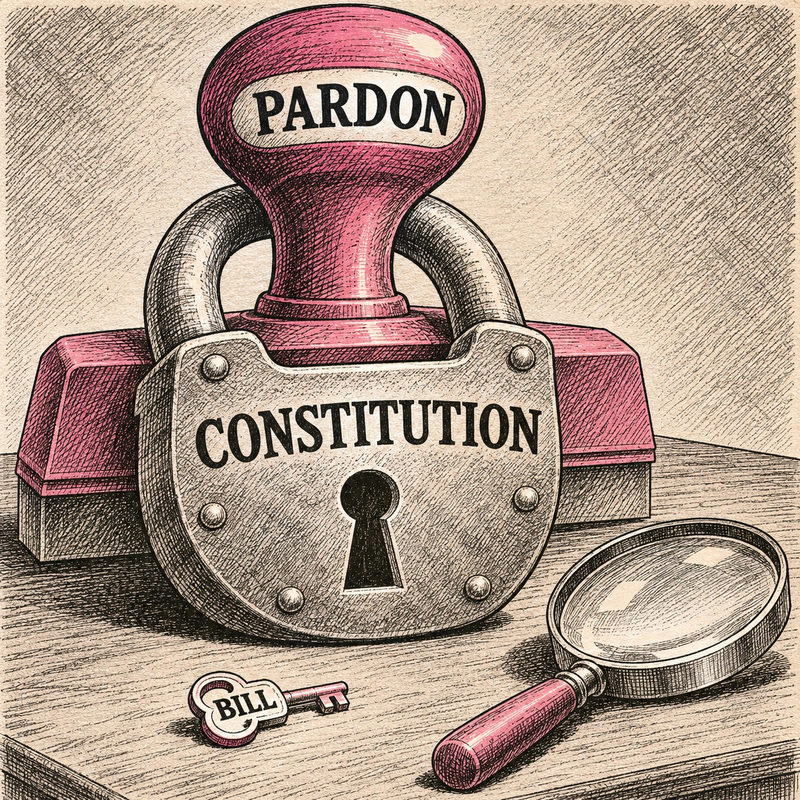
House Democrats have introduced a bill aimed at conflicts of interest in presidential pardons. Good. If mercy is becoming a luxury concierge service, someone should at least inspect the reservation system.
Reps. Mike Levin and Jason Crow's proposal would direct the Justice Department inspector general to examine potentially conflicted pardons, require recipients to disclose gifts to presidential projects and explicitly address pardons exchanged for something of value. It also proposes banning self-pardons.
CBS News has reported that wealthy defendants hire Trump-connected lobbyists and lawyers to seek clemency. That does not establish that anyone bought a pardon. The White House says paid lobbying is wasted money, defends its review process and insists Trump acts ethically.
Wonderful. One side sees an influence industry; the other says the influence industry is an expensive hobby. Some records might help clear that up.
But the bill has problems beyond the president's entirely foreseeable reluctance to sign restrictions on himself.
The Daily Heckler: five or six selected stories.
Political satire for your morning inbox.
Three legal experts interviewed by CBS warn that key provisions would collide with the Constitution's pardon power. On self-pardons, scholar Brian Kalt makes the especially deflating point: if the Constitution permits them, a statute can't take the power away; if it doesn't, the statute adds nothing.
Congress has proposed an adapter that may not fit either socket.
Levin argues reform can be constitutional and points to Congress's power to fund investigations. Investigating actual conduct and obtaining disclosures deserve serious work. Announcing that you've prohibited something is a different activity, particularly when your prohibition immediately needs a constitutional lawyer to explain whether it plugs in.
No new limit has become law. No self-pardon question has been settled.
By all means, investigate the concierge desk. Just don't declare the building secure because you mailed the owner a padlock he may have no legal obligation to use.
Comments
Have something to say? Give this story a heckle.
Comment Rules
Argue the point. Add a joke. No threats, harassment, hate speech, spam, private personal information or unsupported accusations. First-time comments and comments with links are moderated. Full Comment Rules
Loading comments…
Questions or deletion requests? Contact Us. We retain comments and moderation records until removed. Only hashed email identifiers are stored for comment accounts.