
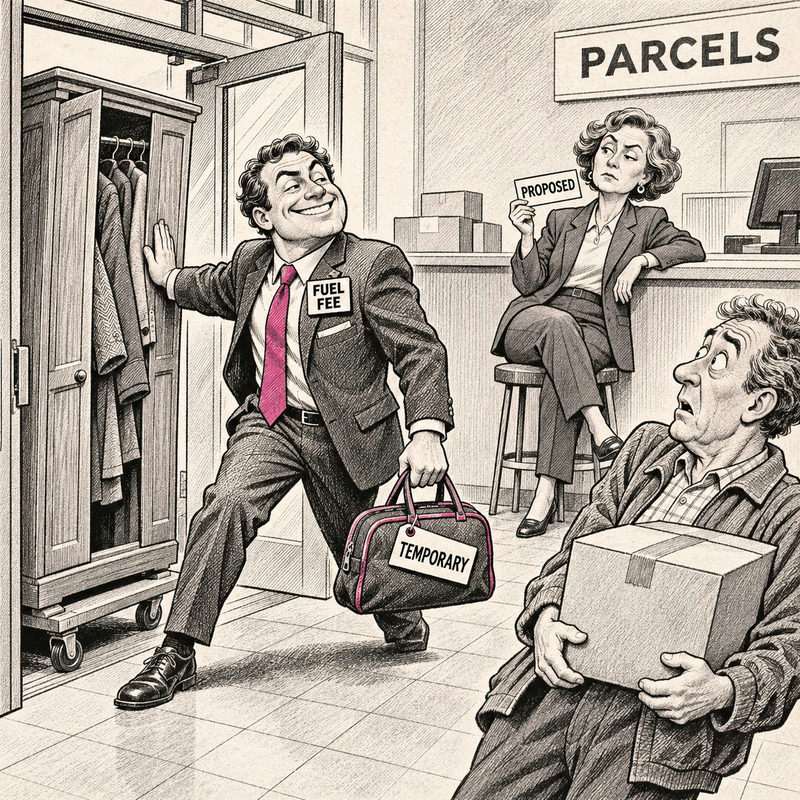
The Postal Service’s temporary package fuel surcharge would like to become permanent and increase from 8% to 11%. It came in April with an overnight bag. Now it is asking where you want the sectional.
USPS needs Postal Regulatory Commission approval for the proposed January change. Its governors have approved the plan, but that is not the final regulatory sign-off. Also, this is a package and Priority Mail surcharge, not an 11% hike on everything with a stamp. No January first-class stamp increase is planned. The envelope has escaped this particular houseguest.
CBS reports that the surcharge would be reassessed in July based on fuel prices. So permanent does not mean immovable. It means the fee intends to keep a key while everybody discusses whether it should be there.
There is a real expense behind it. Reuters reports that higher fuel costs added $225 million to transportation spending in the fiscal year. Nationwide delivery is inconveniently performed in the physical United States, where the distance between two places does not shrink because a committee thinks the business model should improve.
The Daily Heckler: five or six selected stories.
Political satire for your morning inbox.
First-class mail volume has fallen to its lowest level since 1965. Yet the agency still has to serve the country. The profitable mail gets thinner; the country stubbornly refuses to fold into a more economical shape. Have we considered telling Wyoming to stand closer?
USPS has asked Congress for $2 billion in support and reimbursement for unfunded requirements, warning of post-office cuts and other reductions without help. Those cuts are a warning, not completed closures. But the financing question is already here: if lawmakers require service, who pays for the parts a commercial operator might prefer not to bother with?
A public obligation is not funded by calling it a business model. You cannot scold a delivery truck into running on expectations. There is no pump marked congressional concern.
The agency narrowed its annual loss from $9 billion to $6.5 billion. That is substantial improvement and still a giant hole. Congress gets to decide whether to help fill it while customers face proposed higher charges for what goes into the trucks.
The temporary fee, meanwhile, is measuring the living room.
If Congress needs more time, perhaps it can sleep on the sectional.
Comments
Have something to say? Give this story a heckle.
Comment Rules
Argue the point. Add a joke. No threats, harassment, hate speech, spam, private personal information or unsupported accusations. First-time comments and comments with links are moderated. Full Comment Rules
Loading comments…
Questions or deletion requests? Contact Us. We retain comments and moderation records until removed. Only hashed email identifiers are stored for comment accounts.