
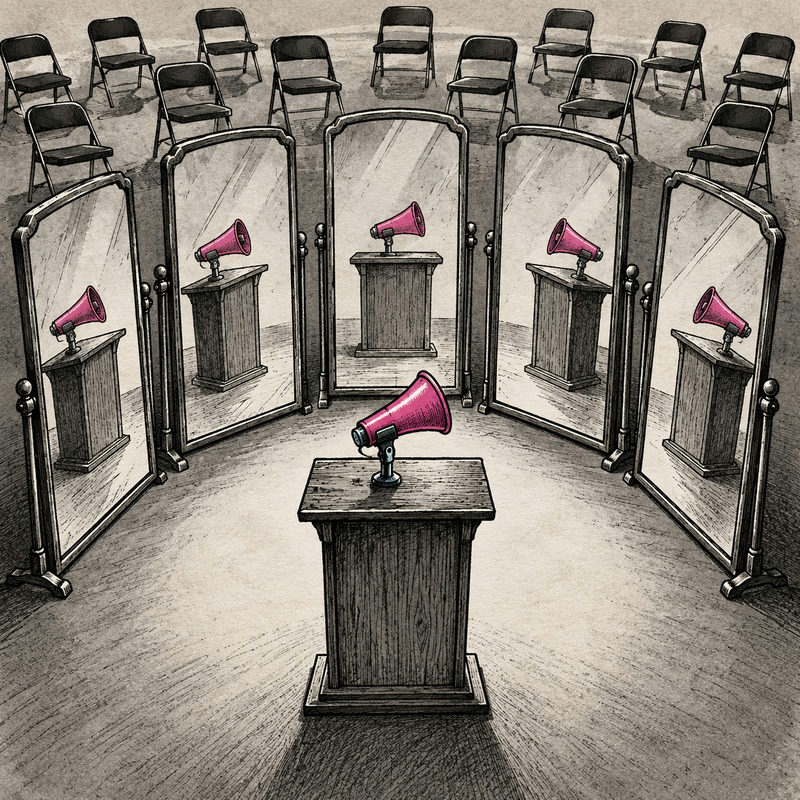
Donald Trump has diagnosed the Republican Party’s difficult midterm environment and prescribed more Donald Trump. There may be side effects, but the patient has been instructed to applaud through them.
The Associated Press reports that Trump is closing the campaign with a rally blitz built around himself, largely visiting friendly territory and conservative parts of battleground states. He asks supporters to imagine he is on the ballot. A congressional election offers hundreds of actual candidates, but apparently they are supporting actors in a production about a man who already has the job.
There is a strategy here, beyond the obvious pleasure of being cheered. Enthusiastic supporters can turn out, volunteer and encourage other Republicans to vote. Images of packed rallies can reach people outside the room. The White House calls Trump the party’s strongest messenger and motivator. A loyal base is a real political asset, not an imaginary one.
The problem is that a rally is a very expensive way to learn that people who attend Trump rallies like Trump. You could get that result with a clipboard near the parking lot.
AP cites a late-September AP-NORC survey in which just 17 percent of US adults approved of Trump’s handling of the cost of living. That is a measure of one issue among adults, not a prediction of next week’s vote. Still, if your political difficulty involves household bills, another opportunity to watch the president enjoy himself does not necessarily answer the question.
Make powerful people uncomfortable.
Subscribe to Democrawonk.
The campaign is trying to turn affection into turnout while avoiding the backlash that can accompany a president whose appeal is much narrower outside his own party. Those goals can collide. The television audience sees the cheers, but it also sees the person it already has an opinion about. Broadcast equipment does not come with a filter that converts disapproval into applause.
AP describes a broader effort to make the midterms about Trump, including a party convention saturated with his image. The branding department has certainly met its deliverables. Whether an undecided voter wanted another portrait of the president is a separate research question.
Democrats quoted in the report welcome his appearances. They have their own partisan reasons to sound pleased, and their confidence does not count as election returns. Nor does a crowded arena. Neither campaign gets to submit its favorite room as the national electorate.
What matters is whether Republicans can persuade enough people who are not already wearing the merchandise, while getting their existing voters to show up. That is harder than filling a rally, because the skeptical audience is allowed to change the channel.
Trump can ask supporters to close their eyes and imagine him on the ballot. The party’s more pressing challenge is persuading everyone else to open their eyes and like what they see.
Comments
Have something to say? Give this story a heckle.
Comment Rules
Argue the point. Add a joke. No threats, harassment, hate speech, spam, private personal information or unsupported accusations. First-time comments and comments with links are moderated. Full Comment Rules
Loading comments…
Questions or deletion requests? Contact Us. We retain comments and moderation records until removed. Only hashed email identifiers are stored for comment accounts.