
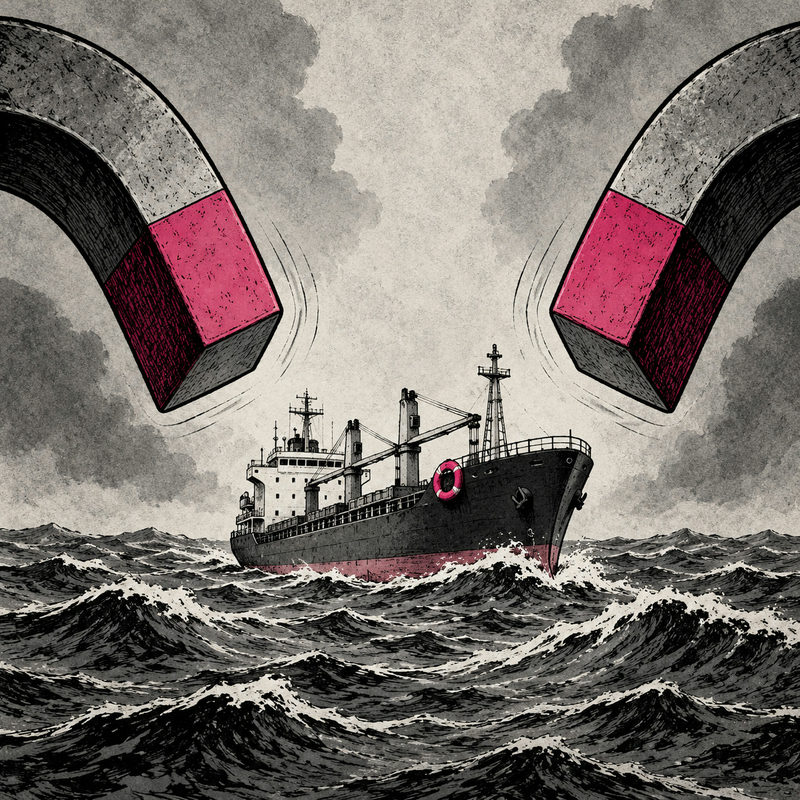
Turkey has delivered a message to Russia and Ukraine: commercial shipping is not an optional extra that can be removed from the Black Sea while everybody else finishes the war.
Reuters reports that defence minister Yasar Guler warned both countries Wednesday to halt attacks on civilian vessels and said Ankara reserved its legal rights concerning Turkish-flagged or Turkish-owned ships. Turkey is waiting for responses to a proposal intended to stop the attacks and protect grain shipments.
A warning is not an agreement, and an agreement would still need to work at sea. For now, the vessels have the familiar diplomatic protection of an important proposal awaiting a reply.
The immediate context includes a Greek container ship sailing under Liberia’s flag that was struck by three drones in Bulgaria’s exclusive economic zone. Reuters said the attacker was not known. That uncertainty belongs in the story; a ship’s location does not supply a perpetrator simply because a commentator has already chosen a side.
The flag, ownership and location also illustrate why commercial shipping refuses to stay inside the tidy national categories used in wartime arguments. A single vessel can connect several countries before anyone asks where its cargo is going. The consequences of an attack do not stop at the belligerents’ preferred map legend.
Russia launched its full-scale invasion of Ukraine in 2022. Turkey, a NATO member, has maintained relations with both Moscow and Kyiv and has repeatedly pressed them to stop attacks affecting commercial vessels. Calling for restraint by both sides does not require pretending the war has no aggressor. It recognises that civilian navigation has its own urgent protection problem.
The Daily Heckler
The best of Democrawonk.
No algorithm required.
Reuters describes an escalation since July: Russia intensified strikes on Ukraine’s main grain-export hubs, while Ukraine increased attacks on ships and infrastructure facilitating Russian oil and grain exports. That context explains the pressure on maritime routes without establishing who conducted the latest drone strike.
Guler spoke after meeting counterparts from Romania and Bulgaria, which already work with Turkey on demining in the Black Sea. They also discussed protection for critical infrastructure beneath the water. The sea is expected to accommodate trade, food shipments, communications and military activity, while mines continue to observe none of the relevant meeting agendas.
There is no elegant accounting trick that turns disrupted civilian shipping into a concern for somebody else. Crews bear the immediate danger. Commercial operators and the countries connected to their cargo have to deal with the uncertainty. Grain moving through this region is part of an international supply system, not stage dressing for a military announcement.
Turkey’s threat of legal action adds pressure, but the reporting does not say that Ankara has filed a case, secured a new ceasefire or won acceptance of its proposal. The next meaningful development would be an actual response and protection that can be observed beyond a conference room.
Until then, the most modest request in the room remains the most important: let a commercial vessel complete a commercial voyage. It is a remarkably low bar to keep finding underwater.
Comments
Have something to say? Give this story a heckle.
Comment Rules
Argue the point. Add a joke. No threats, harassment, hate speech, spam, private personal information or unsupported accusations. First-time comments and comments with links are moderated. Full Comment Rules
Loading comments…
Questions or deletion requests? Contact Us. We retain comments and moderation records until removed. Only hashed email identifiers are stored for comment accounts.