
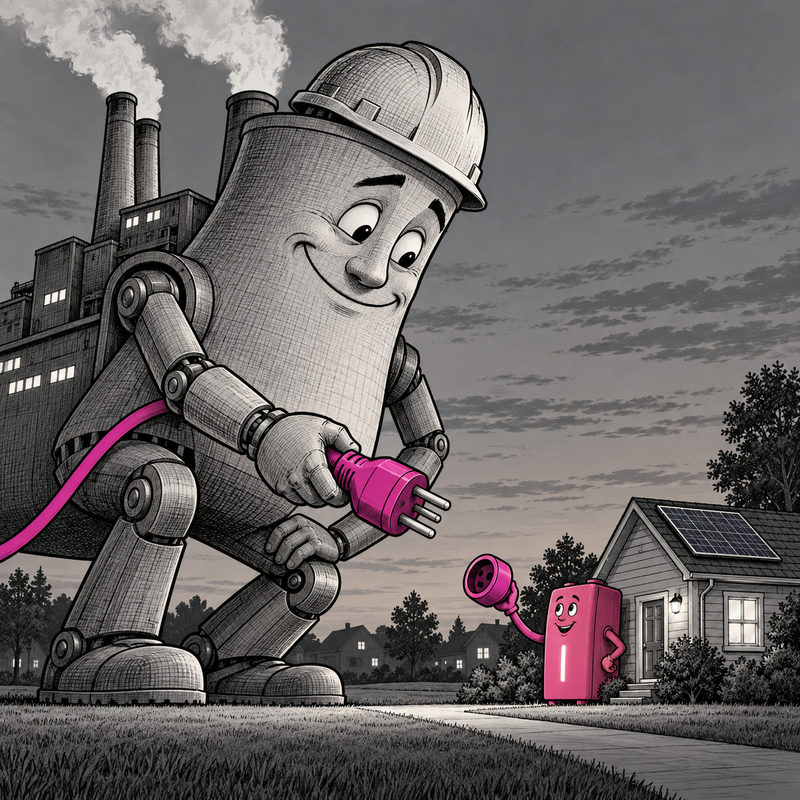
When the utility needs more power for everybody’s house, it could be worth asking everybody’s house.
Grist reports on October 22 that California home batteries helped meet peak demand during the October 6 heat wave. According to the nonprofit Common Charge, Tesla and Sunrun batteries supplied enough capacity during peak hours to power the homes of San Francisco and San Jose combined. That is a comparison of capacity, not a claim that those cities ran exclusively on their neighbors’ batteries.
Make powerful people uncomfortable.
Subscribe to Democrawonk.
Solar households could already sell excess daytime power. Storage changes the timing of the deal: keep electricity when the panels are producing it, then export surplus when demand is high. The household stops offering only what happens to be left over at lunchtime. It has something to sell when the buyer actually needs it.
Sunrun says dispatch can happen without homeowners noticing, while the system keeps a reserve of charge. The house can help the grid without emptying its own backup. Common Charge says drawing on stored local power can also save other ratepayers money compared with new gas plants or expensive imports.
That makes the ordinary customer a useful place to look before building more supply. The utility already has the address. It sends a bill there every month.
Comments
Have something to say? Give this story a heckle.
Comment Rules
Argue the point. Add a joke. No threats, harassment, hate speech, spam, private personal information or unsupported accusations. First-time comments and comments with links are moderated. Full Comment Rules
Loading comments…
Questions or deletion requests? Contact Us. We retain comments and moderation records until removed. Only hashed email identifiers are stored for comment accounts.