
Opinion & Satire
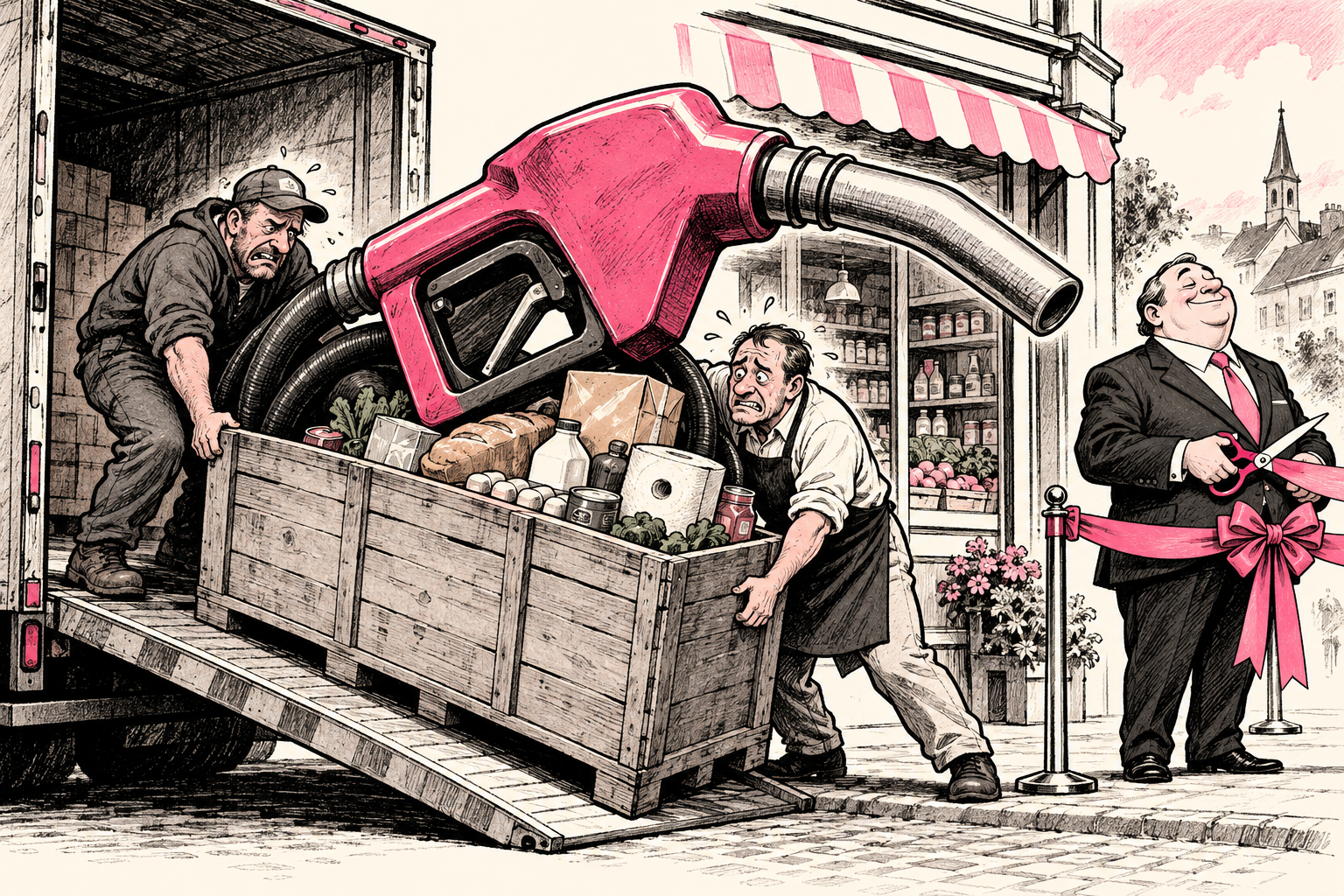
The supply chain has sent another reminder that gasoline does not stay politely inside the gas tank. Its costs can turn up at the loading dock, in a production budget and eventually in the argument about why everything is such a pain in the ass.
The Bureau of Labor Statistics reported October 15 that September's final-demand Producer Price Index rose 1.3% from August, seasonally adjusted, and 6.3% over the year, unadjusted. The monthly increase was the largest since March 2022. AP also reported the new figures.
These are producer prices, not a claim that every household's shopping bill rose 1.3% last month. Nor does the index guarantee an identical future increase in consumer prices.
Energy was a major driver. BLS says the producer-level gasoline index jumped 20.3%; that is not the same measurement as a motorist's change at the pump. Excluding food, energy and trade services, final-demand prices rose 0.5% for the month.
A separate Labor Department release this morning put initial unemployment-insurance claims at 199,000 for the week ending October 10, up 1,000 from a revised 198,000. Those figures measure new benefit claims, not total unemployment or new hiring.
The useful conclusion is narrower than either party's preferred banner: price pressure and the labor market are different questions. One data point does not get to answer both.
An Economy Can Hurt In More Than One Way
A person can keep a job and still find it harder to afford daily life. A business can retain its staff and still face a more expensive delivery schedule.
Neither situation requires the economy to have fallen off a cliff. Persistent pressure can do plenty of damage while the cliff remains entirely undisturbed.
That is why treating a relatively small weekly change in claims as proof that nobody should complain about prices would be absurd. It would be equally sloppy to treat a sharp producer-price increase as proof that mass layoffs have already arrived.
We should expect an administration to discuss the whole picture. Cherry-picking a reassuring indicator and making it supervise all the others is not economic management. It is giving the class hamster responsibility for the chemistry lab.
The distinction is especially important for workers and smaller firms with limited room to absorb a shock. A company with bargaining power may have options a neighborhood business lacks. A household without savings has fewer ways to wait for a promising forecast to become useful.
Those are reasons for targeted policy, not a license to invent a prediction of inevitable disaster.
Deal With The Exposure
The progressive response should begin by asking who bears the cost and what could reduce vulnerability.
Emergency assistance should reach people who need it. Longer-term investment should make businesses and households less exposed to recurring fuel shocks. Competition enforcement should examine actual misconduct where evidence supports it, rather than assume that a price index proves a particular firm's guilt.
We also need honest discussion of policy choices that can add costs or uncertainty. Presidents do not control every global price. They do control decisions for which they should provide an explanation.
Democrats should resist the temptation to respond with a spreadsheet-shaped victory dance of their own. A useful alternative explains what can change, what takes time and how progress will be measured. People deserve more than a new narrator for the same expensive experience.
Thursday's releases add real information: a sharp September rise in producer prices alongside a small weekly move in initial claims. They do not erase yesterday's consumer-price report, and they are not a rerun of it.
They show another part of the machinery.
If the people running the country want credit for keeping that machinery moving, they should be prepared to explain why it keeps arriving with a larger fuel surcharge.