
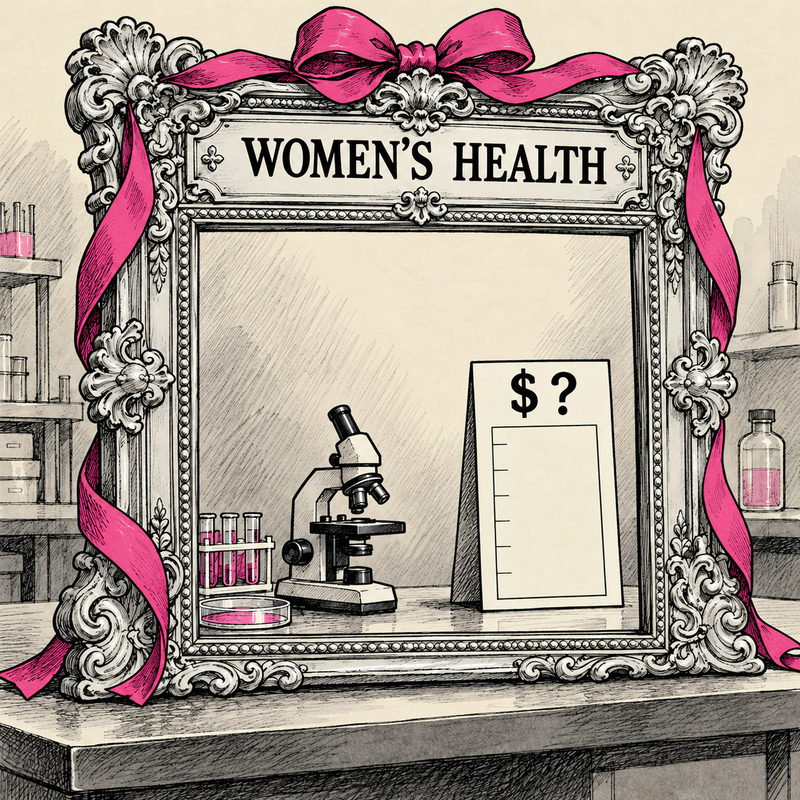
Donald Trump has discovered women's health. Someone should introduce him to the people who were researching it before the ceremony.
The Associated Press reports that his new executive order creates an NIH Women's Health Division and a White House task force. It promotes research into conditions including endometriosis, maternal health and menopause. This is worthwhile work. Women deserve considerably more attention from medical research than a periodic presidential discovery that they have organs.
The order contains no specific funding goals. There is, however, a new organizational arrangement and an extremely confident sense of arrival. Washington can always find enough resources to construct another capitalized noun.
Trump wondered aloud who would not have a women's health division. AP supplies an awkward detail: NIH has had an Office of Research on Women's Health since 1990. The new division is intended to improve coordination. Coordination may help; pretending the subject has just emerged from a previously sealed chamber of human knowledge is less useful.
An organizational chart is not a medical breakthrough, however magnificently you hold it up.
The new order also rescinds Biden's women's-health effort. The Trump administration argues its government-wide task force and planned use of AI go further. Perhaps they will. The appropriate test is what researchers can do and patients eventually receive, not whether the initiative has successfully changed its political next of kin.
AP reports that the administration's broader research cuts have included studies focused on women. Last year it announced an early end to the Women's Health Initiative before reversing itself amid protest. There is a rather extravagant difference between supporting a field and requiring that field to survive periodic auditions for continued existence.
I welcome useful research regardless of whose signature appears beneath the announcement. That is precisely why I object to treating the signature as the useful research. The scientist still needs a functioning project after the television cameras have found something else to admire.
We have covered researchers leaving as funding and political conditions deteriorate. A new sign on an office does not summon their work back through sheer typographical authority. And making health needs less visible is no substitute for meeting them, however attractively the new structure is presented.
Give this effort stable resources and judge it against actual progress. If coordination improves, show how. If a project is cancelled, explain why. These are ordinary expectations for a government asking to be congratulated for taking science seriously. They should not require applause breaks.
The task force can have its meeting. The president can have his photograph. But the women waiting for better answers should get something that survives the end of the event. A diagnosis cannot be made by placing an executive order under a microscope, even if the signature is very large.
Comments
Have something to say? Give this story a heckle.
Comment Rules
Argue the point. Add a joke. No threats, harassment, hate speech, spam, private personal information or unsupported accusations. First-time comments and comments with links are moderated. Full Comment Rules
Loading comments…
Questions or deletion requests? Contact Us. We retain comments and moderation records until removed. Only hashed email identifiers are stored for comment accounts.