
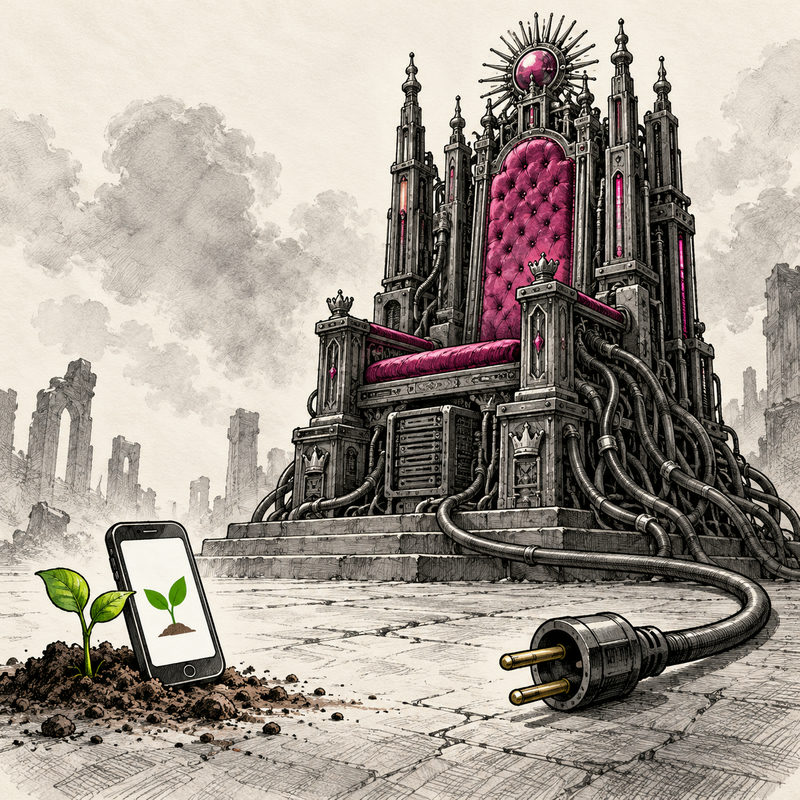
An AI system that helps with a specific problem in the language somebody speaks is a better development pitch than a gigantic machine promising to become everybody's future employer, doctor and mildly unsettling friend.
The World Bank is advocating smaller, specialized models that can run on phones with limited connectivity. The Guardian's report describes systems trained on narrower datasets for particular jobs. This is encouraging. A tool has been spotted in the wild attempting to be a tool. Please keep the futurists back; we don't want to frighten it.
Start with the example the bank's Paschal Donohoe gives: Indian farmers need soil analysis in their own languages, and there aren't enough agricultural experts to serve every small farm. The proposed mechanism follows the need. A limited task. Relevant information. A device people can use. An answer they can understand. None of those steps requires the app to express a profound longing to be human.
It is a proposal for expanding access, not proof that every model will deliver accurate advice. Narrower does not mean infallible. Putting a bad answer in the correct language makes it easier to act on, which is a fairly obvious reason to care whether the answer is any good. The smallness of the software is not an exemption from scrutiny.
But shrinking the task can make the prerequisites visible. The phone needs power. The system needs usable information. People need the skills and confidence to use it. There has to be protection against abuse. At this point the technological revolution encounters its most formidable adversary: the list of things required for the technology to function.
The Guardian cites the World Bank's finding that almost a third of rural schools in sub-Saharan Africa lacked electricity, while more than two-thirds lacked a consistent internet connection. You cannot download your way around the first problem. An unplugged device does not become more democratic when someone describes its potential eloquently.
This is why a national AI announcement is not the same thing as available power, and why community benefit cannot be supplied by calling a datacenter beneficial. The dependency chain keeps operating even when the promotional language skips a link. Software depends on infrastructure. Access depends on cost and design. Useful access depends on the thing doing the job. The slides can move faster than that chain; the person using the phone cannot.
I like the ambition of making a modest system useful to someone excluded from the grand version. I like it considerably more than asking that person to applaud a larger model somewhere else. But the public investment and practical conditions are part of the technology story, not boring preliminary business to be handled offstage.
Build the small model. Test the answer. Make it work where it is meant to work. And when the launch presentation reaches the phrase universal access, keep one actual unplugged phone on the table. Let the most advanced person in the room demonstrate how the adjective charges it.
Comments
Have something to say? Give this story a heckle.
Comment Rules
Argue the point. Add a joke. No threats, harassment, hate speech, spam, private personal information or unsupported accusations. First-time comments and comments with links are moderated. Full Comment Rules
Loading comments…
Questions or deletion requests? Contact Us. We retain comments and moderation records until removed. Only hashed email identifiers are stored for comment accounts.