
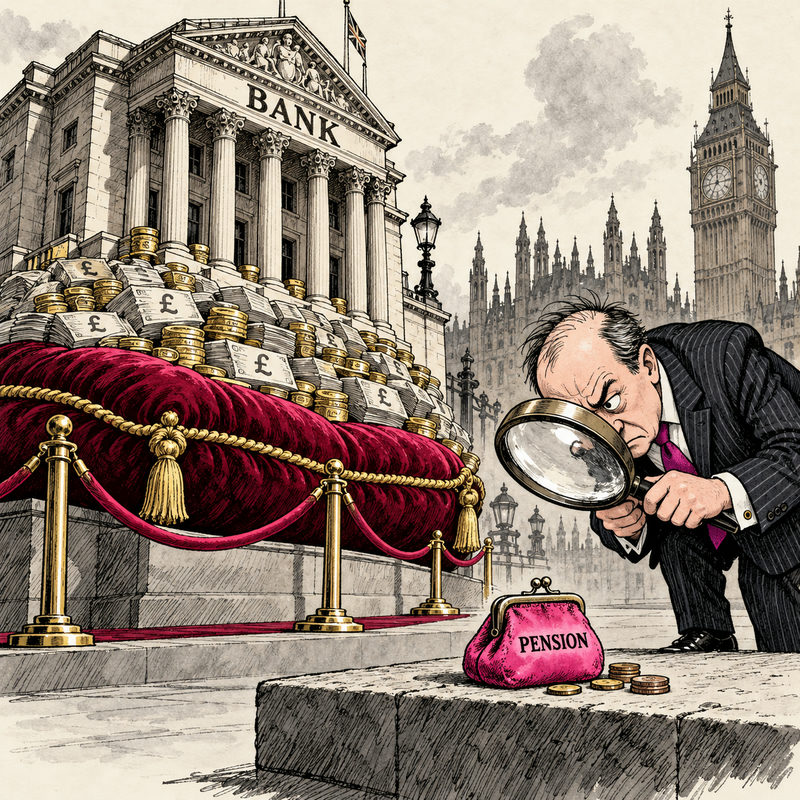
Britain has discovered a group whose finances require exceptional tenderness: banks. According to the Guardian, HSBC, NatWest, Barclays and Lloyds reported combined first-half profits of £29.2bn and pledged £13.7bn to shareholders through dividends and buybacks. The government is considering higher bank taxes. Any plea of hardship will have to squeeze past the queue for shareholder payouts.
The IMF has urged chancellor John Healey to seek savings in pensions and welfare instead. Its official Helge Berger pointed to taxes at roughly 40% of UK GDP and suggested reforming the pensions triple lock and targeting benefits more tightly. If additional revenue is needed, he suggested property taxes or VAT. The menu includes pensions, benefits, property and purchases. Bank taxes have been sent back to the kitchen.
Labour has already said it will reform the triple lock. The bank-tax details remain unsettled, but the industry has prepared a remarkably precise account of its prospective suffering. Research commissioned by banking lobby group UK Finance projects that restoring the bank surcharge from 3% to 8% would leave annual GDP £1.2bn lower in real terms and lending £10.4bn lower in 2029–30 than if the rate stayed at 3%. These are forecasts, not damage already sustained. Banks can get a hearing for hardship that hasn’t happened yet. Benefit claimants might consider bringing an economist instead of a bank statement.
There is also a number for the other side of the ledger. The TUC estimates, using HMRC figures, that the surcharge cut has cost the Treasury £6bn in forgone receipts over three years. That estimate describes money the Treasury did not collect, rather than a bill anyone sent the banks. A cheque would at least have required someone to sign it.
Former banker Philip Augar argues that a moderate tax increase could raise £2bn to £3bn a year. He credits both good management and favourable economic conditions for the banks’ strong results, and points to the taxpayer bailouts some received in 2008. Banking risk has an unusual seating plan: in a crisis, there’s room for the entire public; during the boom, sorry, shareholders only.
Some banks warn that higher taxes could drive investment and jobs elsewhere. JPMorgan boss Jamie Dimon said in May that he could scrap plans for a £3bn London headquarters if Britain became hostile to banks. Augar argues that banks frequently threaten to leave and rarely do. A headquarters still only planned has one advantage over an actual office: it can threaten to leave Britain before it arrives.
Pensions and benefits have the disadvantage of being attached to people rather than proposed developments. The triple lock has no £3bn headquarters it can threaten not to build.
Comments
Have something to say? Give this story a heckle.
Comment Rules
Argue the point. Add a joke. No threats, harassment, hate speech, spam, private personal information or unsupported accusations. First-time comments and comments with links are moderated. Full Comment Rules
Loading comments…
Questions or deletion requests? Contact Us. We retain comments and moderation records until removed. Only hashed email identifiers are stored for comment accounts.