
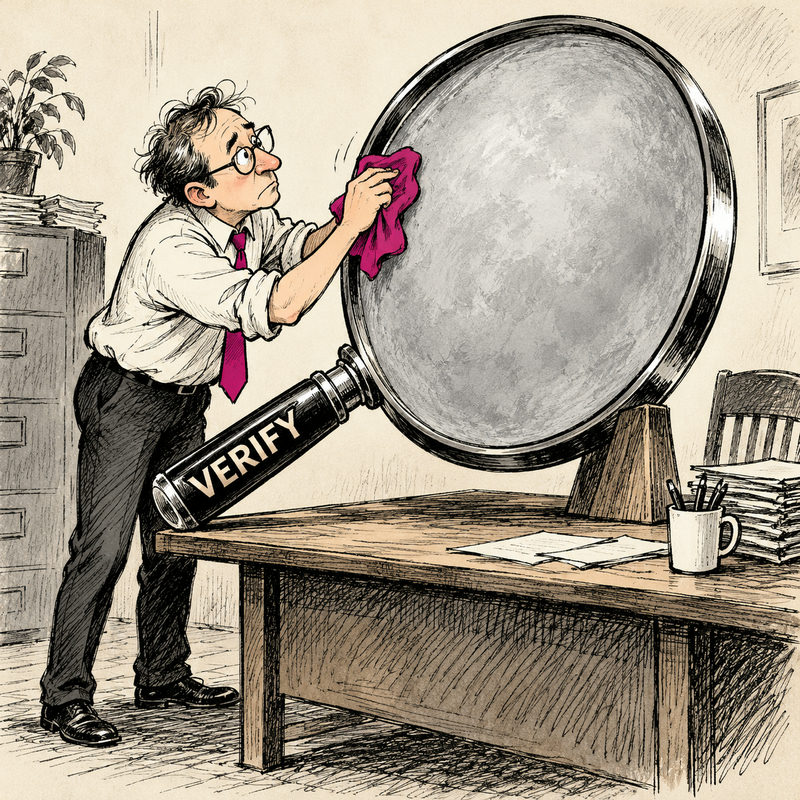
The BBC should be able to explain who helps check its facts without making the explanation sound like another fact in need of checking.
I want public-service journalism to survive. This means I would prefer its defense to involve something sturdier than an institution announcing how seriously it takes the thing people are worried about. Everybody takes everything seriously. It costs nothing and fits beautifully in a statement.
In the BBC's account of its own review, it is pausing a scheme that seconds government statisticians to BBC News. The scheme has offered placements of up to two civil servants for six months, working for the head of statistics. Those currently seconded won't participate in publishing news or content during the review.
This followed a Telegraph report questioning whether civil servants had been doing editorial work. The BBC says journalists and editors make all editorial decisions. It also describes a distinction between statisticians explaining data in writing that can be incorporated into stories and actually writing the copy.
Fine. Show us where the distinction sits. A reader should not need a postgraduate seminar in the metaphysics of a sentence to understand who contributed to it.
There are perfectly legitimate reasons to want a statistician near political reporting. Numbers can be abused, and some politicians appear to regard a percentage as a small decorative flag they can plant wherever they like. Expertise is useful. Civil servants are not automatically party operatives; these statisticians also have a code requiring objective use of data and prohibiting political misrepresentation.
None of that makes institutional boundaries unnecessary. I lock my front door without first accusing the entire neighborhood of burglary.
My concern isn't that a government employee might understand a spreadsheet. It is that a broadcaster asking the public to trust its independence should make outside contributions and editorial control easy to understand before somebody goes looking for a scandal. Independence should be visible in the arrangements, not supplied afterward as an adjective.
And I am not prepared to leap from a secondment to “the government controls the news.” That's a considerable distance to travel on two statisticians. You would expect at least a larger minibus. The report establishes a pause, questions and the BBC's response, not a finding that ministers dictated coverage.
But defending the BBC shouldn't require treating every procedural question as a plot against civilization. Public institutions need defenders who can tolerate asking what happened. Otherwise we become the sort of loyalists who mistake checking the smoke alarm for disloyalty to the building.
Publish the review. Explain the work, supervision and limits in ordinary language. Make relevant contributions transparent, and show how editorial decisions stay independent. If the safeguards worked, demonstrate it. If the arrangement needs changing, change it.
I don't want a BBC without experts. I want one that remembers expertise and accountability are allowed in the same room.
The organization is called BBC Verify. “Take our word for it” is a spectacularly awkward special offer.
Related reading: The $10 Billion Lawsuit Has Entered Do-Not-Disturb Mode · White House Press Access Is Not A Customer Loyalty Program
Comments
Have something to say? Give this story a heckle.
Comment Rules
Argue the point. Add a joke. No threats, harassment, hate speech, spam, private personal information or unsupported accusations. First-time comments and comments with links are moderated. Full Comment Rules
Loading comments…
Questions or deletion requests? Contact Us. We retain comments and moderation records until removed. Only hashed email identifiers are stored for comment accounts.