
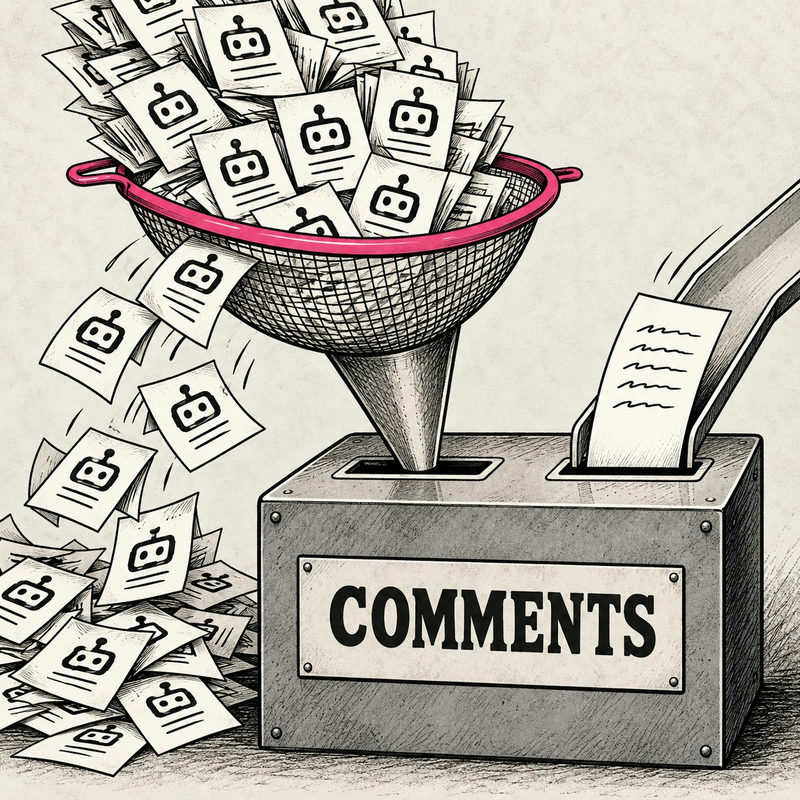
Britain asked the public about banning disposable vapes and received a very strong response from the duplication function.
New research reported by the Guardian says bots supplied 90,835 of the 118,756 submissions to a 2023 government consultation. That was 76 percent of the total. All but two of the automated responses opposed the disposable-vape ban through the same question. A remarkable grassroots movement, if the grass is a server rack.
The important next sentence is that the attempt failed. Officials identified and removed the automated submissions, and the ban subsequently became law. This is a newly disclosed account of interference in an earlier consultation, not evidence that bots have just overturned British health policy.
Nor does the reporting identify who organized the operation. An anti-smoking campaigner raised concerns about commercial interference, but concern is not proof of the culprit. The temptation to assign the whole thing to a convenient villain should meet the same filter as the fake responses: evidence first.
What the episode does demonstrate is a weakness in treating participation as a simple counting exercise. If every submission is assumed to represent an independent person, a machine can manufacture the appearance of a constituency. Democracy by spreadsheet becomes rather less impressive when somebody discovers the fill-down command.
The Daily Heckler: five or six selected stories.
Political satire for your morning inbox.
The department said many responses were duplicates, arriving rapidly from a small number of internet addresses. Those patterns helped expose this attempt. Researchers warn that later campaigns could be harder to identify. A system that catches an obvious swarm still needs to prepare for a swarm that has learned to vary its punctuation.
The answer cannot simply be to make public participation miserable. More barriers can exclude actual people with limited time, limited technical confidence or an ordinary dislike of completing a security obstacle course before expressing an opinion. A consultation should not require a citizen to become a cybersecurity intern.
That leaves governments with work that is less glamorous than announcing a giant response total: screening submissions, explaining how suspicious activity is assessed, and being transparent about what the responses can and cannot establish. A stack of comments is evidence to evaluate, not a substitute electorate that automatically wins by being taller.
There is also a useful success here. Officials say their controls worked, and the known fake responses did not determine the decision. The appropriate lesson is to strengthen that protection, not announce that every consultation is hopeless or that every inconvenient opinion must be artificial.
Real disagreement is allowed. Real people can oppose a ban. But if your public movement needs 90,835 automated submissions to introduce itself, perhaps stop describing it as the voice of the people and start paying its electricity bill.
Comments
Have something to say? Give this story a heckle.
Comment Rules
Argue the point. Add a joke. No threats, harassment, hate speech, spam, private personal information or unsupported accusations. First-time comments and comments with links are moderated. Full Comment Rules
Loading comments…
Questions or deletion requests? Contact Us. We retain comments and moderation records until removed. Only hashed email identifiers are stored for comment accounts.