
 By
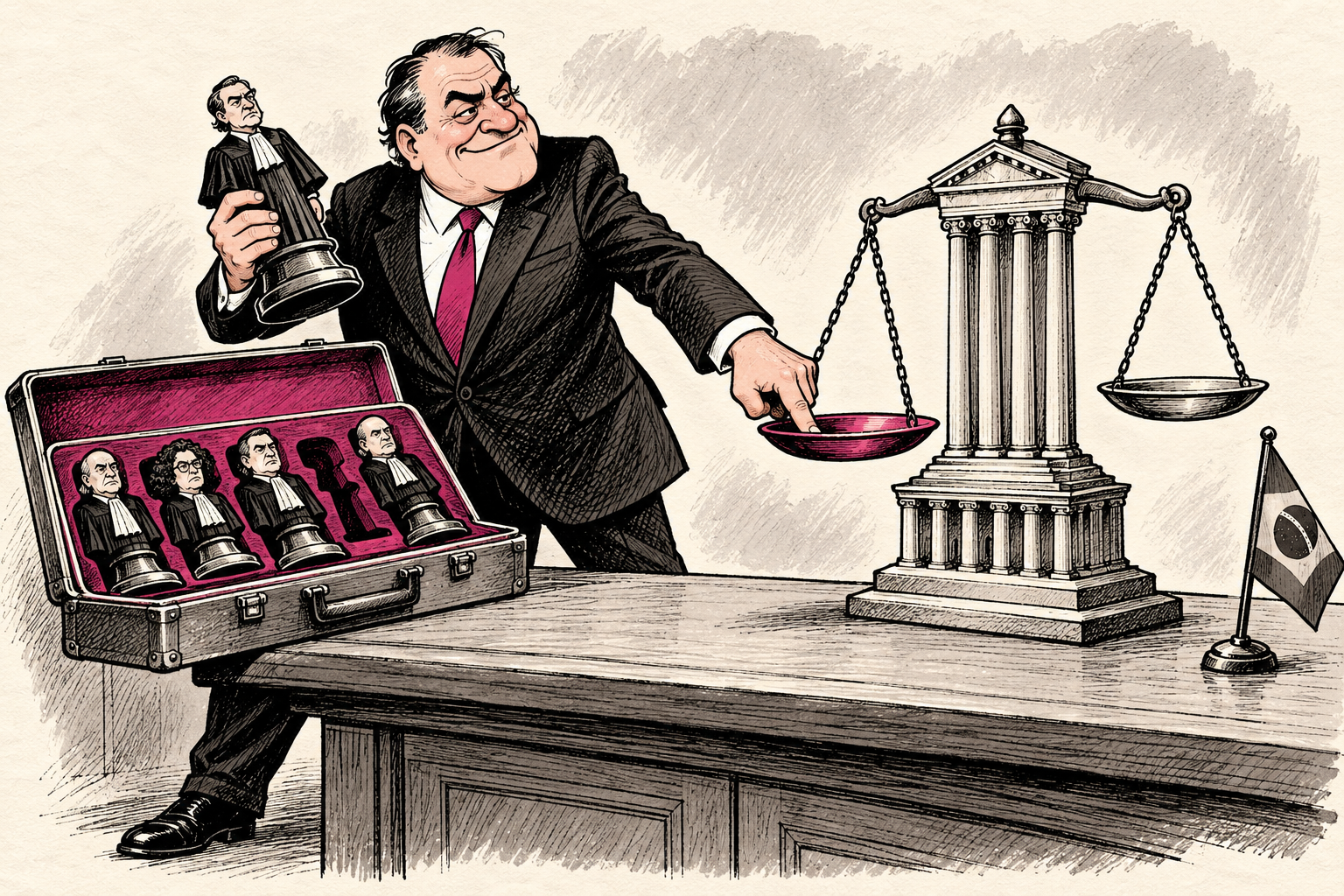
By Brazil’s next Congress is being greeted with a familiar promise of institutional reform: keep demanding accountability until the institution supplies someone more agreeable.
Bolsonaro allies want Justice Alexandre de Moraes removed. CNN Brasil reported on October 6 that the Liberal Party intended to pursue impeachment in 2027. The party’s political calculations are not a completed vote, an opened trial or a conviction. For now, this is an ambition with a parliamentary address, not an eviction notice.
The contradiction is worth keeping in focus. A court can need genuine scrutiny while the politicians demanding scrutiny also want a more accommodating court. Accountability and institutional capture do not wear different uniforms. Both arrive promising to restore balance, and only one bothers to explain where it plans to put the counterweight.
The Complaint Has Two Departments
The first department concerns the justice himself. Associated Press reported that the court postponed a decision on whether Moraes should face investigation in the Banco Master affair, possibly until mid-December. The shuttered bank’s connections to political and judicial figures have raised serious questions. Moraes denies wrongdoing and alleges political retaliation. An allegation is not a finding, and a powerful judge’s denial is not a completed investigation either.
The second department concerns who gets to shape the court next. The Guardian’s October 13 account connects the incoming conservative Congress to supporters’ demands for judicial impeachment and the possibility of future presidential appointments. CNN Brasil’s earlier report describes a party plan, not evidence that every senator in a conservative coalition has committed to remove a particular justice. The development here is the post-election prospect of a stronger impeachment push, not a newly opened trial.
That distinction is less thrilling than announcing that the votes are locked. It is also the distinction between political reporting and counting the wedding guests as signed divorce papers.
The Guardian identifies Moraes as the judge who oversaw Jair Bolsonaro’s coup case. The former president’s supporters have ample political reason to resent him. Resentment may explain a campaign. It cannot supply the evidence required to justify its desired conclusion.
Accountability Must Survive An Inconvenient Answer
AP reports a postponed court decision on investigation; CNN reports a party’s prospective impeachment plan. Neither report establishes an opened Senate trial. The political contradiction is the preference for a personnel outcome before either process supplies a finding. An ordinary inquiry asks what happened. This variety arrives with an answer to who should leave. The evidence has not finished speaking, but the seating plan would appreciate an early decision.
That is the danger in treating removal as the proof of reform. A court that mishandles conflicts of interest needs transparent rules and credible investigation. A political movement that dislikes an adverse judgment needs a lawful appeal. Neither problem is automatically solved by arranging more favorable personalities around the same table.
Nor should concern about political retaliation make scrutiny optional. Judges exercise public power. Their relationships and decisions deserve examination. Protecting judicial independence cannot mean making the judiciary the only institution permitted to mark its own homework in permanent ink.
The test is whether the process can tolerate a result inconvenient to its sponsors. Would an investigation establishing no wrongdoing be accepted? Would substantiated misconduct by a friend receive the same attention? Those are not demands for a ceremonial both-sides paragraph. They distinguish a rule from a targeting preference.
Political ambitions can change, alliances can fracture and an impeachment proposal can stall. The public deserves those uncertainties, not a forecast dressed as a completed constitutional operation. A proposed personnel change does not acquire the force of a verdict because its supporters have ordered the new nameplates.
The promise is to restore institutional balance. The catch is that some of the people offering the service also want to choose what the balance measures. Before approving the repair, Brazilians might reasonably ask whether the technician intends to fix the scales or simply move his thumb.