
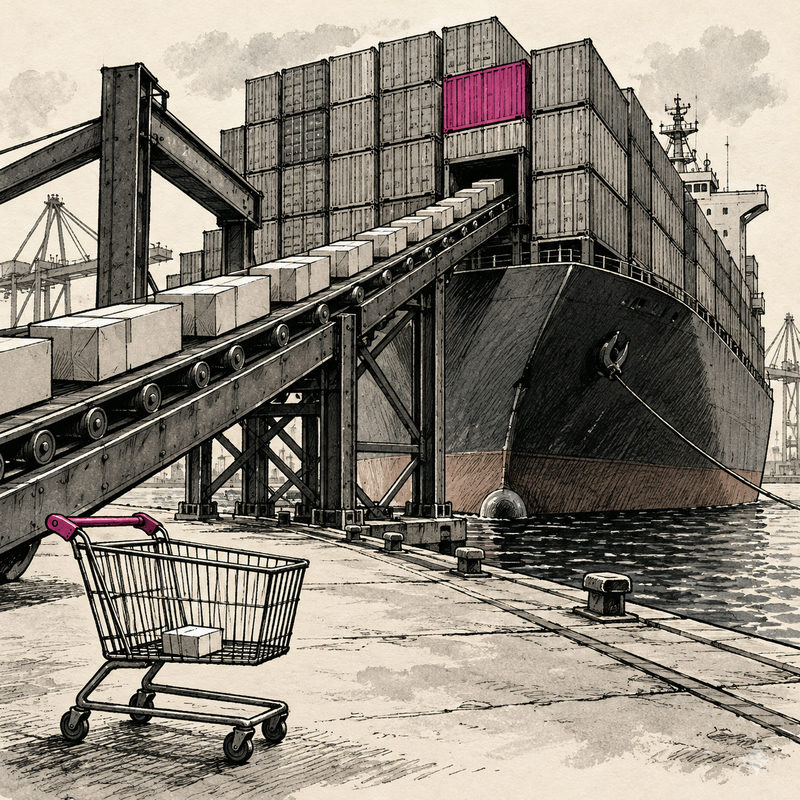
The Chinese consumer has become an awkward obstacle to the Chinese economy: expected to make things competitively, then buy things enthusiastically, preferably without making a fuss about the money required for either activity.
I am on the consumer's side. People are not defective economic components because they hesitate to spend money they may need later. If your growth model requires households to feel richer than they are, the households are not the part that needs repairing.
Reuters reports 4.5% third-quarter growth in China, supported by booming exports, while domestic spending remains weak. September industrial output rose 5.5%; retail sales rose 1.1%. The property downturn has damaged household wealth. Beijing has offered support, but economists say it remains tilted toward production.
Those are real industrial achievements. They are also a strange basis for asking ordinary people why they aren't having a better time. Producing an enormous quantity of stuff does not automatically make the person producing it comfortable. Otherwise warehouse workers would be our most luxurious citizens.
The contradiction is almost elegant. Keep costs down to sell more. Worry that people aren't buying enough. Examine the people for insufficient confidence. At some point somebody should check whether the cost being kept down has a name, an apartment and a salary.
You cannot build a consumer economy entirely out of inexpensive employees.
And confidence is not a substitute for security. An official can confidently predict a bright future without risking the household's emergency savings. The household has to remain alive in the less inspiring period before the forecast comes true. That makes it rather more interested in dependable income than in participating in the national mood.
This is not uniquely Chinese nonsense. The argument over growth figures that don't settle who benefits raises the same question elsewhere. Governments everywhere enjoy a large number they can stand beside. A family enjoying a dependable standard of living is harder to fit on a presentation slide, especially if achieving it requires giving workers more bargaining power.
But China's export strength makes the domestic imbalance particularly revealing. A country can get very good at meeting demand abroad while leaving its own people anxious about making demands at home. That is not evidence the public needs a more stirring shopping campaign. It is evidence that national success and household security are different assignments.
My liberal objection is to treating better wages and stronger protections as costs to be minimized until officials urgently need someone to visit the mall. Workers cannot spend the portion of prosperity that management carefully prevented them from receiving. The arithmetic is disappointingly resistant to speeches.
Support households directly. Make it less financially terrifying to lose work or face a large essential expense. These aren't sentimental extras to consider after the economy is successful; they help determine what success means.
Exports can continue doing useful work. The people making them deserve a larger role than keeping production cheap and then accepting criticism for shopping cautiously. If the economy needs customers this badly, it could try paying its workers enough to become some.
Comments
Have something to say? Give this story a heckle.
Comment Rules
Argue the point. Add a joke. No threats, harassment, hate speech, spam, private personal information or unsupported accusations. First-time comments and comments with links are moderated. Full Comment Rules
Loading comments…
Questions or deletion requests? Contact Us. We retain comments and moderation records until removed. Only hashed email identifiers are stored for comment accounts.