
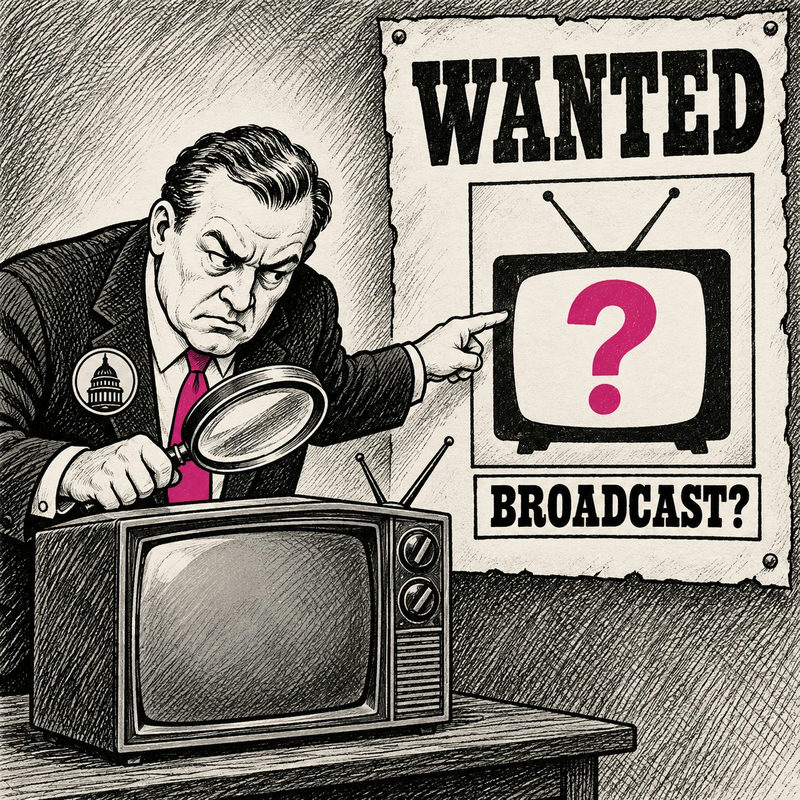
FCC Chair Brendan Carr says broadcasters need to exercise due diligence before airing fabricated polls. On Thursday, he also said he wasn't aware of a specific instance in which a broadcaster had aired one.
The warning has arrived. The example is running a little late.
There really have been fabricated surveys: Wedgewood Polling admitted making them up. Reporting invented numbers as real would be a problem. Carr says he isn't trying to punish polls that are unfavorable to a politician or interfere with good-faith reporting.
So we have an actual category of bad information, a regulator warning that airing it could violate broadcasters' obligations, and no particular broadcast he can identify. Imagine the wanted poster. Height: unknown. Weight: unknown. Last seen: potentially on television. If approached, do not offer the suspect a lower-third graphic.
Carr invited people to come forward if they had concerns about stations airing fabricated polls. Which is a useful way to collect information. It is also information you might want before the regulatory warning arrives wearing its serious shoes.
Could the accusation please catch up with the consequences? We're not asking for a documentary series. A channel. A date. Something more specific than pointing the remote at the room and telling everybody to behave.
The distinction matters because a bad poll, a poll that turns out wrong and a wholly invented poll are not interchangeable objects. Nor is an unfavorable result evidence that someone made it up. Your thermometer does not become a conspiracy because you dislike the fever.
The Daily Heckler: five or six selected stories.
Political satire for your morning inbox.
I would happily spend the rest of the afternoon on that distinction. Check the source. Examine the methods. Correct an error. Somewhere a perfectly ordinary editor could do perfectly ordinary editing, and nobody would need to look nervously at the broadcast license while changing a chart.
But this is happening while the president is publicly demanding punishment for journalists, including NBC's Kristen Welker. Carr hasn't punished her. He has separately ordered an early license review for Disney's eight company-owned ABC stations; he says he hasn't decided whether to seek revocations, and a court challenge is pending.
Those facts don't prove a secret plan to suppress polls. They do give the chair's unspecified warning a rather substantial carrying case.
Imagine your boss announcing that he supports honest feedback while his boss stands behind him asking which employee should be fired. Nobody has been fired for answering that question. Wonderful. Shall I put my criticism in the suggestion box, or would you prefer I climb in there myself and close the lid?
Democratic Commissioner Anna Gomez says the polling warnings could spook stations into censoring themselves and disputes that the cited rules authorize punishment for reporting polls. That's her criticism, not an established finding of Carr's intent.
But, Jesus Christ, a reassurance shouldn't need a lawyer standing beside it whispering that technically nothing has happened yet.
Investigate fabricated polls. Name the broadcast before making every television in the room feel like it's been called to the principal's office.
Comments
Have something to say? Give this story a heckle.
Comment Rules
Argue the point. Add a joke. No threats, harassment, hate speech, spam, private personal information or unsupported accusations. First-time comments and comments with links are moderated. Full Comment Rules
Loading comments…
Questions or deletion requests? Contact Us. We retain comments and moderation records until removed. Only hashed email identifiers are stored for comment accounts.