
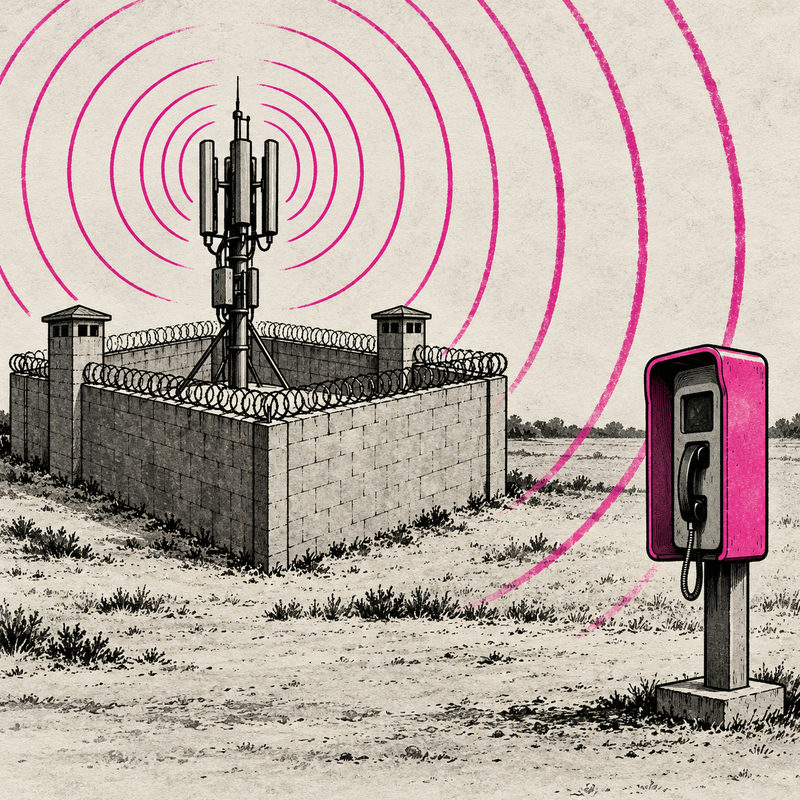
The FCC is moving toward a vote on jamming contraband cellphones in prisons. The difficult part remains persuading radio interference to check whether the call it is interrupting has the correct paperwork.
KARK reports that FCC chair Brendan Carr joined Arkansas attorney general Tim Griffin and Senator Tom Cotton on Wednesday to announce a vote expected in three weeks. A draft decision is due to be released in the coming days. Carr said correctional officials would be able to apply to the commission after the vote with plans for how their equipment would work.
The rule has not already passed. Nobody should read the announcement as evidence that a new nationwide jamming system is operating, or that the final safeguards are settled before the draft appears.
There is a genuine problem behind the proposal. Supporters say illicit phones allow prisoners to coordinate crimes and threaten people outside facilities. Carr said more than 500,000 inmates had access to contraband phones. That is his claim, not a count independently established by the local report.
The technical objection is also longstanding. In January, Ars Technica reported opposition from wireless carriers and industry groups to the earlier FCC proposal. CTIA warned that jamming blocks legitimate communications, including emergency calls, as well as unauthorised ones. AT&T challenged the premise that a jammer could distinguish the legal status of two devices using the same spectrum.
The Daily Heckler
The best of Democrawonk.
No algorithm required.
Those were comments on the earlier proposal, not reactions to a final rule released this week. They identify an issue that the forthcoming draft needs to answer. Changing the legal description of a communication does not make the radio wave read the regulation.
Carr had argued that jamming could be sufficiently targeted to avoid disrupting law enforcement or nearby residents. The disagreement therefore concerns both authority and engineering: what the FCC may permit, and whether the permitted system can remain within the promised boundaries.
It also concerns alternatives. CTIA promoted managed-access systems that can identify and block contraband devices while allowing approved communications. Prison phone companies supported jamming; those companies have a financial interest in increased use of official calling systems. Neither industry’s commercial position settles the technical question. It does make their interests worth keeping visible while the commission evaluates the claims.
The earlier FCC proposal acknowledged that jamming affects calls on the targeted frequencies, including 911. It also raised the possibility of a pilot to test interference risks. Wednesday’s announcement should make the next stage more specific, not allow those unresolved questions to disappear behind a promise to be tough on phones.
People outside a prison do not become part of its communications policy merely because they live near a wall. Staff and emergency users also need reliable connections. Protecting them is not an optional feature to be installed after the celebratory news conference.
The draft should show how the boundaries will be measured, tested and enforced. A signal cannot be ordered to stop at the fence because the press release says please.
Comments
Have something to say? Give this story a heckle.
Comment Rules
Argue the point. Add a joke. No threats, harassment, hate speech, spam, private personal information or unsupported accusations. First-time comments and comments with links are moderated. Full Comment Rules
Loading comments…
Questions or deletion requests? Contact Us. We retain comments and moderation records until removed. Only hashed email identifiers are stored for comment accounts.