
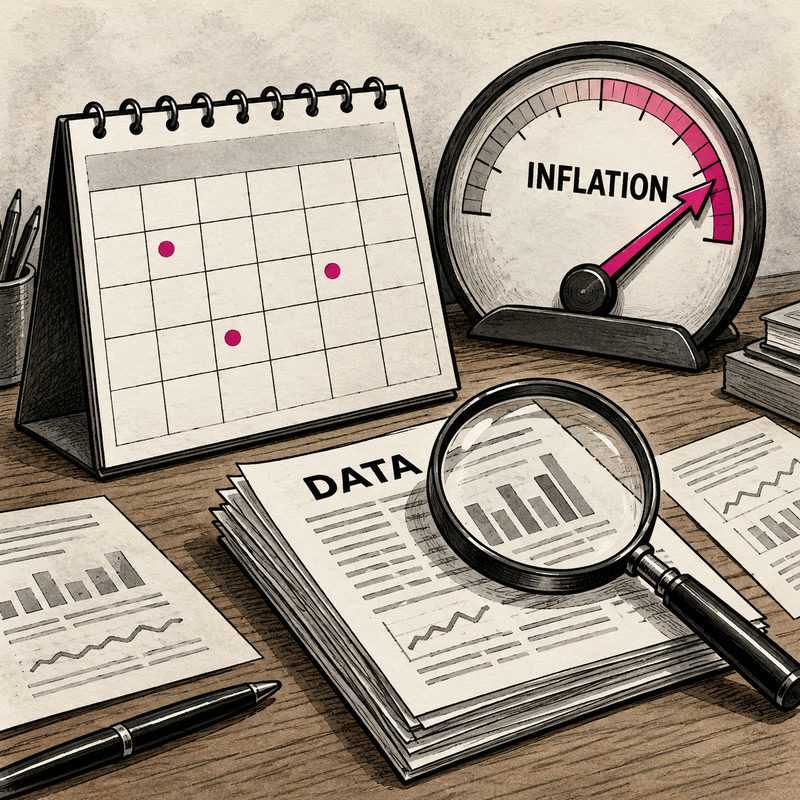
The Federal Reserve wants more information before changing interest rates. It also plans to hold fewer meetings. Finally, a government institution has found a reform every office worker can understand, although the grocery bill remains stubbornly unimpressed.
On Wednesday, the Fed held its benchmark rate steady. NBC News reports that Chair Kevin Warsh also announced a reduction in scheduled rate-setting meetings from eight this year to seven next year and six in 2028. He argues the change will improve the quality of decisions by making more room for deliberation.
Fewer meetings are not automatically worse decisions. Anyone who has attended a meeting to prepare for another meeting can supply supporting evidence. But this announcement arrives alongside a harder fact: inflation has risen again, and the central bank is waiting for more data before deciding what to do about it.
Annual consumer-price inflation reached 3.7 percent in September, up from 3.4 percent in August. That is the consumer-price measure, not the Fed’s preferred personal-consumption index, whose next release was still pending in the reporting. Neither should be turned into a claim that the price of everything rose by exactly the same amount.
Higher fuel costs are putting pressure on households and feeding into the wider economy. The Fed can influence borrowing and demand. It cannot summon cheaper oil by deleting a calendar invitation. That leaves officials choosing between risks rather than selecting a button marked Affordable Groceries.
There was disagreement over Wednesday’s choice. Governor Lisa Cook and Cleveland Fed president Beth Hammack wanted a rate increase. The previous meeting’s increase had been unanimous. Cook’s dissent was her first, NBC reports, while Trump is attempting to remove her from the central bank.
Make powerful people uncomfortable.
Subscribe to Democrawonk.
That does not establish a motive for her vote. It does make the president’s habit of treating the institution as a collection of personal allies and enemies look especially inadequate to the job. The policy dispute is over how to contain inflation, not who produces the most flattering attendance record.
Warsh said politics and the midterm elections played no role in the decision to hold rates. The timing alone does not prove interference, and inventing a secret electoral bargain would be easier than doing the analysis and considerably less useful.
The actual problem is difficult enough. Another increase can raise pressure on borrowers. Waiting can leave inflation expectations and price increases harder to contain. The Fed described economic activity as strong and domestic spending as resilient while acknowledging elevated inflation. Households can experience that resilience as continuing to buy necessities they would rather not have to finance.
A possible December increase is not a decision already taken. Future policy remains dependent on the evidence and the committee’s judgment. Borrowing a rate increase from a forecast would be an especially strange way to cover an institution still waiting for the evidence.
Warsh’s argument for fewer meetings deserves to be judged by what the extra room produces. Better deliberation would be valuable. A smaller calendar by itself is simply a smaller calendar.
Americans will still encounter prices between meetings. The checkout scanner has not agreed to move to six announcements a year.
Comments
Have something to say? Give this story a heckle.
Comment Rules
Argue the point. Add a joke. No threats, harassment, hate speech, spam, private personal information or unsupported accusations. First-time comments and comments with links are moderated. Full Comment Rules
Loading comments…
Questions or deletion requests? Contact Us. We retain comments and moderation records until removed. Only hashed email identifiers are stored for comment accounts.