
Florida officials failed to block ads about a previously expunged grand-jury report, according to CBS Miami.
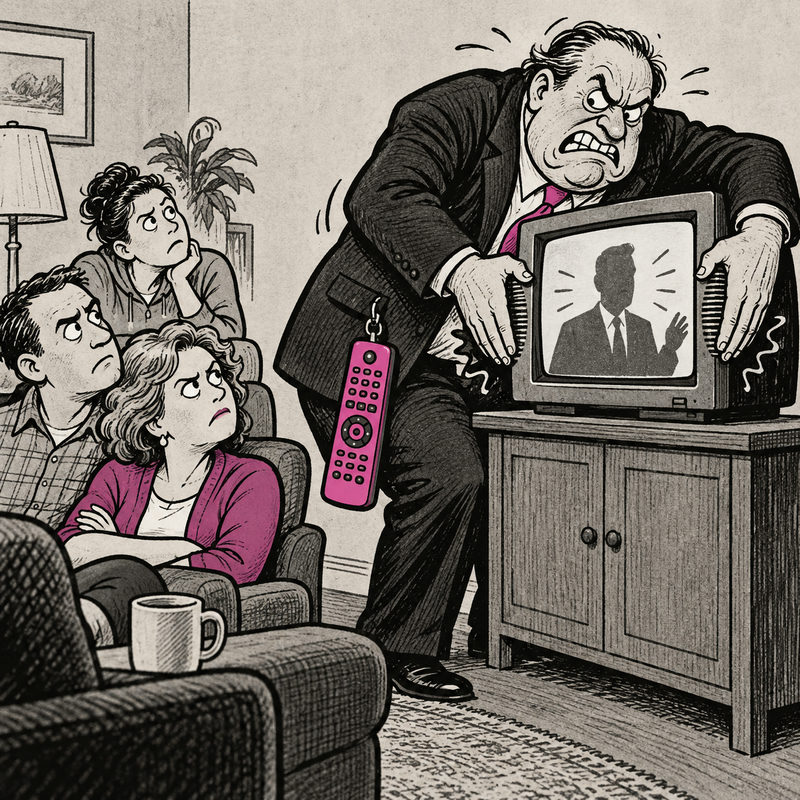
There are several ordinary ways to answer a political advertisement. You can challenge its accuracy. You can explain the missing context. You can make a better advertisement. The option where the other person’s television becomes quieter is certainly an ambitious addition to the communications strategy.
An expunged report is not a criminal conviction. A disputed allegation does not become true because someone put dramatic music underneath it. Accuracy and the legal status of the underlying material matter.
But there is also a difference between arguing that a message is wrong and trying to make the public’s exposure to it the problem that government must solve.
Picture the ideal debate under that arrangement. Each candidate gets a microphone, a timer and a small legal department authorized to remove the other microphone. The moderator spends the evening asking whether anyone can still hear the discussion.
Make powerful people uncomfortable.
Subscribe to Democrawonk.
We are apparently supposed to regard that as a vigorous exchange of ideas, provided the ideas have first cleared the vigorous person who dislikes them.
Public officials have considerable resources for presenting their side. They can hold press conferences. They can put documents in front of reporters. They can describe exactly what a court decided and what it did not decide. None of these tools requires the audience to confuse a politician’s preference with a channel setting.
The temptation to silence criticism is understandable in the same way that wanting the smoke alarm to stop is understandable. It is loud. It is inconvenient. It makes guests ask questions. Removing the battery may improve the dinner party without addressing the thing everyone ought to be discussing.
A democracy needs room to challenge both the original accusation and the official response. We should not have to choose between credulously believing an attack ad and applauding the attempt to turn it off.
There is a useful button on the remote for a message you dislike. It belongs to the viewer.
Source: CBS Miami, October 25.
Comments
Have something to say? Give this story a heckle.
Comment Rules
Argue the point. Add a joke. No threats, harassment, hate speech, spam, private personal information or unsupported accusations. First-time comments and comments with links are moderated. Full Comment Rules
Loading comments…
Questions or deletion requests? Contact Us. We retain comments and moderation records until removed. Only hashed email identifiers are stored for comment accounts.