
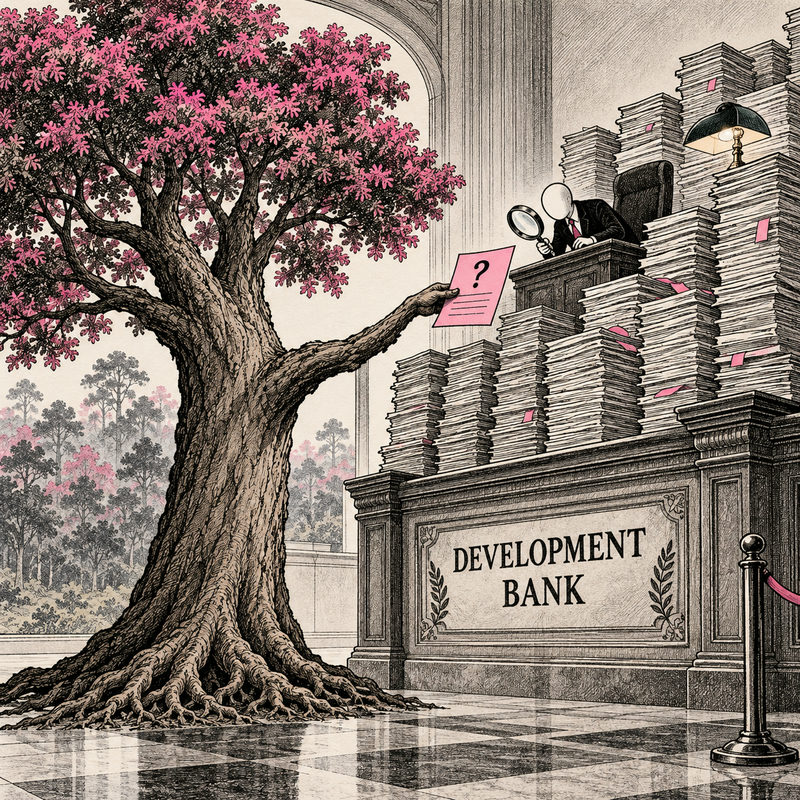
An Apinajé chief described land overlapping the community’s territory as already completely deforested. The chief’s name was withheld for security. Somewhere above that reality, a development-finance process was considering whether another $20 million should help the business expand. The people worried about the forest had to organize a separate process for getting the first process to notice it.
According to Inside Climate News, environmental and Indigenous advocates say the World Bank’s private lending arm has withdrawn its proposed loan to Brazilian feed producer Grupo Agronorte. The IFC removed the project from its disclosure portal but did not answer the outlet’s questions. The coalition calls the withdrawal a victory. On the evidence reported, it is a welcome reversal with less official explanation than the people who fought for it deserve.
More than 100 groups pressed for cancellation. That is a substantial amount of unpaid administrative labor to contribute to a bank with its own staff. Communities get to provide the local knowledge, assemble the objections, recruit the allies and explain why the development plan might be developing the wrong thing. Perhaps the loan proposal should have included their hours under essential project costs.
Make powerful people uncomfortable.
Subscribe to Democrawonk.
The company’s founder faces a Brazilian federal lawsuit alleging illegal deforestation near Indigenous land. Those allegations are not a verdict. They are, however, a reasonably good reason for a development institution to become curious before lending. Curiosity should be available in-house, without requiring a hundred organizations to deliver it in bulk.
The proposed mill was more than a thousand miles from Apinajé territory. Advocates argued that expanding feed production could increase pressure for soy in their region. This is how a neat project boundary can become a very convenient stopping point for an untidy question. The loan has an address. Its demand for raw material can travel.
We have written about a land-use plan whose paperwork stayed provisional while the trees did not. Here there is at least a chance to celebrate a financing decision stopping before the proposed money goes out. Nobody needs to pretend the reversal restores land already lost to understand why preventing more pressure matters.
A development bank ought to be able to recognize development’s human consequences without the people living with them having to become its temporary research department. In this case, the coalition did the work and reports a result worth keeping. The bank’s portal now has one fewer proposed loan. The community should not have needed a hundred co-signers to make that an option.
Comments
Have something to say? Give this story a heckle.
Comment Rules
Argue the point. Add a joke. No threats, harassment, hate speech, spam, private personal information or unsupported accusations. First-time comments and comments with links are moderated. Full Comment Rules
Loading comments…
Questions or deletion requests? Contact Us. We retain comments and moderation records until removed. Only hashed email identifiers are stored for comment accounts.