
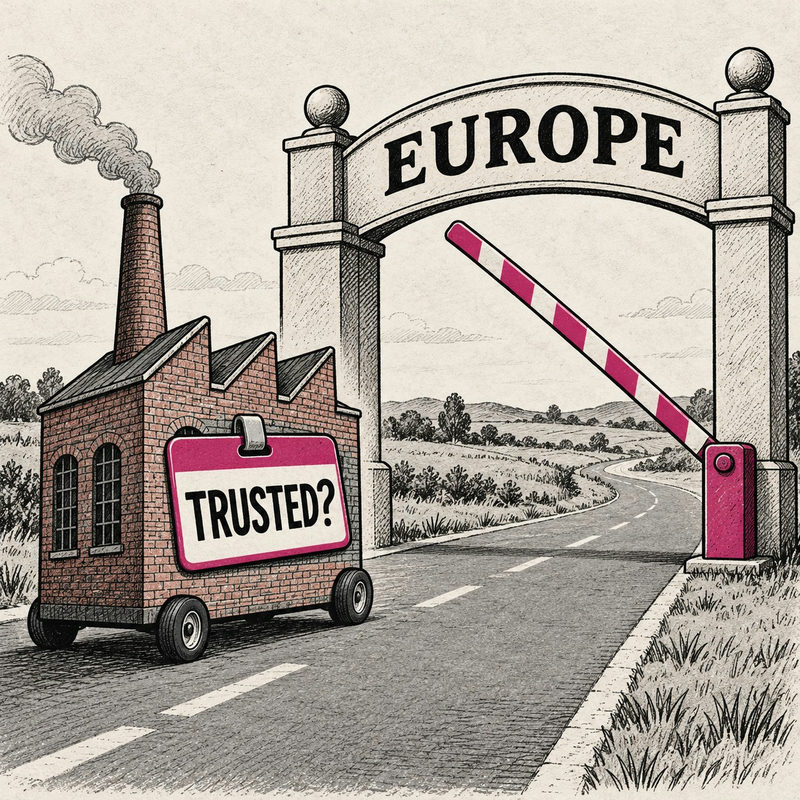
Britain remains in Europe. Whether its manufacturers will count as sufficiently European for proposed purchasing and subsidy rules is a different question, currently being handled by people with meetings.
Business minister Jonathan Reynolds told Sky News on Tuesday that Britain and the EU were finding a way through concerns about the bloc's proposed Made in Europe rules. Reuters reports that the plans would favour European-made goods in public procurement, auctions and subsidy schemes covering electric vehicles, batteries and other clean technologies.
This is not a ban on every British product entering the EU. Nor is it a completed agreement excluding Britain. It is a dispute over who gets favourable treatment when public purchasing and public support are on offer. That distinction is rather important if you manufacture cars instead of campaign slogans.
The EU's stated aim is to reduce reliance on cheap imports, particularly from China. The proposals create a particular risk for Britain's car industry, and businesses want clarity. Reynolds says a lot of work is under way. This is the diplomatic equivalent of hearing vigorous typing from behind the customer-service desk.
A potential compromise makes the tradeoff unusually easy to see. Reuters reported earlier this month that France and Germany were discussing allowing Britain to qualify as a trusted partner if it aligned with EU tariffs on China.
Make powerful people uncomfortable.
Subscribe to Democrawonk.
In other words, Britain could gain the advantages of belonging to the preferred trading circle by agreeing to part of the circle's policy. The independence comes with an excellent selection of alignment options.
There is nothing inherently absurd about negotiating that tradeoff. Governments decide which compromises are worth market access. The absurdity is pretending that freedom from shared rules means freedom from their consequences. A neighbouring market can write conditions for its own spending without consulting your preferred description of sovereignty.
For a manufacturer, the question is less theatrical. Would its products qualify? What would the tariff alignment require? When will the rules be settled? A factory cannot put “a lot of work is going on” into a production schedule and expect the supplier to deliver batteries on Thursday.
The proposals still require approval from EU governments and the European Parliament. The trusted-partner route is a possibility under discussion, not a concession Britain has already secured. Reynolds's optimism is news; it is not the final rulebook.
That leaves ministers with a perfectly ordinary political job: negotiate the terms, explain the costs and benefits, and tell businesses what applies. It would be a welcome change from selling autonomy as a service that includes every membership benefit after cancellation.
Britain has not moved. The eligibility criteria might.
Comments
Have something to say? Give this story a heckle.
Comment Rules
Argue the point. Add a joke. No threats, harassment, hate speech, spam, private personal information or unsupported accusations. First-time comments and comments with links are moderated. Full Comment Rules
Loading comments…
Questions or deletion requests? Contact Us. We retain comments and moderation records until removed. Only hashed email identifiers are stored for comment accounts.