
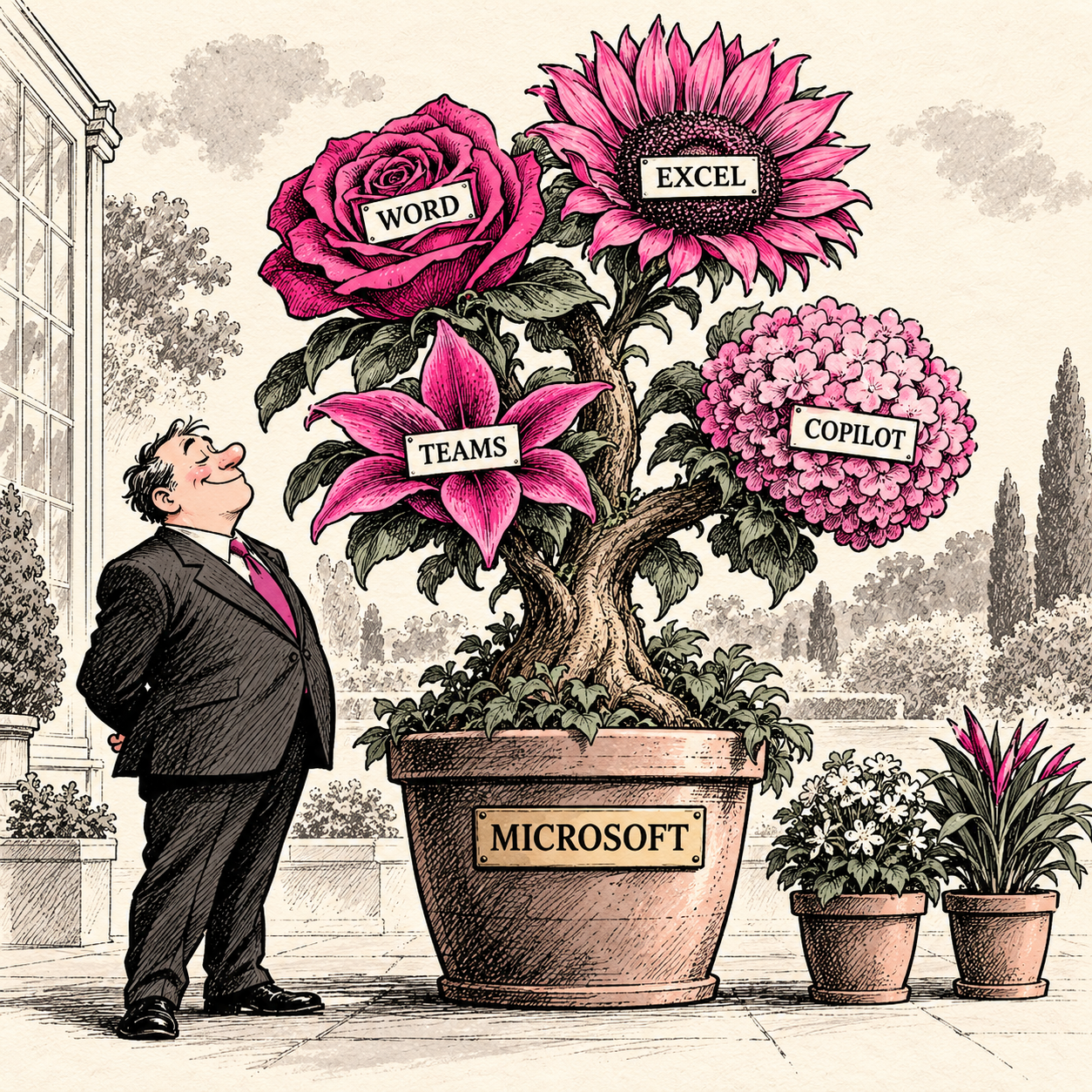
Welcome to a fictional nature documentary about the enterprise-software ecosystem. Here we observe Word, Excel, Teams and Copilot: different markings, different calls, and a remarkable tendency to send the bill to the same place. The habitat is diverse. The ownership has achieved focus.
Britain’s Competition and Markets Authority proposes designating Microsoft’s business-software ecosystem with strategic market status. It is consulting before a final decision. Its provisional findings identify switching barriers and advantages from commercial practices and integration that constrain rivals. One finding is explicit: “Microsoft’s strength in business software comes from the barriers customers face when switching”. No designation or new remedy has been imposed by this proposal. Our imaginary documentary has reached the observation stage, not the part where someone releases wolves.
The interesting distinction is between choosing a function and choosing a supplier. A workplace may have abundant ways to write, calculate, meet and generate things requiring an employee to check them. That does not tell us how easily it can change the company supplying the tools. Four different birds can still belong to the same very enterprising aviary.
A Flourishing Range Of Familiar Products
The CMA wants to examine whether customers can choose AI tools beyond Copilot, whether security-product bundling limits choice, and the effect of licensing practices on customers’ choice of cloud. These are areas for evidence and possible intervention, not a list of remedies already ordered. Even the regulator’s pruning shears are currently subject to consultation.
In our imaginary habitat, the newest shoot is AI. It grows beside the documents, meetings and email already established in the soil. A rival arrives with an attractive flower. Unfortunately, it would also like sunlight, root access and some reasonable way of being planted beside the existing shrub. This has made it a disruptive species in the most literal business sense: it wants a chance to grow.
Microsoft disputes the investigation’s premises. As Computer Weekly reports, the company argues the market is vigorously competitive, cites alternatives including Google Workspace, macOS, Linux, PostgreSQL and Okta, and says AI lowers barriers to building enterprise software. Those alternatives are real features of its argument, not imaginary animals conveniently omitted from our film.
But naming other species is not quite the same exercise as measuring the conditions in which they compete. A brochure can show every bird in the county. The buyer still needs to know whether changing nests requires moving the whole tree. The CMA’s proposed investigation of choice concerns those practical conditions; it has not concluded that rivals do not exist.
There has also been progress in a separate cloud-engagement process. The CMA says Microsoft and Amazon have taken steps including removing transfer fees for customers switching providers and improving interoperability, while further barriers remain. So this is not a landscape in which nothing ever changes. Sometimes a path widens. Naturally, the supplier would prefer a commemorative plaque before anyone measures the remaining fence.
Strategic market status would not itself establish wrongdoing. Any targeted intervention would require further legal tests. The proposal nevertheless makes a useful distinction visible: an ecosystem can contain many products without giving customers an equally abundant ability to combine suppliers or leave one.
Our fictional documentary ends on a magnificent display of branded foliage. The narrator lowers his voice, respecting the delicate commercial habitat.
A monoculture is just an ecosystem with excellent brand consistency.