
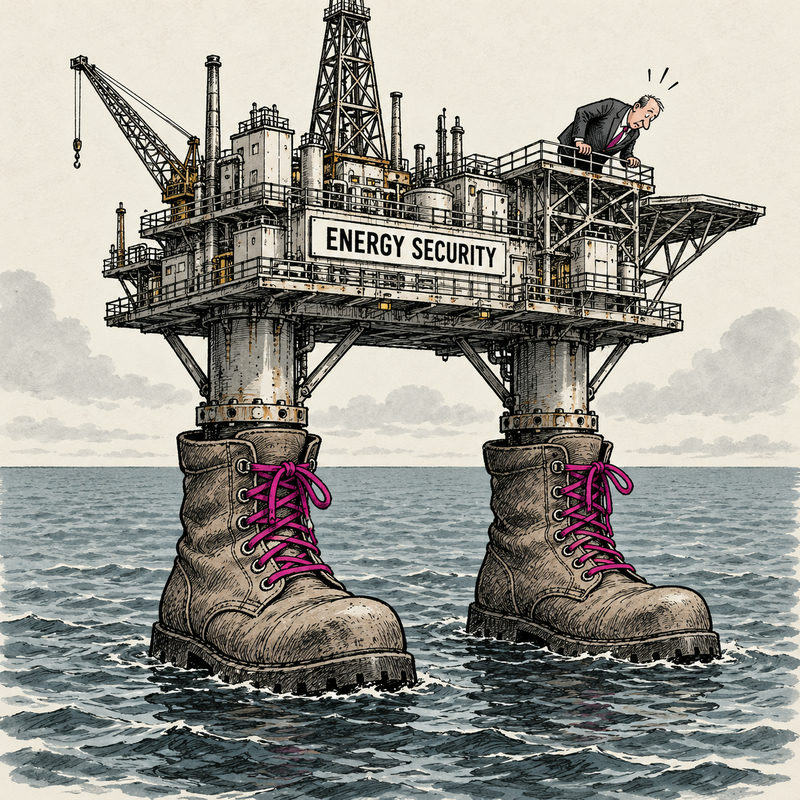
Offshore workers have found a reliable way to become central to Britain's energy debate: discuss withholding their labor. Until then, the national conversation can become so absorbed in taxes, investment and company decisions that you might imagine oil rises from the sea through executive confidence.
The Guardian reports that more than 160 workers at five Apache platforms plan a 24-hour strike over pay. Unite warns of possible disruption through the Forties pipeline system. Apache disputes the wider risk and says experienced contractors will maintain production. This is a threatened disruption with competing assessments, not proof that Britain's fuel supply has already stopped.
The company offers a 4% pay increase and points out that the workers are among the country's higher earners, with an offshore rota averaging 153 working days a year. That is its case. The number of days is worth understanding, but so is where those days occur. An offshore platform is not a pleasant part-time arrangement overlooking a water feature.
I support their right to bargain over what the work is worth. A wage dispute does not become illegitimate when the employees have managed to secure decent wages already. Otherwise collective bargaining would be allowed until it succeeded, at which point its continued use would demonstrate terrible manners.
The sector's companies have been emphatic about the costs government imposes on them. Apache blames the windfall-tax burden for its planned North Sea exit by the end of 2029. Firms can argue that taxes alter their willingness to invest. Workers can argue that pay alters their willingness to work. It would be refreshing to grant both sentences the same elementary acquaintance with economics.
Corporate withdrawal is strategic. Employee withdrawal is disruptive. The verbs describe closely related behavior; the adjectives appear to have different shareholders.
There are real differences, and negotiations must confront them. Nobody can settle the appropriate wage from a headline or guarantee a pipeline outcome from a union warning. Acas-mediated talks are scheduled. That is where the specific disagreements belong, with the offer and working arrangements examined rather than waved around as a verdict.
The costs of dependence on fossil fuels already reach well beyond the platform. A credible transition must take workers seriously too. People do not become disposable because a basin is aging, and energy security does not mean employers get unlimited access to somebody else's willingness to endure the job.
There is room to negotiate without pretending every strike warning is a national catastrophe or every corporate threat to leave is a dispassionate forecast. Both sides have an argument. Only one side routinely gets described as a regrettable obstacle to the smooth operation of the economy.
The workers are part of that operation. If their absence would be so alarming, their presence ought to be worth discussing before it becomes an emergency.
Comments
Have something to say? Give this story a heckle.
Comment Rules
Argue the point. Add a joke. No threats, harassment, hate speech, spam, private personal information or unsupported accusations. First-time comments and comments with links are moderated. Full Comment Rules
Loading comments…
Questions or deletion requests? Contact Us. We retain comments and moderation records until removed. Only hashed email identifiers are stored for comment accounts.