
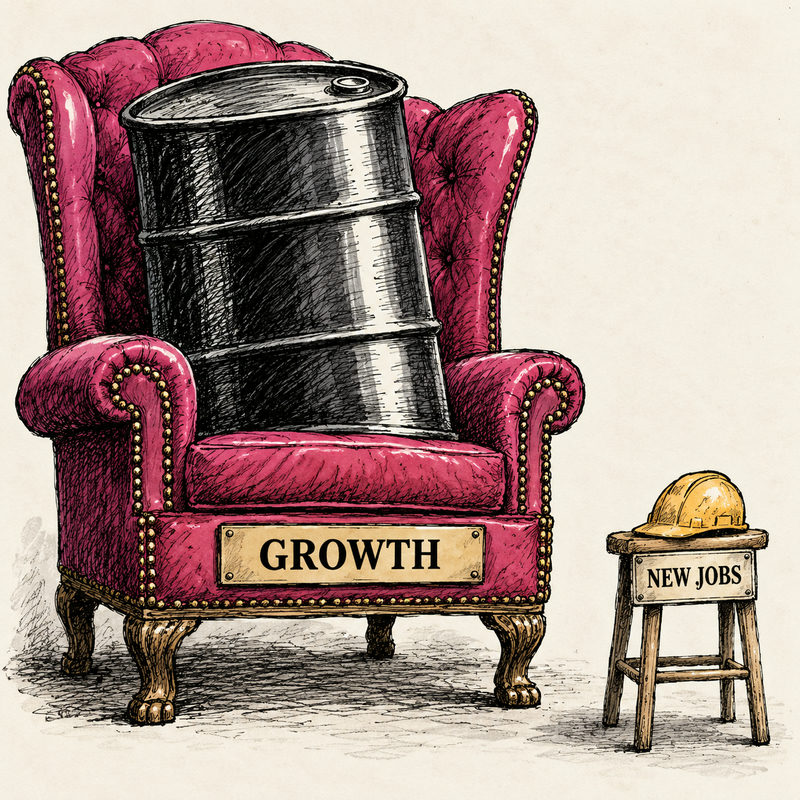
An oil boom that doesn't need many more oil workers is an excellent arrangement, provided you were fortunate enough to be born a shareholder.
For everyone born with the less versatile asset of needing a job, I'd suggest reading past the word “boom.”
Reuters reports that Mark Carney's proposed Pacific pipeline could help Canada sell more oil to Asia and depend less on the United States. That is a real strategic objective. It does not, however, establish that Fort McMurray's old employment bonanza is about to climb out of retirement wearing brand-new work boots.
Carney himself cautioned against calling it a boom. Good. Let us not supply a promise the prime minister declined to make. The industry may be growing; nostalgia still isn't a hiring department.
The uncomfortable arithmetic comes from Energy Safety Canada: its August forecast has oil sands production rising 6% by 2035 while employment falls 4%. A spokesperson told Reuters a new West Coast pipeline could reverse that job decline, but might not create many permanent jobs. Automation and efficiency mean more output with fewer people.
Wonderful. The workers have achieved the traditional reward for helping make an industry productive: becoming an expense it is increasingly proud of not having.
I don't object to a machine doing an unpleasant task. I object to the political habit of celebrating the machine's production numbers as if the person it replaced can eat them. Your mortgage lender is unlikely to accept a chart showing that somebody else's extraction process is going extremely well.
The report also supplies a magnificent testimonial from Jason Kenney, the former conservative Alberta premier who cut corporate taxes to encourage investment. He says companies prioritized shareholder returns over job growth, and he was frustrated.
Imagine that. You made the business case for giving businesses more money, and the businesses agreed with the part about more money. The job creation apparently required a separate invitation.
There could be thousands of jobs associated with the proposed projects, the Oil Sands Alliance says, including construction and supply-chain work. Those matter. Temporary work is real work. But temporary construction and permanent employment are different things, rather like a wedding reception and a marriage. A government should know which one it is advertising.
And none of this is a completed industrial revival. Reuters says companies haven't committed the C$100 billion in private investment needed for the pipeline's additional supply and the carbon-capture project Carney has made an approval condition. We are discussing an ambition with substantial financing still to find, not a shift schedule.
My preference is to negotiate for people with at least the enthusiasm lavished on barrels. Demand honest job projections. Make any public concessions depend on measurable public benefits. Invest in skills and industries that don't require a worker's household to wait for the next favorable oil price.
Canada can pursue export security without pretending corporate prosperity automatically arrives with a name badge for everyone else.
A barrel isn't a constituent, Mr. Prime Minister. Try remembering which one you were elected to represent.
Related reading: Your Drafty House Would Like to Meet This Very Impressive Oil Rig · The Free Market Has Reached The Terms And Conditions
Comments
Have something to say? Give this story a heckle.
Comment Rules
Argue the point. Add a joke. No threats, harassment, hate speech, spam, private personal information or unsupported accusations. First-time comments and comments with links are moderated. Full Comment Rules
Loading comments…
Questions or deletion requests? Contact Us. We retain comments and moderation records until removed. Only hashed email identifiers are stored for comment accounts.