
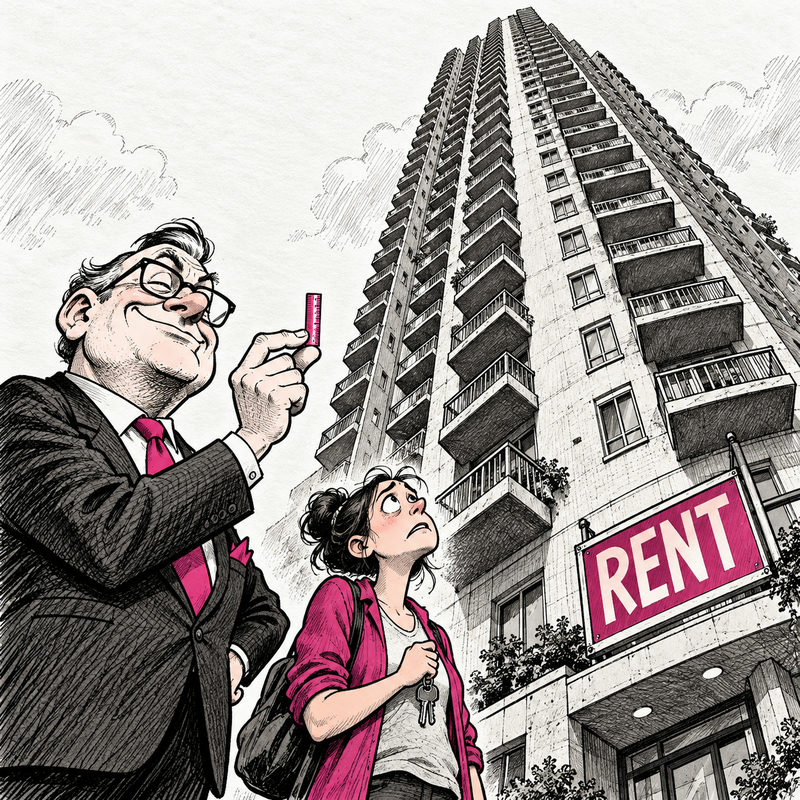
A poverty statistic that makes California look relatively comfortable needs to spend a few minutes looking for an apartment there.
Not renting one. Just looking. We don’t want to bankrupt the statistic.
Axios analyzed Census Bureau state estimates for 2023–2025 and found that California’s poverty rate was 10.7% under the traditional official measure but 17.8% under the broader Supplemental Poverty Measure. Louisiana’s figures were 19.6% and 19%, respectively.
Those are different ways of examining the same period, not evidence that millions of people suddenly became poorer between calculations. The broader measure accounts for taxes, benefits, unavoidable expenses and geographic differences in housing costs. Apparently a family’s financial situation becomes clearer when you acknowledge that it has to live somewhere.
My objection is to treating a reassuring number as permission to stop asking uncomfortable questions. A household does not become comfortable because its income clears a threshold that doesn’t change with local housing costs. The landlord remains distressingly uninterested in your strong showing against the national benchmark.
And no, this is not an invitation for Republicans to declare California a failed civilization while ignoring Louisiana. Both states remain near the top under the broader measure. This is a fairly poor foundation for a victory parade. The floats would have to pass the people your argument has just decided not to notice.
I’m a liberal. I want liberal governments to make it possible for ordinary people to live in the places they govern. That is a more useful achievement than explaining why their state looks better under the calculation that gives housing geography less attention.
If your preferred politics produces wonderful speeches about inclusion while people struggle to afford inclusion within commuting distance, something needs fixing besides the speech.
That means taking housing costs seriously even when building more homes annoys people who already own one. It means protecting tenants from displacement while creating more places for people to live. I refuse to accept a politics in which welcoming everybody is a deeply held value right up until somebody proposes somewhere for them to sleep.
The supplemental measure also counts benefits such as SNAP and housing assistance. Good. Public help is a resource, not a statistical impurity. If assistance keeps somebody out of poverty, that is the program doing its job—not cheating, not dependency sneaking into the arithmetic wearing a false mustache.
But benefits and unavoidable costs belong in the same picture. Celebrating income while ignoring what families must spend is like congratulating someone on reaching the top of an escalator while it’s moving down.
I don’t need one magic poverty number to defeat all the others. Census designed the supplemental measure as another lens, not a replacement. Use both. Then stop choosing the lens according to which one makes your party look less responsible for the view.
I want politicians judged on whether people can afford housing, medical care and the costs of working—not on whether they can find a flattering percentage to hold up at a press conference.
The poverty line is supposed to help us see hardship.
It should not double as a place for elected officials to hide.
Comments
Have something to say? Give this story a heckle.
Comment Rules
Argue the point. Add a joke. No threats, harassment, hate speech, spam, private personal information or unsupported accusations. First-time comments and comments with links are moderated. Full Comment Rules
Loading comments…
Questions or deletion requests? Contact Us. We retain comments and moderation records until removed. Only hashed email identifiers are stored for comment accounts.