
The Details
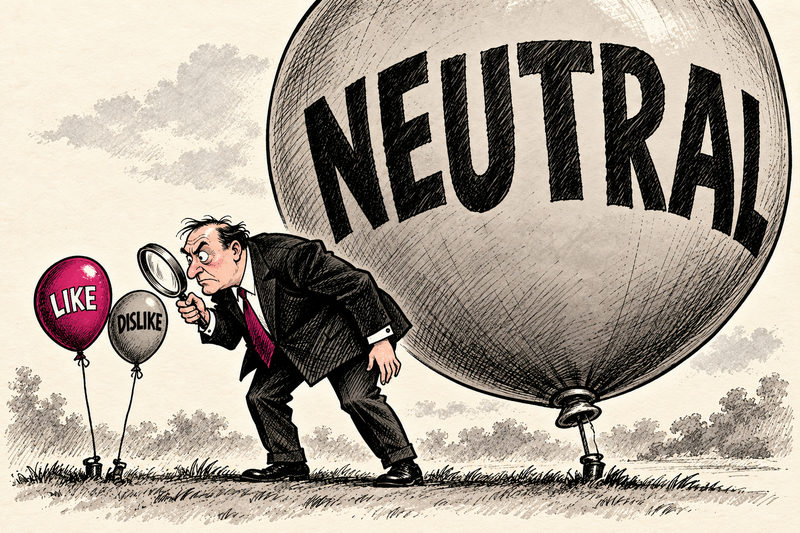
Axios reports an opening for the socialist left: 21% of Black Democrats and Democratic-leaning independents told Pew they like leaders who identify as democratic socialists, compared with 11% who dislike them. Then comes the number that should interrupt any premature victory speech: 65% are neutral. Angie Nixon won Florida’s Democratic Senate primary, and DSA-backed Donavan McKinney won in Detroit; former Rep. Cori Bush lost to Wesley Bell. Those are real openings and real limits. Read the favorable ratio, skip the largest group, and you have not found a coalition. You have found a convenient place to stop reading.
The Breakdown
- Pew asked about attitudes toward leaders, not votes for a candidate. Twenty-one to eleven looks commanding until 65% neutral walks in carrying most of the chairs. A campaign still has to give those respondents a reason to choose its candidate.
- Among Black Democratic-aligned respondents ages 18–49, 23% like democratic-socialist leaders; among those 50 and older, it is 20%. Three points are worth examining, not enough to turn a birthday into a political allegiance test. Before announcing a generational uprising, locate the other 77% of younger respondents.
- Nixon became the first DSA member to win a major-party statewide nomination, Axios reports. The former union organizer also fought voting-rights battles and opened a bookstore amid Florida’s book bans; her vote share rose in precincts with younger and larger Black populations. Apparently the shortcut to a breakthrough involved years of work and a candidate voters could recognize without checking the endorsement list.
- McKinney beat Rep. Shri Thanedar 51.9%–48.1% in Michigan’s 13th District. His deep Detroit roots, legislative record, labor support and local backing came with the victory. Crediting the label alone is like crediting a restaurant’s success to the sign while the kitchen has been feeding the neighborhood for years.
- A July poll put Bush ahead of Bell among voters under 35 and those 35–49. But only 19% of the poll’s Black likely-primary sample was under 50, and Bell ultimately beat Bush 59%–37%. Younger support cannot carry an election by itself when the turnout fantasy requires everyone else to disappear.
The Counter
- A supporter might point out that likes nearly double dislikes. Fair! That is an opening for persuasion, not an election return. Neutral respondents did not reject democratic-socialist leaders in that survey; they also did not promise to vote for the next candidate with the label.
- Perhaps the plan is to ride younger enthusiasm. Axios quotes New America’s Theodore Johnson calling younger Black voters central to an insurgent coalition but insufficient without broader support. If your turnout plan depends on quietly deleting older voters, you have not found a youth strategy. You have found the crop tool.
- Nixon and McKinney won, so why not use their campaigns as a national template? Use their organizing as a lesson. Treat their local records and alliances as detachable accessories, and the template becomes a candidate-shaped hole with a DSA sticker over it.
- Frustration with establishment Democrats might create an opening. Darius Jones of the National Black Empowerment Action Fund warns Axios it is not a wholesale DSA endorsement. A voter can demand faster results without agreeing that another organization has earned the keys; dissatisfaction is not a forwarding address.
- DSA says it wants a diverse, multiracial, multigenerational movement organized around Black workers, child care, housing and food security. Good: material concerns, not a request to admire a logo. But Howard University’s Marcus Board Jr. identifies connecting class politics to race as a hurdle. You cannot clear it by putting both words on one yard sign and calling the punctuation organizing.
The Hot Take
Nixon and McKinney did not win by mailing voters a favorable ratio. They brought records, relationships and labor support; strip those away and their campaigns become the political equivalent of selling someone a restaurant menu and insisting dinner has been handled. A liberal coalition that wants to grow should put local organizers behind affordable child care, housing and food-security plans, recruit candidates answerable to their communities, and show older as well as younger voters how those promises survive an election. It should connect economic policy to racial realities instead of asking voters to supply that connection themselves. That takes more work than celebrating two wins, which is precisely why those wins are worth studying. If the plan for persuading the 65% who are neutral is to display somebody else’s hard-earned victory, that is not organizing a movement. It is a fan club for other people’s door-knocking.
Comments
Have something to say? Give this story a heckle.
Comment Rules
Argue the point. Add a joke. No threats, harassment, hate speech, spam, private personal information or unsupported accusations. First-time comments and comments with links are moderated. Full Comment Rules
Loading comments…
Questions or deletion requests? Contact Us. We retain comments and moderation records until removed. Only hashed email identifiers are stored for comment accounts.