
Alex Pretti's parents went to a Minneapolis press conference on Tuesday asking for justice for their son. The government's response included an explanation of when, in the ordinary sequence of a case, family members might expect to hear from it.
There are moments when a procedural explanation clarifies a difficult situation. There are others when it arrives dressed as customer service and explains why nobody can connect you to accountability.
Reuters reports that Pretti, a 37-year-old intensive-care nurse and U.S. citizen, was killed by federal immigration agents in January while taking part in protests in Minneapolis. His parents criticised the administration for withholding evidence from local prosecutors investigating the shooting. Their loss is not an abstraction or a communications problem. A man died, and his family wants answers.
The Justice Department told Reuters that communications with families, when they occur, generally come at later stages such as indictment, trial or sentencing, rather than during an investigation. That is its stated practice. It does not answer the separate dispute over what investigators outside the federal government are being allowed to examine.
Hennepin County Attorney Mary Moriarty sued the administration in March for evidence concerning Pretti's killing, the fatal shooting of Renee Good and a nonfatal shooting. In July, she said the federal government was providing a large volume of material. Her office subsequently concluded that some information had been withheld, according to her court declaration, and that federal authorities had obtained further material, including witness statements and material from grand jury processes.
Federal prosecutors responded that they were not obligated to release more because Moriarty's office had not initiated legal proceedings. DOJ says the timing is consistent with how such investigations proceed.
Make powerful people uncomfortable.
Subscribe to Democrawonk.
The competing legal positions have to be resolved on their merits. Grand jury material and other evidence can involve rules about disclosure. But the practical problem described by the local prosecutor is plain: she is investigating whether to bring a case while the federal government points to the absence of proceedings as a reason it need not provide additional evidence.
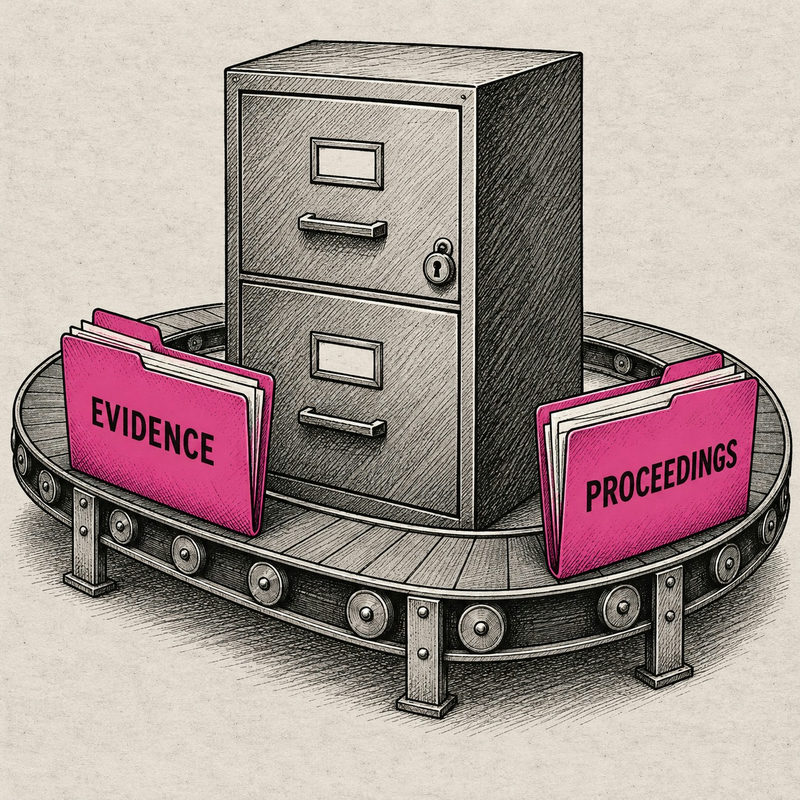
The evidence is waiting for the case. The investigation is looking for the evidence. At some point, someone ought to check whether this workflow was designed by a person who has ever wanted anything to happen.
The factual dispute around the shooting makes access especially important. Administration officials initially claimed Pretti was trying to attack agents with a handgun he was legally carrying. Reuters reports that bystander videos instead showed a phone in his hand and his attempt to help a protester who had been pushed down before agents pinned and shot him. That contrast is a reason for rigorous investigation, not for deciding that the first official account should be the last word.
The broader question of how citizens can seek accountability for immigration-enforcement abuses is not confined to one procedural barrier. A possible legal remedy is worth less if the route to establishing the facts remains obstructed. That earlier proposed legislation concerns wrongful detention; it does not settle the disclosure obligations in this shooting investigation.
Pretti's parents asked to be treated with dignity and respect. They should not have to master the government's preferred sequence of institutional milestones before that request is taken seriously.
There may be legitimate disputes about particular evidence. Explain them, resolve them and let the investigation do its work. A timetable for communicating after a case advances is not much comfort to a family watching the dispute over evidence keep the answers out of reach.
Comments
Have something to say? Give this story a heckle.
Comment Rules
Argue the point. Add a joke. No threats, harassment, hate speech, spam, private personal information or unsupported accusations. First-time comments and comments with links are moderated. Full Comment Rules
Loading comments…
Questions or deletion requests? Contact Us. We retain comments and moderation records until removed. Only hashed email identifiers are stored for comment accounts.