
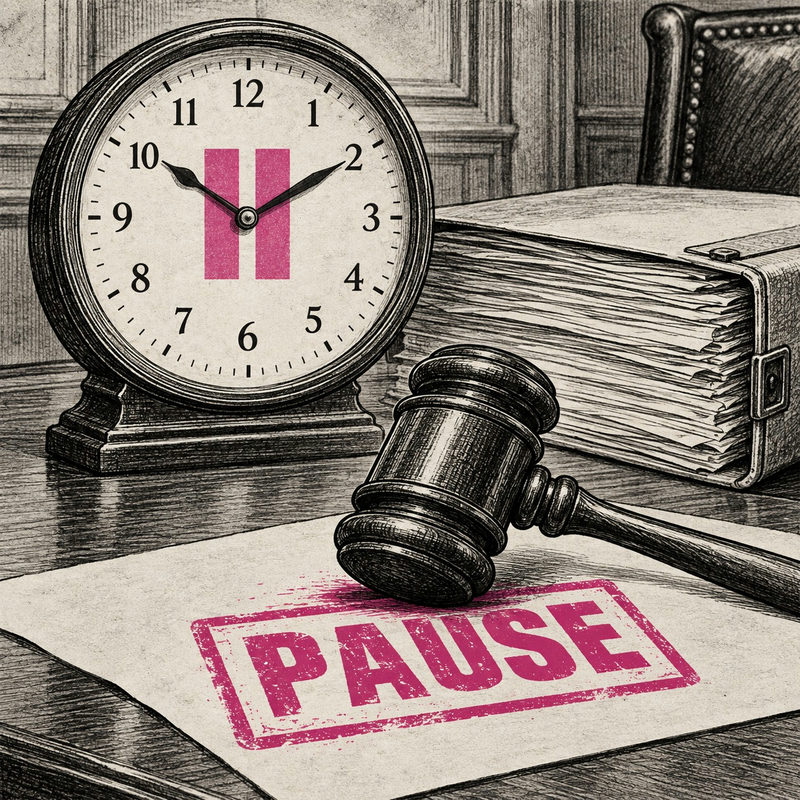
The Trump administration found a way to make a refugee's legal problem move faster: give the refugee two-thirds less time to answer it.
On Tuesday, U.S. District Judge Julia Kobick temporarily blocked a rule that would reduce the time refugees have to contest the termination of their status from 30 days to 10. According to Reuters, the Boston judge's order holds the rule through November 6 so another judge can hear the case.
That is a pause, not a final ruling against the policy. It preserves the existing response window rather than deciding the whole dispute. The legal system has, for the moment, declined to confuse a shorter deadline with a better answer.
U.S. Citizenship and Immigration Services issued the rule on October 14. Refugee advocacy organizations challenged it on Monday as part of a lawsuit also contesting a broader review of refugees. Homeland Security estimated that the new rule could affect as many as 186,000 people.
The administration describes its objective as enforcing immigration law. USCIS spokesperson Zach Kahler called the lawsuit frivolous and said it disrupted that commitment. That is the government's defense of its approach. It does not explain why the appropriate amount of time for someone to defend their legal status has suddenly become one-third of the previous amount.
Make powerful people uncomfortable.
Subscribe to Democrawonk.
A termination notice is not an invitation to choose a better email subject line. It concerns whether the person receiving it keeps a legal status on which their life depends. The opportunity to contest a decision has to include a usable opportunity to prepare the contest. Otherwise the government can retain the word “response” while steadily removing the time required to produce one.
There is a lovely administrative trick available here. Announce a decision, shorten the answer period, and call the resulting acceleration efficiency. The file moves briskly. Whether the person has had a fair chance to answer is located in another department.
That is why the limited nature of Tuesday's order matters. Kobick did not give refugees permanent immunity from review. She kept the status quo in place while the challenge can be heard. The administration still gets to defend its rule. It simply does not get to run the shorter clock in the meantime.
The plaintiffs' lawyer, Erez Reuveni, told Reuters the order provides protection for people already facing termination notices. For those people, the difference between 10 days and 30 is not an abstract disagreement about the size of government. It is time in which an answer can exist.
If the government's case is sound, it can withstand being answered. The calendar should not have to win it.
Comments
Have something to say? Give this story a heckle.
Comment Rules
Argue the point. Add a joke. No threats, harassment, hate speech, spam, private personal information or unsupported accusations. First-time comments and comments with links are moderated. Full Comment Rules
Loading comments…
Questions or deletion requests? Contact Us. We retain comments and moderation records until removed. Only hashed email identifiers are stored for comment accounts.