
On June 22, Texas sued the federal government over an immigration-court rule. The federal government and Texas filed an agreement to invalidate it. A federal judge approved the agreement. All on the same day.
For anyone who has ever waited six weeks for an agency to acknowledge a form, it is reassuring to discover that government can move quickly when the plaintiff and defendant arrive with the same preferred ending.
Reuters reports that the Supreme Court on Tuesday declined an emergency request to put that agreement on hold while litigation continues. Its one-sentence order offered no explanation, and no justice publicly dissented. This was a refusal of interim relief, not a fully explained decision resolving every legal question in the dispute.
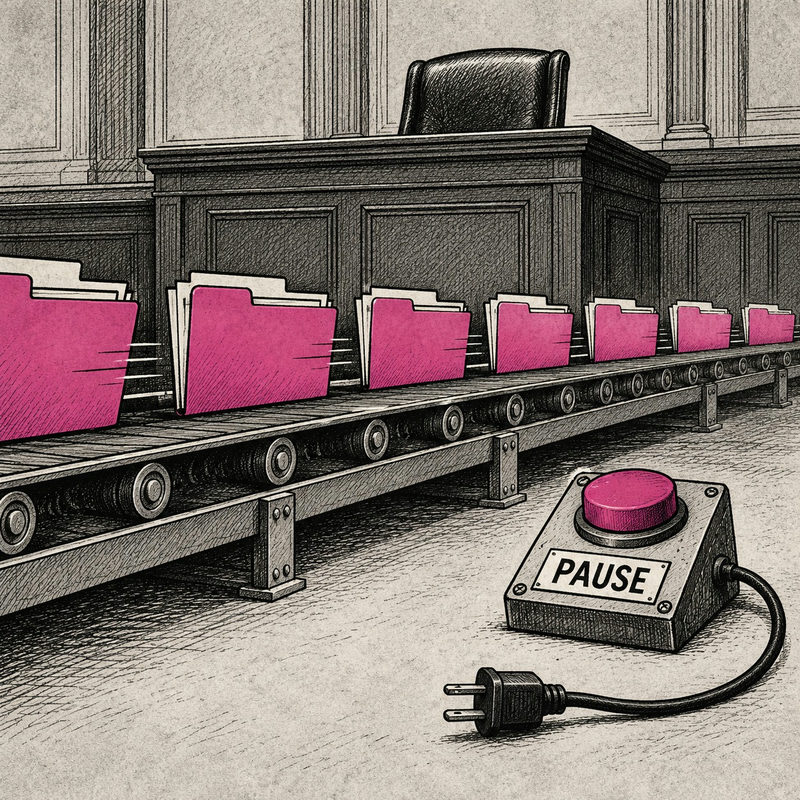
The procedure at issue is administrative closure. Immigration judges used it for decades to temporarily take certain deportation cases off their active dockets, including while another proceeding might affect whether the person could be removed. A pending visa petition or an appeal of a criminal conviction can make waiting relevant to getting the eventual decision right.
Texas and the Trump administration argue that the practice lets people without legal status remain indefinitely, functioning like amnesty. The Biden administration's 2024 regulation took the opposite view: formalising the procedure would improve docket management and fair treatment. A pause is not itself a grant of legal status, although critics object to how long cases can remain paused.
That disagreement could have produced the usual administrative process of changing a rule. Instead, after Trump's return, the Justice Department office overseeing immigration courts said it would not defend the regulation. Texas filed suit, the supposed adversaries jointly requested an order declaring the rule unlawful, and Judge Reed O'Connor blocked it nationwide.
Make powerful people uncomfortable.
Subscribe to Democrawonk.
The adversarial system had briefly become an agreement with a case number.
Baltimore, New Haven, Columbus and legal-services organisation Centro Legal de la Raza tried to intervene to defend the rule. O'Connor rejected their effort. They contend the administration used a friendly state's lawsuit to get around federal agency procedures, describing the litigation as manufactured and alleging collusion. Those are their allegations, not findings supplied by Tuesday's Supreme Court order.
The procedural concern is nevertheless easy to understand. If both parties in a lawsuit want a regulation eliminated, who is presenting the case for keeping it? The cities and legal-aid group attempted to volunteer. The door did not open for them.
Meanwhile, the practical issue belongs to actual immigration cases. A judge may be waiting for a separate decision that changes the legal picture. Removing this docket-management tool does not resolve that separate proceeding. It removes one way of accounting for the fact that it is unfinished.
The administration calls indefinite delay a problem. Fair enough: delay can be a problem. But treating every pause as an illicit benefit is like assuming a mechanic who waits for the replacement part is secretly granting your car citizenship.
The litigation continues. For now, the rule's defenders have not secured emergency relief, and the nationwide agreement remains in place.
It took the aligned governments a day to get the answer they wanted. The people who wanted to argue the other side are still trying to get into the conversation.
Comments
Have something to say? Give this story a heckle.
Comment Rules
Argue the point. Add a joke. No threats, harassment, hate speech, spam, private personal information or unsupported accusations. First-time comments and comments with links are moderated. Full Comment Rules
Loading comments…
Questions or deletion requests? Contact Us. We retain comments and moderation records until removed. Only hashed email identifiers are stored for comment accounts.