
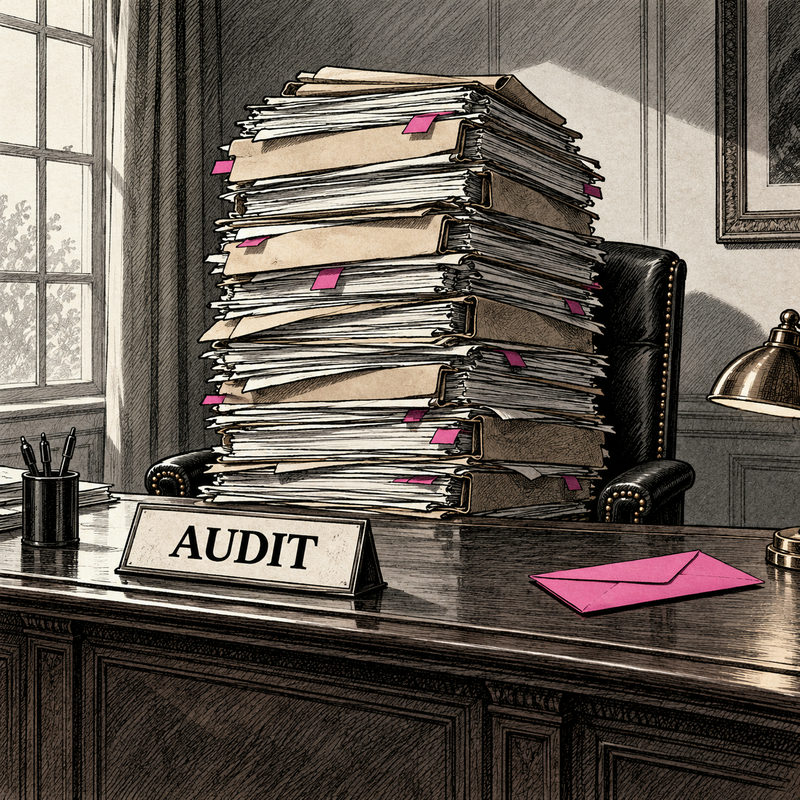
A resignation is a very efficient political document. Usually one page, occasionally a moving paragraph about the institution, and somehow expected to carry away an entire roomful of unanswered questions. It should come with a warning about its limited storage capacity.
Reuters reports that Guadalupe Taddei, head of Mexico’s autonomous National Electoral Institute, plans to resign amid corruption allegations. The federal audit authority is examining alleged contract irregularities and potential conflicts of interest. Local reporting has accused her of favoring a contractor with whom she has a personal relationship.
Those are allegations, not findings. Taddei says material circulating about the affair includes rumors and fabrications that require verification. She says leaving will protect the institute’s constitutional mission. An inquiry must test the evidence rather than turn the volume of public accusation into a substitute for it.
President Claudia Sheinbaum supports her departure and rejects the idea that this constitutes a political crisis. Fine: the crisis label can wait outside with the television crews. The contracts should still come in for questioning.
The obvious temptation is to treat the empty chair as the finished reform. A new person sits down, everybody takes a photograph, and institutional credibility is declared restored because the nameplate now contains fewer familiar syllables. If only public trust were that easy to assemble. There would be an Allen key in the box.
Make powerful people uncomfortable.
Subscribe to Democrawonk.
The INE is preparing for the 2027 midterms. Its job requires the public to trust a process even when the result disappoints them. That confidence is not improved by asking people to accept unexplained procurement decisions on faith. An electoral authority cannot answer every question with “but imagine the alternative,” especially when its entire purpose is to administer alternatives.
Nor does resignation prove guilt. That distinction protects the person accused and the usefulness of the investigation. A public inquiry that merely ratifies a popular conclusion is another institution performing confidence instead of earning it.
The practical questions are wonderfully resistant to ceremony: what was purchased, how suppliers were selected, whether relationships were disclosed, and which rules were followed. None requires a dramatic press-conference backdrop. All can survive the departure of the person whose office first attracted attention.
There should be no need to choose between a public lynching and a private shrug. Records can be examined, claims challenged and conclusions explained. It is slower than swapping the chair’s occupant, but it has the unusual advantage of addressing what happened.
Let the resignation letter leave the building.
Keep the receipts.
Comments
Have something to say? Give this story a heckle.
Comment Rules
Argue the point. Add a joke. No threats, harassment, hate speech, spam, private personal information or unsupported accusations. First-time comments and comments with links are moderated. Full Comment Rules
Loading comments…
Questions or deletion requests? Contact Us. We retain comments and moderation records until removed. Only hashed email identifiers are stored for comment accounts.