
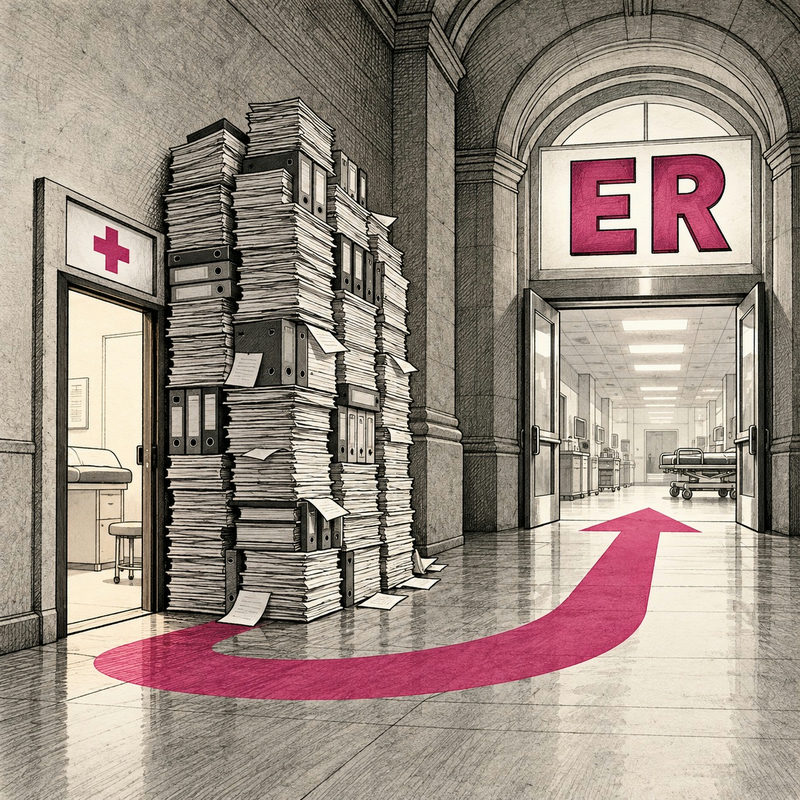
There is a remarkably convenient way to make healthcare look cheaper: stop counting the expense at the door where you cut it, and let someone else meet it at the emergency entrance.
Arizona health workers are warning that changes to Medicaid eligibility and federal funding will do precisely that. In reporting published Tuesday by the Arizona Mirror, a pediatrician and an intensive-care nurse describe a system in which people who lose access to routine treatment may postpone care until the problem becomes dangerous and much more expensive.
The illness does not receive a copy of the eligibility determination. It continues working its regular hours.
The Republican legislation enacted last year cut nearly $800 billion from Medicaid over a decade and added eligibility requirements. Beginning in 2027, certain adult recipients will have to demonstrate qualifying work, education, volunteering or other approved activity, or sufficient earnings, to retain coverage. Those rules do not apply identically to every recipient. The issue is not that every disabled person must suddenly work; it is that eligibility administration and funding decisions have consequences beyond a neat federal spending line.
At a Thursday roundtable covered by the Mirror, Tucson pediatrician Eve Shapiro described the practical progression. Without an affordable asthma prescription, a manageable condition can become an emergency. Missed diabetes treatment can have devastating consequences. An interruption in cancer care can jeopardize a patient's health.
There is no clever punchline in those outcomes. The absurdity belongs to a policy argument that treats preventing them as the luxury item.
Make powerful people uncomfortable.
Subscribe to Democrawonk.
The hospital side is not insulated. St. Mary's Hospital ICU nurse Maria Manzanarez said her Tucson hospital had already begun laying off clinical staff in anticipation of the cuts. That is her account, not an independently established statewide staffing total. She also warned of future emergency-care surges as people delay treatment.
Those future effects are warnings, not a completed count of coverage losses or crowded beds. But the mechanism is plain enough to discuss before the emergency room supplies the final data. Less access to routine care can mean more serious illness arriving at a more expensive setting. Hospitals also face funding pressure while being expected to handle the consequences.
Our earlier look at rural-health funding tied to deregulation examined a different federal policy shaping hospital finances. The question there, too, was what the funding rules would mean for the people relying on care.
The saving has not necessarily disappeared. It may simply have changed addresses and put on a hospital wristband.
Democrats are campaigning on reversing the cuts, and Representative Adelita Grijalva told the roundtable that congressional control will matter. That does not make reversal automatic if an election changes the House. Legislation still needs the votes and institutional path to become law. A campaign promise is not an insurance card either.
The useful test is what happens to care, patients and costs across the whole system. If a policy makes the federal spreadsheet look tidier while sending a preventable crisis to an ICU, the spreadsheet has not discovered efficiency.
It has learned to look away before the bill arrives.
Comments
Have something to say? Give this story a heckle.
Comment Rules
Argue the point. Add a joke. No threats, harassment, hate speech, spam, private personal information or unsupported accusations. First-time comments and comments with links are moderated. Full Comment Rules
Loading comments…
Questions or deletion requests? Contact Us. We retain comments and moderation records until removed. Only hashed email identifiers are stored for comment accounts.