
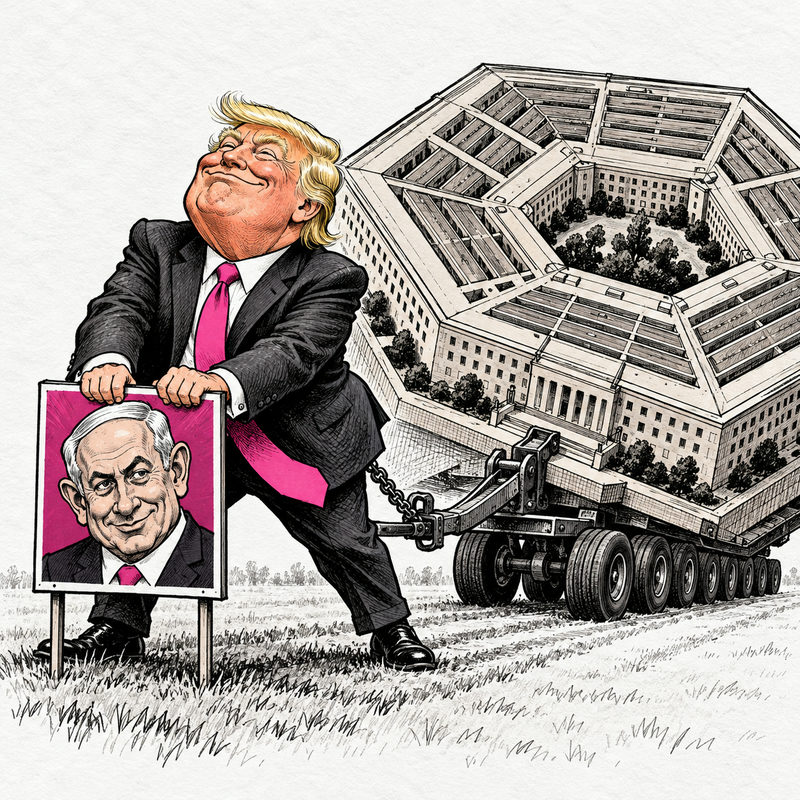
Donald Trump has endorsed Benjamin Netanyahu, which is his right. He has also suggested that his willingness to take further military action against Iran could depend on Netanyahu winning, which is where I would like somebody to separate the campaign materials from the weapons.
Israelis are choosing a prime minister. They should not have to wonder whether American foreign policy includes a preferred-candidate requirement.
According to the Associated Press, Trump backed Netanyahu ahead of Israel’s October 27 election and suggested he might be less inclined to act against Iran if Netanyahu loses. He described any other Israeli leader as the wrong one.
Any other leader. Impressive efficiency. Why bother evaluating the opposition when you can dismiss it wholesale? Political judgment, now available in the family-size container.
I don’t want another war with Iran. I also don’t want the decision advertised as a benefit of keeping one particular politician employed. If military action is unnecessary, Netanyahu winning doesn’t make it necessary. If Trump believes it is necessary, Netanyahu losing doesn’t magically change the evidence. A national-security argument should survive the devastating experience of somebody else getting the job.
This is not a demand that presidents have no preferences. Have preferences. Endorse somebody. Wear a button big enough to interfere with your golf swing. But explain American policy in terms of American obligations, actual threats and human consequences—not whether the other government still contains your favorite acquaintance.
The strangest part is that Trump recently told Time, in an interview cited by AP, “I’m not involved in politics anymore.”
That retirement has unusual benefits. Most people get a watch. Trump gets to intervene in another country’s election while declaring the entire field unacceptable apart from his selection. Apparently leaving politics means becoming its regional manager.
Netanyahu, meanwhile, has marketed his relationship with Trump as a reason to keep him in office. Wonderful. The argument for retaining the prime minister now includes maintaining access to the American president’s good mood.
I would prefer diplomacy that doesn’t require voters to preserve a friendship for everyone else’s convenience. Governments change. Alliances and commitments need rules that remain intelligible afterward. Otherwise every election becomes a stress test of one powerful man’s capacity to learn a new name.
And calling Netanyahu a partner for peace does not settle what that partnership produces. AP describes disagreements between the two over Iran and Gaza. The relationship is not a substitute for examining the policy. You can have excellent chemistry and still be a terrible combination for everybody downwind.
My position is simple: oppose needless military escalation, defend the public’s right to choose its leaders, and make presidents explain security decisions without using another politician’s reelection as the organizing principle. Congress should insist on its own role rather than accepting a presidential endorsement as strategic analysis with better lighting.
Trump can prefer Netanyahu. Israelis can prefer somebody else. Neither country owes him an election result that simplifies his social life.
If he wants to campaign for Netanyahu, he can put up a yard sign.
He does not get to put the Pentagon next to it.
Comments
Have something to say? Give this story a heckle.
Comment Rules
Argue the point. Add a joke. No threats, harassment, hate speech, spam, private personal information or unsupported accusations. First-time comments and comments with links are moderated. Full Comment Rules
Loading comments…
Questions or deletion requests? Contact Us. We retain comments and moderation records until removed. Only hashed email identifiers are stored for comment accounts.