
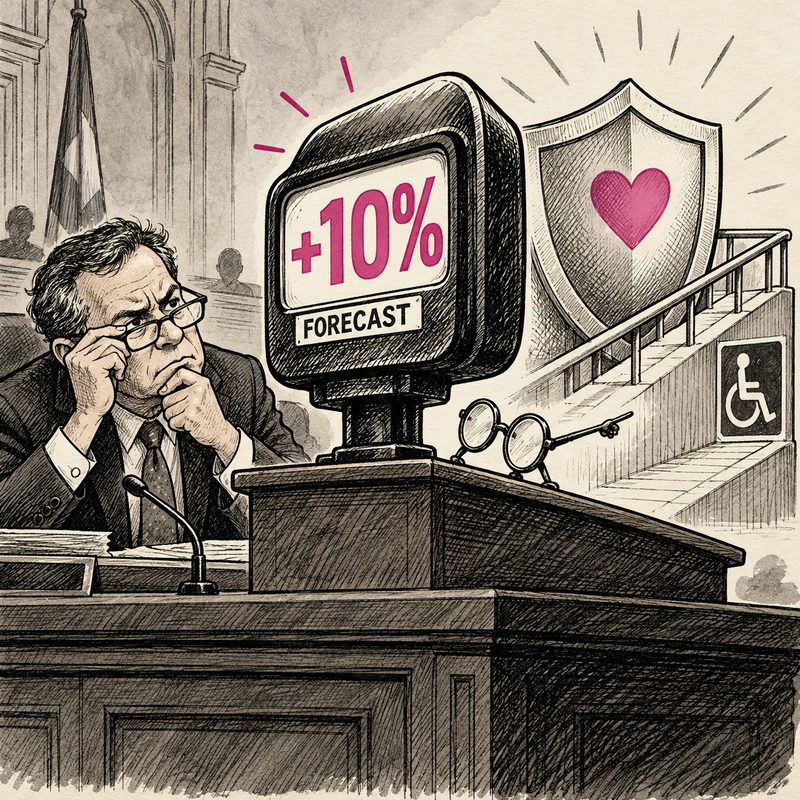
Uber can apparently calculate the cost of better passenger protections before Washington has finished discussing them. Ten percent. Not nine, not eleven. When a regulation approaches, the company’s forecasting suddenly enjoys excellent reception.
Axios reports that Uber predicts a 10% fare increase in the first year if D.C. passes a proposed rideshare overhaul. The bill would require stronger driver insurance, reduce waits for wheelchair-accessible vehicles and prohibit surveillance-based fare discrimination, among other changes.
Those sound like things a transportation company should want to discuss with its customers. Instead, the discussion arrives with a little emotional surcharge: look what you’re making us charge you.
I want the protections examined on their merits. I also want Uber’s estimate examined as an estimate from Uber, which is a company with a position in this debate, rather than a calculator that has spontaneously developed civic concerns.
Its argument is that higher insurance requirements and restrictions on driver onboarding would raise costs and reduce the number of drivers. Fewer drivers, it says, would mean more surge pricing. That is a plausible chain worth testing. It is not a law of physics that the D.C. Council has rudely proposed repealing.
The missing half of the sales pitch is what riders and drivers receive for the money. Insurance is not just an expensive document that someone cruelly requires a business to possess. Its usefulness tends to become especially clear shortly after a car does something a car was not supposed to do.
And wheelchair access is not an optional luxury upgrade for people who failed to appreciate the basic package. A cheap ride that you cannot use is competitively priced at useless.
The fare is not the whole cost of the service. It is the part the app shows you.
This is why I get suspicious when a business describes every new obligation as a burden on its customers. Customers are also the people who bear the burden when the obligation is absent. We’ve already examined how a convenient purchase can become an inconvenient complaint. Convenience is a remarkably selective corporate principle.
Uber objects that the proposal treats its industry like legacy taxi fleets. Well, the vehicles still contain passengers. The wheel remains circular. Fifteen years of software development have not made the consequences of an uninsured crash a charming historical reenactment.
The bill is a proposal, not a settled set of rules, and council members should scrutinize requirements that could needlessly drive people off the platform. They should scrutinize the company’s predictions just as carefully. A corporation lobbying against regulation does not get to grade its own homework merely because it has put a percentage at the top.
Show the assumptions. Show the coverage. Show what happens to people who need an accessible ride.
Then we can decide whether the price is too high. Uber has already made that decision about the protections.
Comments
Have something to say? Give this story a heckle.
Comment Rules
Argue the point. Add a joke. No threats, harassment, hate speech, spam, private personal information or unsupported accusations. First-time comments and comments with links are moderated. Full Comment Rules
Loading comments…
Questions or deletion requests? Contact Us. We retain comments and moderation records until removed. Only hashed email identifiers are stored for comment accounts.