
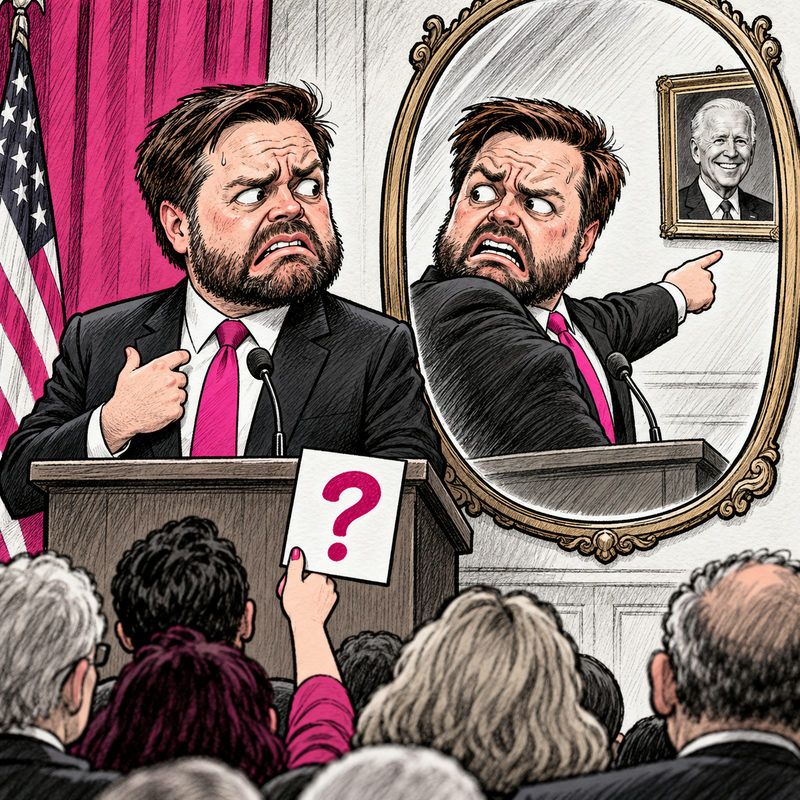
JD Vance thinks looking backward for blame is unhelpful, unless you can look far enough backward to find Joe Biden.
Then history becomes an essential discipline. Fetch the archives. Dust off the exhibits. The vice president would like to explain something that happened before he became responsible for explaining anything.
At a CBS town hall that aired Saturday, Vance faced questions about high gasoline prices and the Iran war. According to the Associated Press, he acknowledged prices were too high, pointed to events in the Middle East and blamed diminished refining capacity during Biden’s presidency.
But when pressed about his own administration’s responsibility, he asked what Democratic Senate candidate Abdul El-Sayed would do and said, “It’s easy to criticize something that happened seven months ago.”
Seven months: apparently the statute of limitations on asking the people in charge what the hell they were doing.
I don’t expect a vice president to control every price. I do expect him to distinguish between explaining a problem and trying to relocate the question to a Democrat.
El-Sayed is running for a Senate seat. Vance is already vice president. Asking the applicant to explain your performance is an unusual employment arrangement. Most of us would struggle to get through an annual review by demanding that the person waiting outside describe how they would have handled our mistakes.
And Biden is not a universal adapter for presidential responsibility. You cannot plug every inconvenient question into him and expect the conversation to light up.
If the argument concerns refining capacity, explain the evidence and the options. If it concerns the administration’s decision to go to war, explain that decision. Those questions can coexist. They don’t have to fight in a parking lot until only the politically convenient one remains.
The public deserves more than a president’s ally describing the resulting situation as something that simply exists now, like weather or a difficult relative.
People live with the consequences of government decisions. They get to ask where those consequences came from. Calling that backward-looking does not make the inquiry obsolete. It makes the answer overdue.
Vance’s immigration answers had a related flexibility. AP reports that he acknowledged mistakes and said investigations had led to training or discipline, while explaining that the administration does not publicize the cases as investigations play out.
Investigations can require confidentiality. They should not require the public to accept accountability entirely on the administration’s enthusiasm for assuring us it exists. Explain what can be disclosed, what changed and how people harmed by mistakes get help. A government does not become transparent merely because its spokesman can see through the excuse.
Some of the questioners said they had voted for Trump and Vance. Good for them for asking. Voting for somebody does not obligate you to spend the next four years helping him escape follow-up questions.
My preference is for leaders who can defend a decision, acknowledge a failure and explain a remedy without first checking whether a Democrat is available to carry it.
Vance wanted to know what El-Sayed would do.
For now, I’d settle for finding out whether JD Vance intends to do the job he already has.
Comments
Have something to say? Give this story a heckle.
Comment Rules
Argue the point. Add a joke. No threats, harassment, hate speech, spam, private personal information or unsupported accusations. First-time comments and comments with links are moderated. Full Comment Rules
Loading comments…
Questions or deletion requests? Contact Us. We retain comments and moderation records until removed. Only hashed email identifiers are stored for comment accounts.