
 By
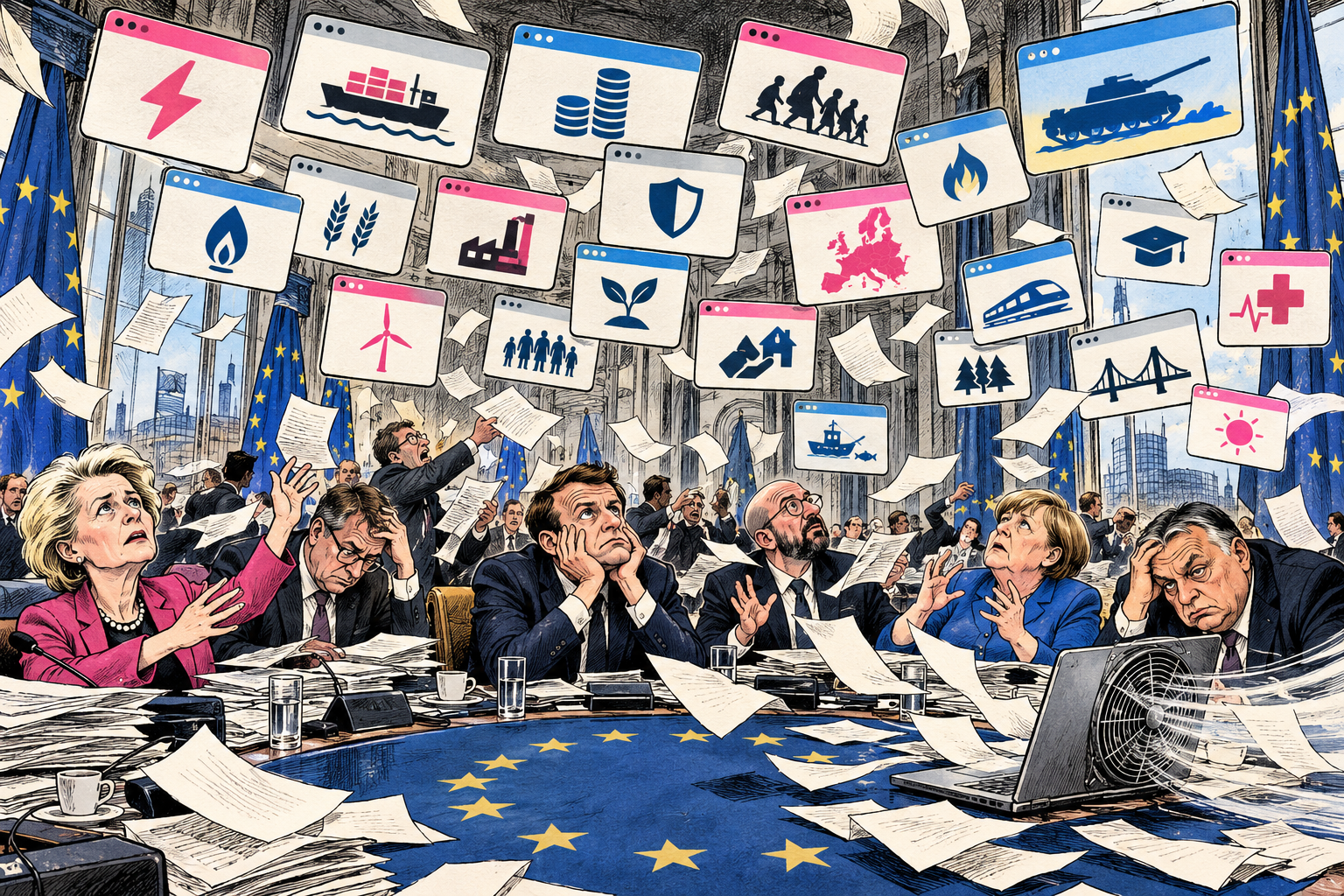
By European Union leaders opened a two-day summit Thursday with energy prices, Chinese exports, the next long-term budget, Ukraine, migration and the Middle East all demanding attention. In Brussels, this is considered a focused agenda because nobody added fisheries before lunch.
Reuters reported splits over spending, trade defenses and whether to ease climate measures in response to high energy costs. Germany and France want tougher protection against Chinese imports. Nordic countries are defending emissions policy. Leaders are also debating continued support for Ukraine and what to do with frozen Russian assets.
The official agenda promises “concrete outcomes.” That phrase is diplomatic code for 27 governments entering a room with different red lines and emerging with a paragraph congratulating themselves on the color beige.
None of these problems is imaginary. Energy bills are real, Ukraine needs support and industrial policy matters. But Europe’s governing ritual keeps asking one summit to function as trade ministry, war cabinet, budget committee and group therapy session.
The meeting continues Friday. By then, leaders may have closed two tabs, opened five working groups and agreed that Europe must urgently schedule another meeting.