
 By
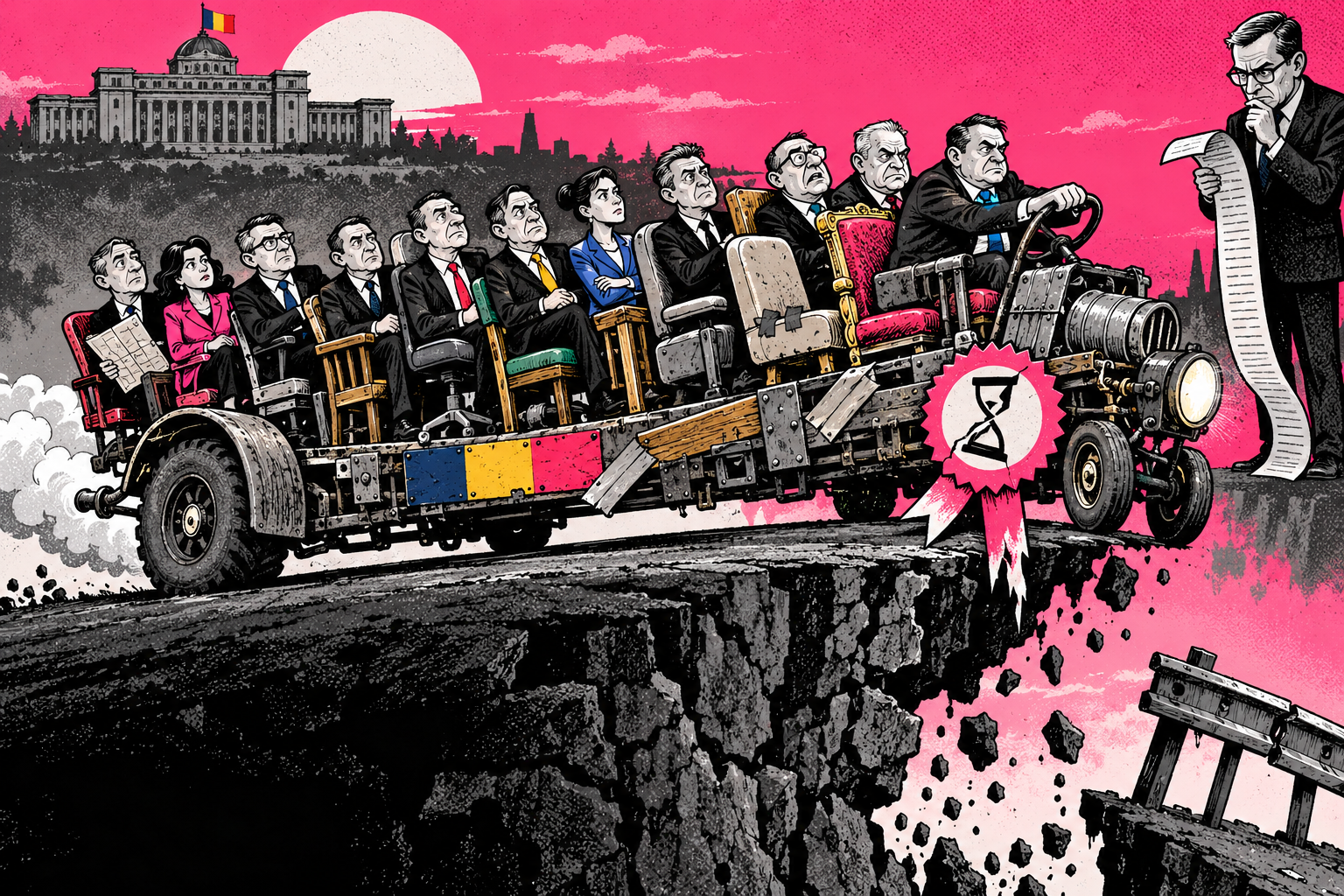
By Romania may finally be getting a government, which is encouraging news for anyone who enjoys such luxuries as budgets, bond markets and knowing who is responsible for the energy ministry next Tuesday. The product is assembled. Parliament still has to approve it. The warranty card is already unusually specific.
Prime-minister-designate Luca Niculescu secured enough promised support for a confidence vote, Reuters reported Thursday. The Social Democrats, Romania’s largest parliamentary party, agreed to join his proposed government and take 11 ministries. Technocrats are expected to lead finance, energy and foreign affairs, while several other pro-European parties plan to support the cabinet without joining it.
Niculescu is President Nicușor Dan’s fourth nominee in five months. The previous broad coalition collapsed in May after the Social Democrats withdrew and joined the far-right opposition in a no-confidence vote. Under Romanian law, a government requires 233 votes. The pledges reported Thursday appear sufficient, though the vote had not yet occurred when the reporting was published.
The arrangement is being sold as an end to political paralysis. The fine print says the Social Democrats want a 2027 budget presented by December 1 without additional tax increases, and they plan to review the cabinet’s performance in six months. This is less a coalition agreement than a rental inspection with ministers.
Coalition Warranty Card — Parody
Coverage period: six months.
Required maintenance: one credible national budget, delivered by December 1.
Excluded damage: new tax increases, collapsing party patience and any sentence beginning with ‘the ratings agencies will understand.’
Roadside assistance: several parties will vote for the vehicle but prefer not to be seen riding inside it.
Market confidence sold separately.
The urgency is real. Months of political crisis pushed the Romanian leu to record lows and increased government borrowing costs. Romania narrowly avoided losing its investment-grade credit rating, and its deficit is expected to be about 6.2% of economic output this year. The country has agreed with Brussels to reduce that below 3% by 2030. Those numbers are not Brussels trivia. Higher borrowing costs eventually reach public services, taxpayers and anyone whose mortgage notices that international finance has developed an opinion.
Niculescu is a former journalist and diplomat who has served as ambassador to France and worked on Romania’s OECD accession. That résumé may help him explain the situation elegantly in several languages. It does not make the coalition partners less capable of locating the emergency exit.
There is a rational case for the arrangement. A snap election could deepen instability and benefit the hard-right Alliance for Uniting Romanians, which leads opinion polls. A mixed cabinet of party figures and technocrats may be the only available bridge to a budget and a steadier pro-European course. Parliamentary government is often the art of building a table from parts nobody ordered.
But a government designed around temporary tolerance can spend more energy surviving than governing. Every difficult budget choice becomes an opportunity for a coalition partner to rediscover its principles on television. Every market wobble becomes evidence that somebody else should own the finance ministry. And every deadline arrives with the quiet knowledge that the cabinet’s largest partner has scheduled an appraisal for spring.
Romania may finally get a government. The instruction manual is twelve pages, the warranty expires in six months, and the ratings agency has kept the receipt.