
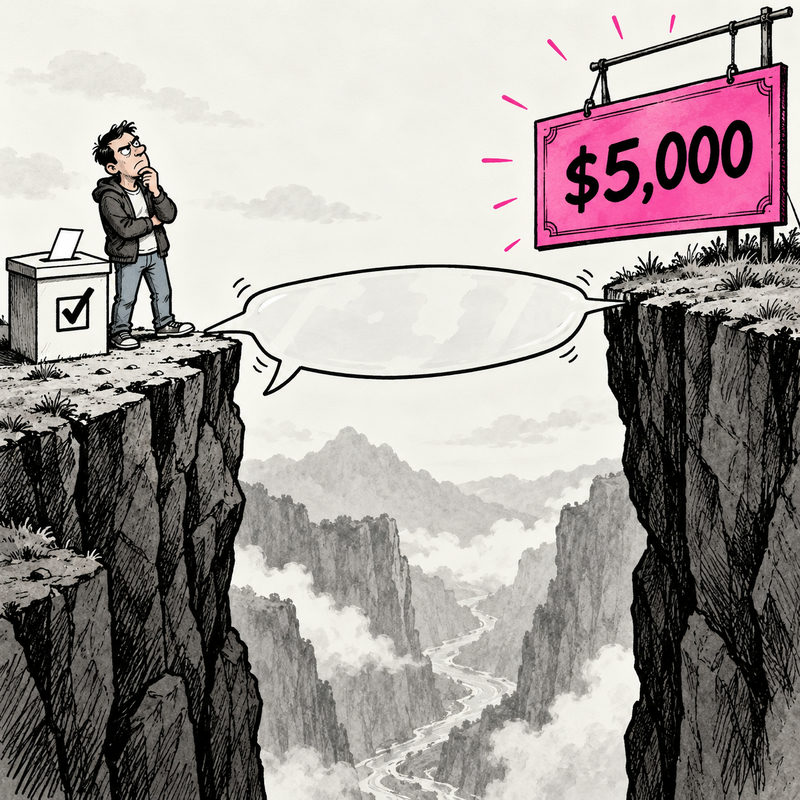
I would like to follow the instructions for receiving Donald Trump's proposed $5,000 payment. Five thousand dollars is useful money. The trouble begins when the instructions become more definite about my vote than his payment.
According to the Associated Press, Trump says the checks depend on Republicans retaining both the House and Senate. That part is admirably clear. The public must deliver a particular result on November 3. Afterward comes the money, at a cost Trump acknowledges would exceed $1 trillion.
We appear to have been given a deadline for our half of the arrangement and an expression of confidence for his.
The White House says trade deals, foreign investment commitments, government stakes in companies and oil and mineral deals make the payments possible. All right. Those are different kinds of economic activity, but let us try to accept the reassurance and proceed to the next step: what would distributing more than a trillion dollars do to prices?
When AP asked whether the administration was modeling the economic effect, the chairman of the Council of Economic Advisers declined to answer. This seems an unfortunate moment for the economic adviser to become the quiet member of the group. We are being asked to support a very large economic intervention on the understanding that its economics needn't interrupt the announcement.
Make powerful people uncomfortable.
Subscribe to Democrawonk.
The administration says the checks would help people recover from inflation that began under Joe Biden. Republicans previously blamed pandemic relief checks for contributing to that inflation. There could be differences worth explaining. But the explanation cannot simply be that these checks would have a Republican sender, giving them immunity to the unfortunate behavior of Democratic dollars.
I am not opposed to government helping people pay their bills. I am opposed to a payment promise becoming a test of political obedience before anyone has supplied a convincing account of the payment. Taking credit before delivery is already a crowded field in this presidency.
AP also notes that earlier promises of tariff dividends and refunds from DOGE savings did not materialize. That doesn't prove this payment cannot happen. It does make “this time” an essential part of the proposition, and one that deserves more explanation than another rally reassurance.
Some Trump supporters interviewed by AP doubt the money will arrive; others believe him. Their skepticism is entirely reasonable. Wanting the assistance does not require believing every politician who discovers your bank balance shortly before an election.
For now, I can identify exactly when the offer expects me to act. I remain less certain when it expects the government to act. Perhaps the simplest reading is that November 3 is the payment deadline after all. We're just the ones being asked to pay first.
Comments
Have something to say? Give this story a heckle.
Comment Rules
Argue the point. Add a joke. No threats, harassment, hate speech, spam, private personal information or unsupported accusations. First-time comments and comments with links are moderated. Full Comment Rules
Loading comments…
Questions or deletion requests? Contact Us. We retain comments and moderation records until removed. Only hashed email identifiers are stored for comment accounts.