
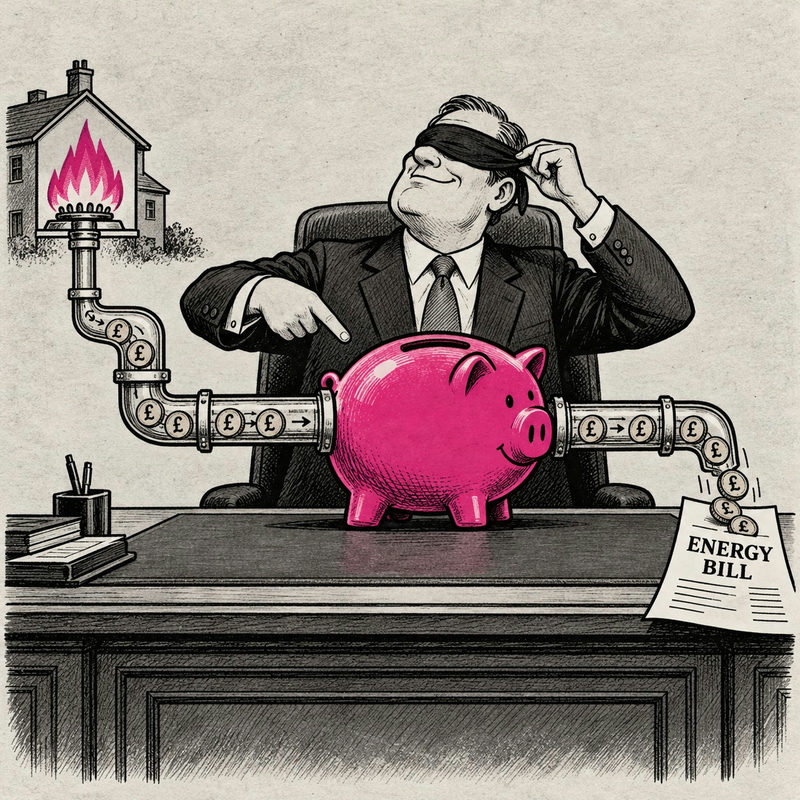
Lloyds can follow the money until it reaches the Treasury. Then the trail becomes terribly confusing.
Chief financial officer William Chalmers says he sees no obvious link between energy prices and bank taxes. The government plans to double the bank surcharge from 3% to 6% for 15 months to help households with energy bills.
Fortunately, Lloyds’s earnings offer a diagram. Inflation expectations driven by energy prices have pushed up interest rates. Higher rates have helped bank interest income. Lloyds’s net interest income rose 10%. We seem to have reached the bank without changing trains.
Chalmers says the sector needs stable taxes and the ability to lend and support growth. Lloyds has paid about £1.8 billion in corporate taxes this year. Those are real arguments. They are different from being unable to see how the energy crisis got into the conversation.
The Treasury promises to put the temporary tax’s end date into law. Bankers worry it could still be extended.
So they can imagine a connection between a future energy crisis and their tax bill. It’s the present one that’s mysterious.
The Daily Heckler
The best of Democrawonk.
No algorithm required.
Comments
Have something to say? Give this story a heckle.
Comment Rules
Argue the point. Add a joke. No threats, harassment, hate speech, spam, private personal information or unsupported accusations. First-time comments and comments with links are moderated. Full Comment Rules
Loading comments…
Questions or deletion requests? Contact Us. We retain comments and moderation records until removed. Only hashed email identifiers are stored for comment accounts.