
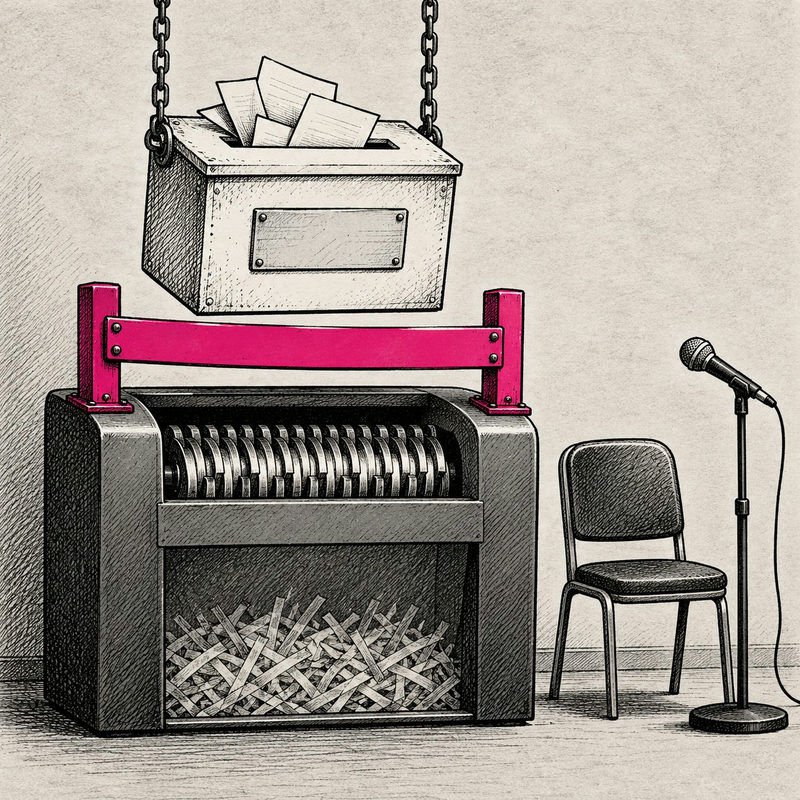
The British government has decided to keep the independent organization that tells the NHS when patients are unhappy. An earlier plan would have moved its functions partly into the health system itself, because nothing says independent feedback like asking the institution to supervise its own complaint box.
The Guardian reports that Health Secretary Yvette Cooper has abandoned plans to abolish Healthwatch England and its local network. The bodies will remain and are to receive a stronger role. This is a welcome reversal. Occasionally, government discovers that the useful part of a watchdog is the watching, rather than the opportunity to announce a smaller organizational chart.
Healthwatch and its 150 local branches collect and analyze patients’ experiences. Their reporting has highlighted problems including access to dental treatment, lengthy assessment waits and appointment notices arriving after the appointment. The last of those is a particularly ambitious approach to patient involvement: invite people to participate in the past.
The abolition plan would have transferred functions to NHS regional integrated care boards and local councils. Critics warned that this would weaken independent oversight. Labour, Conservative and Liberal Democrat politicians objected. Cross-party agreement is easier to appreciate when it produces something more useful than a jointly signed expression of concern.
Cooper says patients need a voice and that the retained organizations will be strengthened so their experiences can influence change. That is the right promise. Its value will depend on what the bodies can actually do, and whether the rest of the system listens when their findings become inconvenient.
Make powerful people uncomfortable.
Subscribe to Democrawonk.
An independent patient advocate does not manufacture hospital capacity or shorten every waiting list by issuing a report. But it can make a pattern visible that isolated patients would otherwise be left to describe separately. One person’s frustrating experience is easy to dismiss as an exception. A documented collection of exceptions becomes a management problem.
That is precisely why independence matters. The service being criticized should not possess every available microphone, write the agenda and then congratulate itself on a productive listening exercise. A patient’s account does not become less valuable because it complicates the press release.
The Nuffield Trust’s Thea Stein welcomed the retreat while warning that a deeper change in listening was still needed. Keeping Healthwatch prevents one loss of oversight; it does not establish that the NHS has solved the problems Healthwatch identifies. The complaint box has been saved. Someone still has to open it.
There is a broader lesson for reformers who arrive carrying a diagram full of arrows. Combining functions can look efficient on paper while removing the person whose job is to ask whether the paper describes reality. Accountability is not duplication merely because management also has an opinion about its performance.
The government deserves credit for changing course. MPs, peers and institutional supporters defended the organization that helps patients be heard, and the government listened. Now the test is whether keeping their voice also means answering it.
Comments
Have something to say? Give this story a heckle.
Comment Rules
Argue the point. Add a joke. No threats, harassment, hate speech, spam, private personal information or unsupported accusations. First-time comments and comments with links are moderated. Full Comment Rules
Loading comments…
Questions or deletion requests? Contact Us. We retain comments and moderation records until removed. Only hashed email identifiers are stored for comment accounts.