
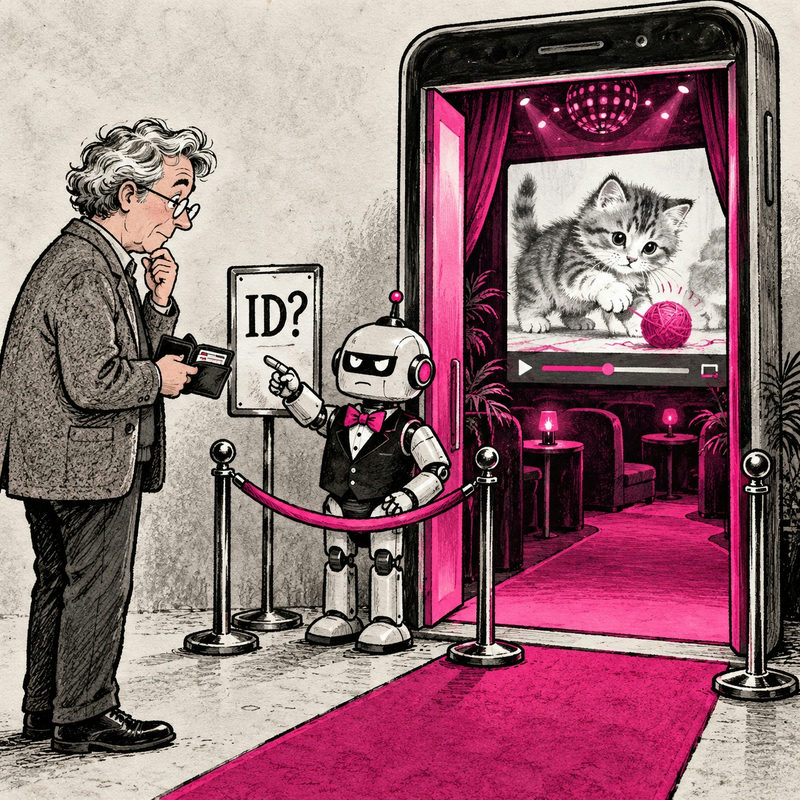
British adults may soon need to establish that they are adults before entering social media, a place whose existing behavior has not made that an easy case to argue.
Ofcom has issued new recommendations for enforcing the UK’s under-16 ban on ten major platforms, due in March. The government still has to approve the methods, with a decision expected by year’s end. Possible checks include matching photo ID to a live image, using age information held by a bank, facial age estimation and digital ID services. An institution trusted with your mortgage may now help establish your eligibility to watch a stranger fall off a paddleboard.
The difficult cases include 16- and 17-year-olds: old enough under the rule, but without some of the documents adults routinely use, and with faces that do not come factory-stamped with a date. Ofcom says facial estimation has improved. Somewhere, a teenager may be preparing to hear that the computer thinks they look young for their age, a compliment with a logout button.
The Daily Heckler: five or six selected stories.
Political satire for your morning inbox.
Meta would prefer checks at the app-store or device level, reducing repeated verification across services. That would put more of the job with Apple and Google. Ofcom says platforms would still have their own responsibilities. Silicon Valley has finally found a task it does not want to own the entire market for.
The regulator says checks must preserve privacy and protect data. It also acknowledges that some children will get around them. That does not make the effort pointless: child-safety groups welcomed the guidance. But those same groups want effective enforcement and safer platforms, not merely a digital doorman who waves through the determined kids and asks their parents for another document.
Ofcom cannot yet say how many adults will have to verify their age. It expects a large number of accounts to need attention. Before March arrives, the companies have to turn this list of possible methods into something people can use.
After years of insisting they know everything about us, the platforms may be about to ask whether we were born.
Comments
Have something to say? Give this story a heckle.
Comment Rules
Argue the point. Add a joke. No threats, harassment, hate speech, spam, private personal information or unsupported accusations. First-time comments and comments with links are moderated. Full Comment Rules
Loading comments…
Questions or deletion requests? Contact Us. We retain comments and moderation records until removed. Only hashed email identifiers are stored for comment accounts.