
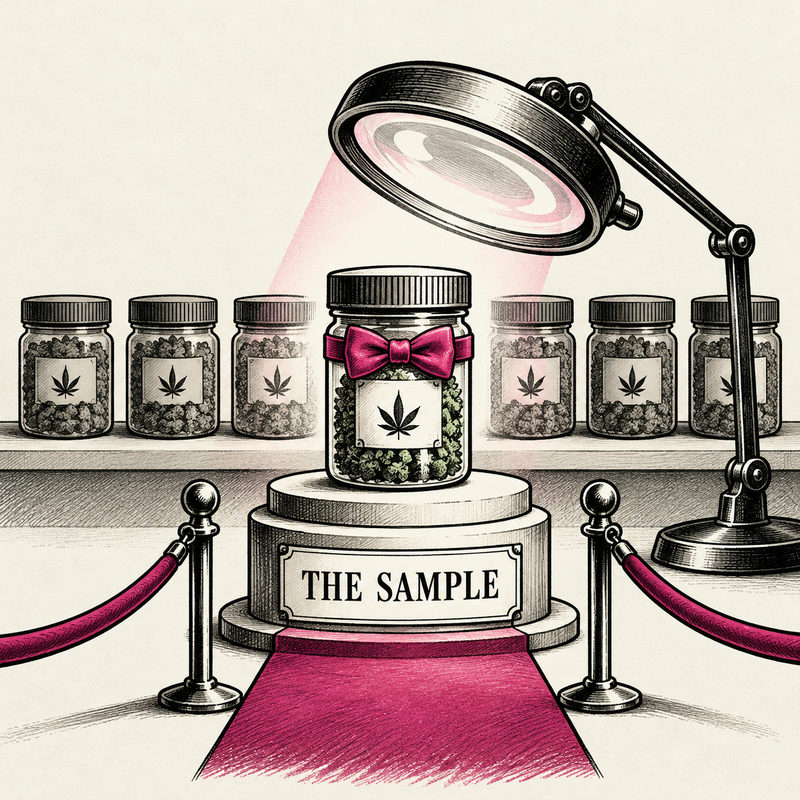
Colorado lets marijuana businesses pick the samples they submit for safety testing. An independent laboratory can then establish, with scientific precision, what was in the thing the business felt comfortable sending.
The inventory that stayed home must be very proud.
A state audit, reported by The Denver Gazette and ProPublica, found that the arrangement increases the risk of samples failing to represent the overall product. The agency's own investigators described a system largely dependent on an honor code. Nothing against honor. It just seems an unusual substance to be testing for.
The Marijuana Enforcement Division considered having private lab personnel collect samples. Manufacturers objected to the cost, and the effort was dropped. Deputy senior director Kyle Lambert told legislators that reaching rural businesses was the chief obstacle. Geography is real. So is the distance between the sample somebody chooses and the product somebody buys.
Colorado also lets businesses with consistent compliance qualify for less frequent testing; other exemptions cover certain skin and body products. The audit found that nearly 75 percent of marijuana processed for eventual sale from 2023 through 2025 escaped pesticide testing. That does not mean three-quarters was contaminated. It means the reassuring test result is unavailable on a surprisingly industrial scale. The reward for passing the test is fewer opportunities to find out whether you're still passing.
The Daily Heckler: five or six selected stories.
Political satire for your morning inbox.
Even a known problem has time to establish itself. After investigators decided a public advisory was necessary, issuing it took another month on average in 2025. The decision had cleared the difficult hurdle of being made. Now someone had to tell the people using the product.
Voluntary recalls supplied another point at which the regulated business could help regulate itself. Auditors found that some failed to stop sales of potentially unsafe products. At this stage the honor code could use an enforcement division.
The agency emphasized that auditors had not found evidence of widespread health and safety problems, while accepting that improvements were needed. That limitation matters; an inadequate testing system is not proof that every product is bad.
Last month, the two newsrooms reported on a manufacturer's warning to dispensaries to stop selling 49 vapes flagged for recall after a lab detected a hazardous chemical. MED issued its public advisory the following day. For a system built on self-reporting, it needed a remarkable number of reporters.
Comments
Have something to say? Give this story a heckle.
Comment Rules
Argue the point. Add a joke. No threats, harassment, hate speech, spam, private personal information or unsupported accusations. First-time comments and comments with links are moderated. Full Comment Rules
Loading comments…
Questions or deletion requests? Contact Us. We retain comments and moderation records until removed. Only hashed email identifiers are stored for comment accounts.