
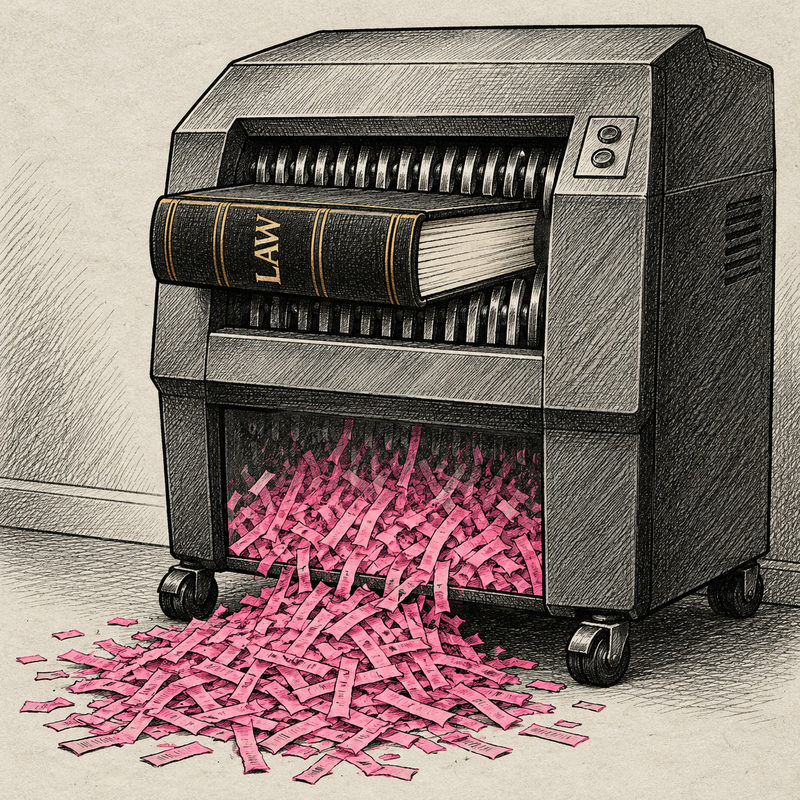
The trouble with running the government like your personal business is that the law keeps turning up without an appointment.
A federal judge ruled Monday that the Trump administration unlawfully fired former Manhattan prosecutor Maurene Comey, USA TODAY reports. Comey alleged that she was dismissed because of her father James Comey's antagonistic relationship with Trump. That allegation about motive is distinct from the reported finding that the firing was unlawful.
The distinction matters. A court is supposed to establish what the government may do, not merely provide a more expensive venue for everybody's suspicions. Which is also why an administration ought to establish its authority before using it. The paperwork should not be the part you discover after the employee has left.
Civil-service protections are very inconvenient if your preferred management philosophy involves confusing the public payroll with the seating chart at a family feud. They require you to account for decisions in a vocabulary larger than wanted and unwanted. There are procedures. There are rights. Occasionally someone is even allowed to finish a sentence.
Make powerful people uncomfortable.
Subscribe to Democrawonk.
This does not make every career employee indispensable or every dismissal improper. It means the government has to follow rules when it removes people. An astonishing imposition on an institution that spends a considerable amount of its time telling everybody else to follow rules.
The public should want that discipline most of all at a prosecutor's office. Decisions there can cost people their liberty. A system entrusted with that power should be able to explain its own personnel decisions without treating an explanation as insubordination.
Presidential authority is real. So are the limits on it. The administration can dislike the second sentence, but it does not get to count only the first.
The law is still on the payroll. Apparently nobody cleared its termination.
Comments
Have something to say? Give this story a heckle.
Comment Rules
Argue the point. Add a joke. No threats, harassment, hate speech, spam, private personal information or unsupported accusations. First-time comments and comments with links are moderated. Full Comment Rules
Loading comments…
Questions or deletion requests? Contact Us. We retain comments and moderation records until removed. Only hashed email identifiers are stored for comment accounts.