
A journalist was questioned about his sources as a witness. He later faced a charge of failing to report information about a terrorist crime or its possible commission. Now he has a four-year prison sentence. Tunisia has found a deeply alarming way to make sure a reporter understands the seriousness of a question.
DPA reports that a Tunisian court sentenced Zied el-Heni in a case connected to leaked audio recordings, with the ruling issued late Tuesday into Wednesday. The same case brought a nine-year sentence for Ennahda figure Mondher Ounissi. Recordings attributed to Ounissi surfaced in 2023; he says they were fabricated.
El-Heni had published comments about the case and was initially questioned as a witness about the sources of his information, according to the report. Authorities subsequently charged him with withholding information about terrorism. The report describes the charge and the sentence. It does not give readers the complete evidentiary record or establish that the underlying terrorism allegation is true.
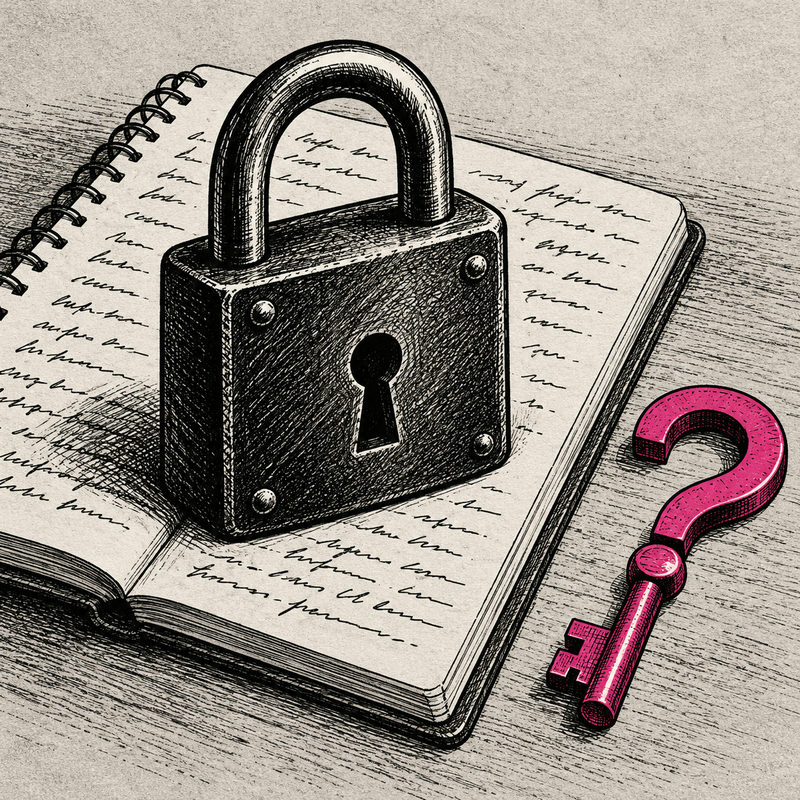
That limitation is not a reason to overlook what the sequence means for reporting. When a journalist’s access to information becomes the basis for treating the journalist as a suspect, the act of finding things out acquires an additional professional hazard. The notebook starts looking less like a tool and more like something the prosecution might ask you to explain.
The Daily Heckler
The best of Democrawonk.
No algorithm required.
Tunisia’s journalists’ union condemned the new sentence as an escalation against the press and raised concerns about fair-trial protections. It called for an end to arbitrary prosecutions over journalists’ work or opinions and for protection of confidential sources. Those are the union’s criticisms, not findings issued by the court that imposed the sentence.
El-Heni had already been serving a sentence in a separate case since April. The new four-year term should not be carelessly presented as the entirety of his legal situation. It is another serious consequence in a record of prosecutions described by DPA.
Governments are entitled to investigate genuine crimes. That does not make every dispute over a reporter’s information an argument the state wins by announcing the gravest available category of offense. Press freedom becomes extremely fragile when a person gathering news must consider whether knowing something will later be treated as participation in it.
The public loses information long before every possible reporter is charged. Sources become harder to reach. Questions become more dangerous to ask. A prison sentence communicates beyond the person ordered to serve it.
That is the efficient part of suppressing journalism: the authorities do not have to answer every question if they can make enough people afraid to ask one.
Comments
Have something to say? Give this story a heckle.
Comment Rules
Argue the point. Add a joke. No threats, harassment, hate speech, spam, private personal information or unsupported accusations. First-time comments and comments with links are moderated. Full Comment Rules
Loading comments…
Questions or deletion requests? Contact Us. We retain comments and moderation records until removed. Only hashed email identifiers are stored for comment accounts.