
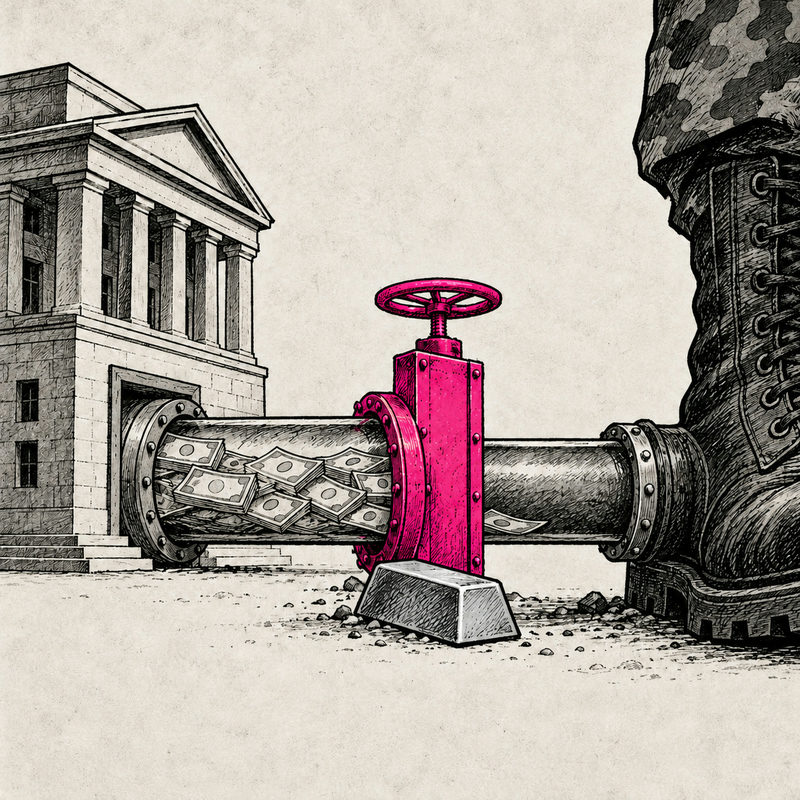
The United States has sanctioned Rwanda’s defence ministry and a financial institution linked to its security services. A peace agreement signed in Washington has apparently reached the part of implementation where Treasury starts following the money.
Reuters reports that Wednesday’s measures target the ministry and Zigama Credit and Savings Society over the conflict in eastern Democratic Republic of Congo. Washington alleges that the ministry directed military support for rebels and that the financial institution helped facilitate it.
Rwanda denies backing the rebels. Government spokesperson Yolande Makolo says commitments in the Washington Accords concerning the FDLR militia remain unfulfilled, and says Rwanda is ready to implement the agreement alongside reciprocal action by Congo and accountability for all parties. Zigama’s chief executive did not immediately respond to Reuters’ request for comment.
The sanctions act on Washington’s stated allegations; the report describes no criminal verdict. Congo’s government welcomed them and demanded Rwanda honour its commitments.
The useful detail is the chain the sanctions seek to reach. Treasury says the defence ministry directed the Rwanda Defense Force to send thousands of troops into eastern Congo and operate alongside the rebel group, providing equipment and other support. The force was already sanctioned. Wednesday’s move adds the ministry above it and a financial institution alleged to assist the operations.
That is a more concrete approach than assuming an armed group operates on enthusiasm and a well-organised calendar. Military activity requires supplies, payments and institutions willing to move resources. Following those connections asks who makes the activity possible, rather than stopping at the name painted on its most visible participant.
The Daily Heckler
The best of Democrawonk.
No algorithm required.
Treasury alleges that Zigama facilitated payments to entities in China and elsewhere for weapons, ammunition and other military equipment. It also says a branch enabled the movement of gold from rebel-controlled territory in Congo to Rwanda. The financial and logistical roles are Treasury’s allegations, which the sanctions now seek to address.
They also identify the practical test for the policy. Announcing a sanction is one step. Whether it changes access to funds, procurement or support is another. The reporting does not establish that the new measures have already stopped any shipment or ended any fighting.
The United States helped broker the 2025 agreement between Rwanda and Congo. Reuters reports that the effort has brought little change on the ground. That gap is not merely an embarrassment for the officials who organised the signing. People in eastern Congo continue to live with a conflict that a document was supposed to help resolve.
The military, political and economic relationships therefore need more attention than the ceremony. Rwanda points to security commitments concerning the FDLR, a militia rooted in the 1994 genocide. The United States points to alleged Rwandan support for rebels. Enforcing a peace arrangement requires confronting those competing claims and the conduct behind them, not treating the existence of signatures as proof that the job is finished.
Wednesday’s sanctions make Washington’s demands more tangible. Their success still has to be measured in changed behaviour, not the number of additional names on a government list.
Peace agreements do not implement themselves. It would be useful if the institutions moving weapons and money were at least made to work harder than the people arranging the photo.
Comments
Have something to say? Give this story a heckle.
Comment Rules
Argue the point. Add a joke. No threats, harassment, hate speech, spam, private personal information or unsupported accusations. First-time comments and comments with links are moderated. Full Comment Rules
Loading comments…
Questions or deletion requests? Contact Us. We retain comments and moderation records until removed. Only hashed email identifiers are stored for comment accounts.